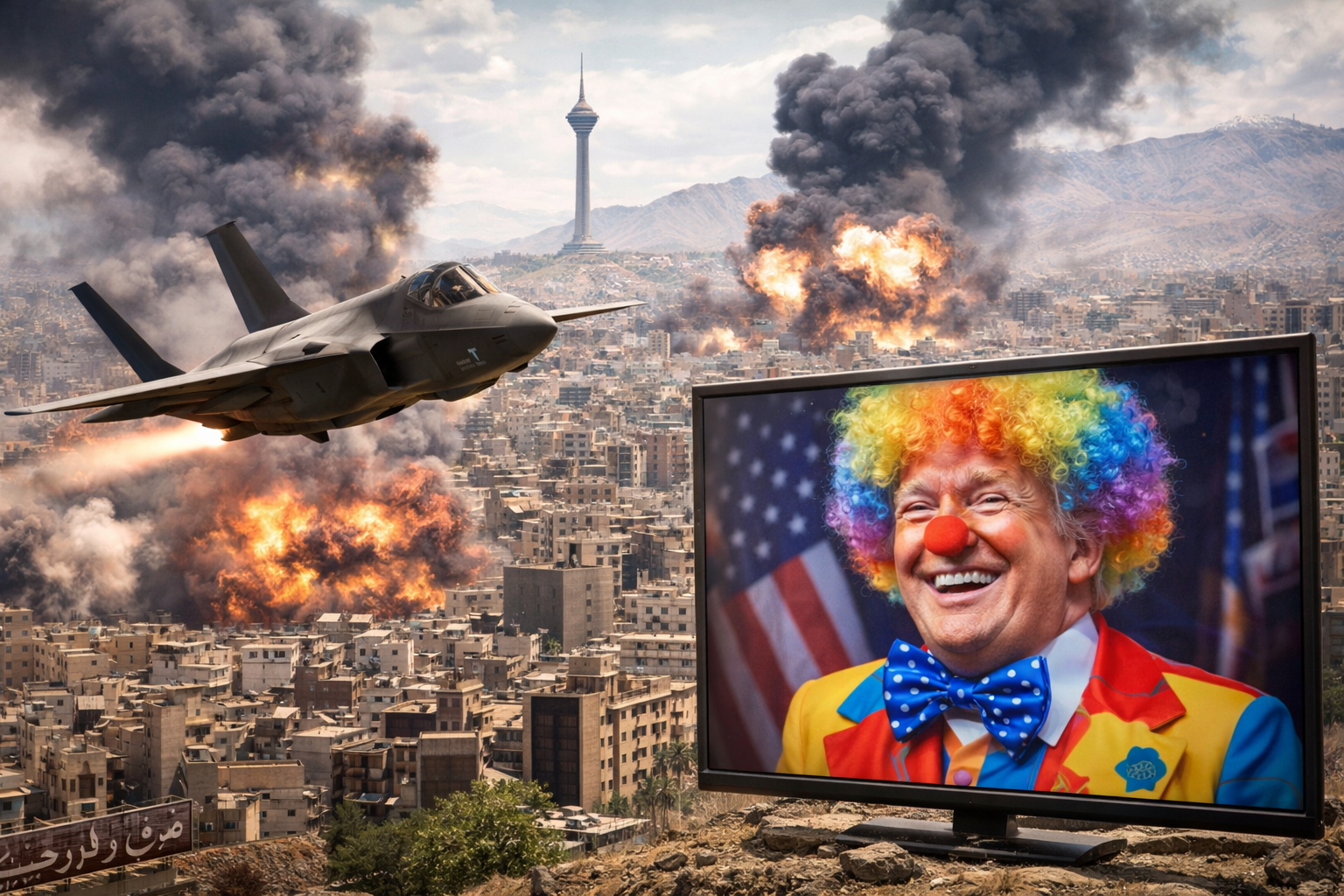

However, in today’s realities, they have transformed into critical, virtually indispensable hubs within the framework of a massive and highly controversial US military campaign against Iran. This conflict, unfolding before the eyes of the world, places official Berlin in an ambiguous and dangerous position.
Theoretically, Germany possesses all the necessary sovereign levers of pressure and could significantly restrict the use of its infrastructure for conducting air attacks—which leading experts already rightfully call a direct violation of international norms. Nevertheless, the German government seems to be consciously choosing a strategy of passive observation, seeking at all costs to avoid a head-on collision with the unpredictable and harsh administration of Donald Trump.
Meanwhile, within the ruling Social Democratic Party of Germany (SPD), sentiments are radicalising: discussions about whether Berlin should continue playing the role of a “silent accomplice” are becoming increasingly fierce and public.
As of now, the worst-case scenario, which many European diplomats awaited with ill-concealed anxiety, has been avoided. In his keynote speech on Wednesday, Donald Trump, while confirming the US intention to further intensify combat operations against Tehran, refrained from a final break with allies.
“We will hit them extremely hard in the next two to three weeks; the world has never seen such power,” the American president emphasised, remaining true to his aggressive communication style. Nevertheless, the key fear of Brussels and Berlin—a formal announcement of a US withdrawal from NATO amid a deep rift over the Iranian war—has not yet materialised. Trump has left the door ajar, but the price of this “unity” for Europe is becoming increasingly burdensome.
It is worth recalling that just a few days ago, the White House’s rhetoric was far more destructive. Trump did not mince words, lashing out at European Alliance partners with open insults. He publicly called the leaders of leading EU countries “cowards,” accusing them of ingratitude for decades of American protection, and directly threatened to leave Europe alone with its security challenges.
The reason for such a sharp reaction from Washington is obvious: an organised resistance to the war, which the United States started about a month ago in close and, in the opinion of many, excessive partnership with Israel, is rapidly forming on the European continent. Washington is accustomed to unquestioning obedience, but this time European elites felt that the scale of escalation threatens their own national interests.
Particularly noteworthy is that the current opposition from Europeans has long moved beyond diplomatic etiquette, formal protests, or ambiguous press releases. The capitals of key EU states have begun moving toward implementing concrete, technically calibrated measures that strike the American “war machine” at its most vulnerable points. States such as Spain and France have already introduced factual restrictions on the use of US military facilities located on their sovereign territory.
Given that European airfields function as “aircraft carriers on land” and play a decisive logistical role in conducting remote warfare in the Middle East, these actions create real operational obstacles for the Pentagon, forcing route changes and increasing logistics costs.
In this complex political dilemma, Germany also possesses colossal potential: Berlin is capable of seriously complicating life for Trump if it decides to restrict the use of American outposts here. The actual closure or even partial limitation of base operations could paralyse a significant portion of the supply and operational control for the American group. However, to date, the German federal government prefers to exercise maximum caution.
The Cabinet appears to be guided by the principle of “do no harm,” trying not to provoke Trump into retaliatory economic or political sanctions. But in Berlin’s political circles, the question is increasingly being asked: will the current “black-red” coalition be able to maintain this shaky line if the intensity of the war continues to grow and footage of destruction from Iran finally turns the German electorate against Washington?
European Resistance Grows and Formalises
The new waves of massive attacks announced by Donald Trump, involving the use of strategic aviation and high-precision weapons, make the situation politically toxic for European governments. Already, public pressure on cabinets in Paris, Madrid, and Rome has reached a critical point. Citizens are demanding that their leaders provide not just words, but legal and factual distancing from attacks perceived as neo-colonial expansion.
Even those politicians traditionally considered reliable Atlanticists and allies of Trump are beginning to send alarm signals. For instance, Italian Prime Minister Giorgia Meloni, whose loyalty to the White House was previously beyond doubt, was forced to publicly admit that the methods of conducting this war are moving “far beyond the boundaries of international humanitarian law.”
This collective European bewilderment is increasingly flowing into the realm of practical consequences, creating cracks in the NATO monolith. Spain set a powerful precedent by banning the US Air Force from using its bases at the very beginning of the conflict, which caused undisguised fury from the US President.
Others followed Madrid’s lead. According to insider data from the Italian state television channel RAI, the government in Rome responded this week with a refusal to a US military command request to land a heavy transport aircraft at the Sigonella base in Sicily. Italy justified this by stating that the cargo on board could be used for offensive operations, which contradicts the state’s current position.
France, for its part, has taken an even tougher and more structured stance. Official Paris provides its military airfields exclusively for the needs of US Air Force transport aviation (logistics, food, medicine), while imposing a categorical and uncompromising ban on the use of infrastructure by combat bombers or fighters directly involved in strikes against Iranian targets.
Even the United Kingdom, traditionally acting as a “junior partner” and the chief advocate for the US in Europe, has been forced to introduce certain filters. London restricts the use of its bases to weapons systems performing tasks exclusively with a “defensive objective”—for example, ensuring maritime security in the Strait of Hormuz or protecting allied Gulf monarchies from a possible retaliatory strike by Tehran.
Although in official documents Europeans try to justify their actions with legal technicalities and clauses from old treaties on the use of bases, the political message is read unambiguously. It is a demonstrative refusal of solidarity on a specific issue: Europe wants to distance itself as strongly and clearly as possible from this war, unwilling to share either moral or legal responsibility for its consequences with Washington.
Germany’s Special Path and Special Responsibility
Against this backdrop, Germany’s position appears the most complex and, in some sense, contradictory. Berlin, holding the status of Europe’s leading economy, could most tangibly hinder Trump’s military plans. The US Ramstein Air Base and Spangdahlem Air Base, located in the federal state of Rhineland-Palatinate, are not merely auxiliary facilities but critical nerve centres for the entire American air war. Ramstein is the “heart” of the US Air Force in Europe, the location of senior command and the largest transit point outside the United States itself. Since the start of the conflict, hundreds of heavy aircraft—such as the Boeing C-17 Globemaster III and Lockheed C-130 Hercules—have been making round-the-clock sorties from Ramstein, ensuring the seamless transfer of troops, heavy equipment, and ammunition to the Middle East.
Michael J. Williams, a renowned specialist on NATO structures and a former advisor at the US State Department, explicitly calls Ramstein “the central distribution hub for all US air operations in the Middle East direction.” According to him, the base is absolutely indispensable for managing modern unmanned aerial vehicle (drone) missions. “The technological architecture is such that the data transmission lines and satellite relays for controlling drones pass precisely through Ramstein. Direct control from the US would be too slow due to signal latency, which is critical in dynamic combat conditions,” Williams explained. Thus, without German soil, Trump’s modern high-tech war would become significantly less effective.
However, unlike its European neighbours, Germany continues to grant the United States virtually complete and unchecked freedom of action in the use of its outposts. Official Berlin seems to turn a blind eye to what exactly is flying out of its territory and for what purposes. Government spokesperson Steffen Cornelius confirmed this position on Wednesday, stating that Germany is “bound by existing treaties and intends to adhere to the legal substance of these agreements.” At present, the federal government sees no formal reason even to initiate an audit of the intended use of the bases, let alone restrict them.
Legal Deadlock: Is Germany Becoming an Accomplice?
The situation, however, may turn out to be much more convoluted and dangerous than official Berlin tries to present. The problem of complicity arises particularly acutely in light of recent events, such as the tragic American bombing of a school in Tehran. As a result of this strike, according to international organisations, about 200 people died, the majority of whom were civilians. The fact that US bases in Germany play a key role in supporting such operations undermines not only the country’s political image but also creates quite real risks in the international legal sphere. If the logistics of killing pass through Ramstein, can Germany be considered a neutral party?
A recently published expert opinion from the Bundestag’s Scientific Service (WD) has added fuel to the fire of this discussion. The document clearly states: the war in Iran, in the form it is being conducted now, should be regarded as a gross violation of the prohibition on the use of force established by the UN Charter. Thus, US actions contradict international law—and this assessment coincides with recent tough statements by Federal President Frank-Walter Steinmeier, who called for the maintenance of world order.
This twelve-page study was initiated by the Left Party and examines in detail the question: is the provision of bases in Germany “complicity” in the commission of an international crime for which Berlin must bear responsibility? The result of the Bundestag lawyers’ work turned out to be remarkable and frightening for the government: “under certain circumstances, Germany’s responsibility for assisting unlawful acts cannot be excluded in any case.” Experts emphasise that US bases are not US territory—they are sovereign German land where FRG laws apply. The scientists also drew a parallel with the legal analysis of Russian aggression against Ukraine, where providing Belarusian territory for the needs of the Russian army was unambiguously qualified by the international community as complicity in aggression.
The director of the Atlantic Academy of the state of Rhineland-Palatinate, Americanist David Sirakov, is also convinced that restricting the use of bases is legally justified, although he acknowledges the presence of serious bureaucratic obstacles. The Status of Forces Agreement (SOFA) and accompanying stationing treaties do not give the US carte blanche to conduct operations from German soil that violate fundamental law. “Germany is entitled to insist on compliance with its legislation and can initiate steps up to and including a revision of the terms of the treaty,” Sirakov points out in an interview.
Political Rift Within the Coalition
The question of Germany’s moral and legal responsibility for Trump’s actions has become a “bone of contention” within the ruling black-red coalition. The Union (CDU/CSU) and the SPD demonstrate fundamentally different approaches to this problem. The Union’s spokesperson for defence policy, Thomas Erndl (CSU), advocates for maintaining the status quo. “The end justifies the means: we need to reduce the Iranian threat in the region. One can argue about tactics, but restricting the Americans in the use of their infrastructure means betraying NATO’s interests,” he declares.
The coalition partners from the SPD hold the opposite view. Adis Ahmetovic, who is responsible for foreign policy within the faction, calls on Berlin to find the courage to follow the example of France and Spain. According to him, issues regarding the use of Ramstein should be assessed not only through the prism of old contracts but also through the prism of current international law. Ahmetovic does not even rule out the possibility of a lawsuit: “If the use of our sites goes against the law, this must be verified by a court.”
Risks and Costs: The Price of Freedom of Action
But is what is legally possible politically expedient? For Berlin, any step to restrict American autonomy in Ramstein will be viewed by Washington as an act of open hostility. Is Germany ready for the consequences? NATO specialist Williams believes that in military terms, it would be a devastating blow to the Pentagon, but politically he advises Germany to refrain from sudden movements due to the risk of an “uncontrolled, furious reaction” from Trump.
David Sirakov also warns against hasty bans. The most reasonable approach, in his opinion, would be a “phased approach”: initiating official consultations, demanding a legal expert review of every flight, and a US obligation to provide guarantees of compliance with international law. Only if these measures do not work should one move to physical restrictions.
Ultimately, the costs of an open conflict with the US in conditions of instability in Europe and the ongoing war in Ukraine seem unbearable to Berlin. This explains the current compliance of the German authorities: they fear that Trump could finally destroy the NATO collective security system. Thus, Germany remains a hostage of its geography and history: politically it tries to distance itself from the war, but technically it continues to be its most important transit point.

Latest Posts