
The Return of the Wave
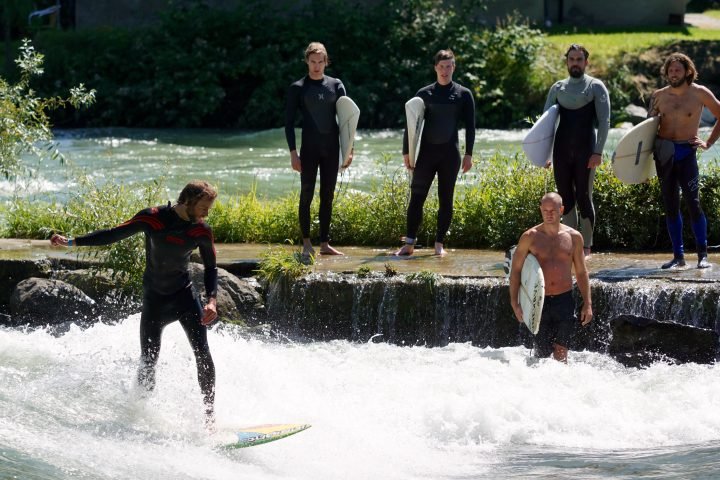
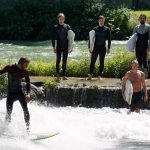
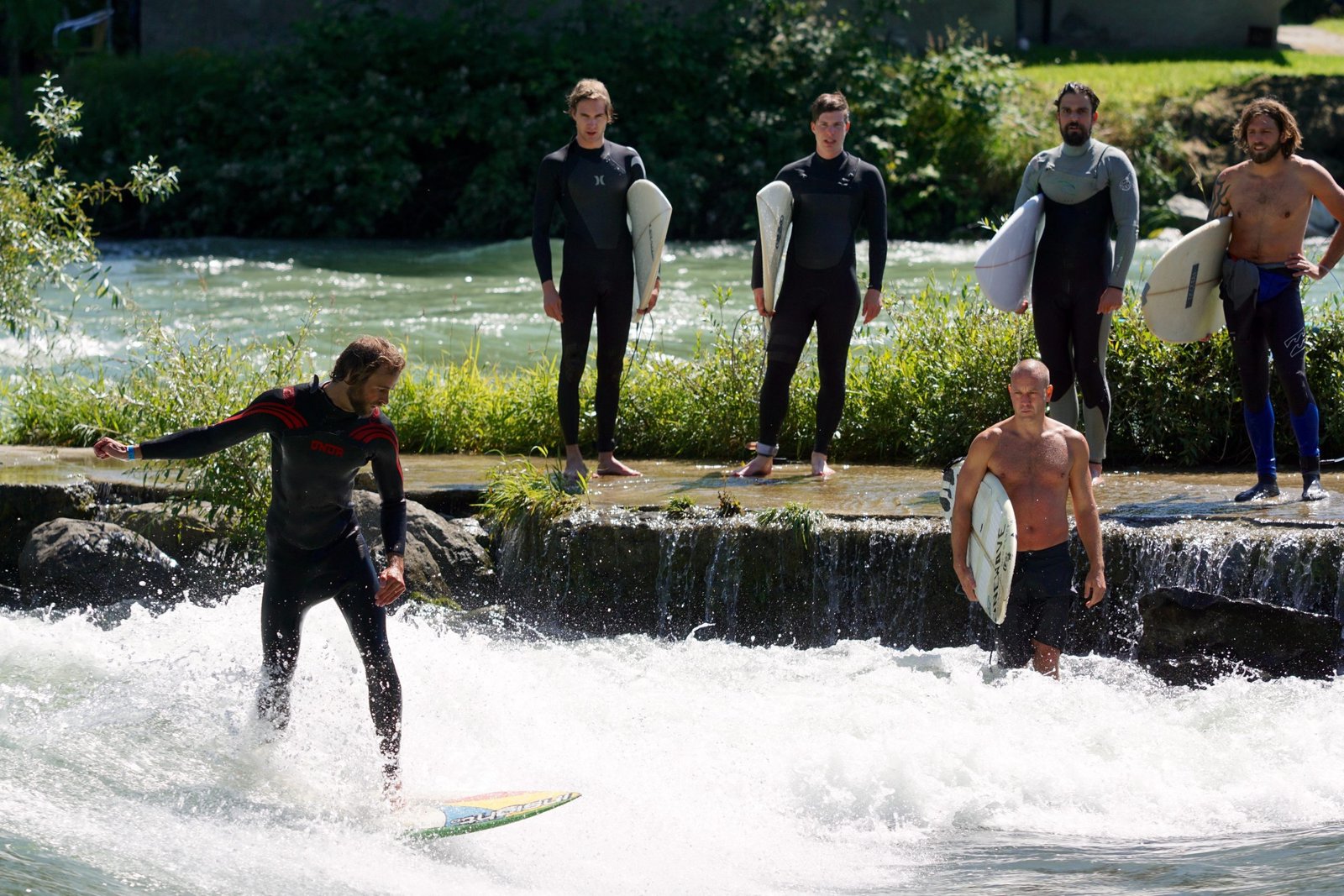
It is back! A surfable wave has formed once again on the Eisbach. Surfers were spotted on their boards as early as Christmas Day, and by the second day of the holiday, people in black wetsuits were back on the water. Many Munich residents watched from the banks, wondering how this became possible.
It is suspected that unknown parties placed a wave-forming board into the water. According to eyewitness reports, cables were seen running from the bridge pillars into the water—likely securing the homemade construction.
Wave Restored, but Use is Almost Certainly Unauthorized
Surfers attempted this exact method back in November, successfully creating a small, surfable wave. However, there was a significant catch: surfing here remained prohibited. The Munich city administration officially closed access to the site, a fact clearly communicated by signs installed near the stream. The wave posed a danger; in April, a fatal accident occurred at the site, claiming the life of a 33-year-old local resident. Nevertheless, the Christmas surfers clearly ignored the ban.
The original Eisbach wave disappeared in late October following a scheduled cleaning of the streambed. According to the construction department, the work involved clearing debris and sediment. Since then, athletes, city authorities, and representatives from several universities have attempted to restore the wave. Until now, no one had succeeded—except for the anonymous creators of the ramp.
Athletes Denounce “Impossible Requirements” by Authorities
It remained unclear whether the current construction received official approval. Before Christmas, surfers had submitted an application to install a similar ramp as a hydraulic experiment. According to the Department of Environmental Protection, that application was incomplete, a spokesperson stated on December 23 in response to an inquiry.
On December 25, the Munich Surf Club issued an official press release accusing the administration of effectively obstructing the return of the wave by imposing impossible conditions. Consequently, the initiators have ceased their attempts to obtain a permit for a formal hydraulic experiment. The athletes view these requirements as a manifestation of political will rather than safety concerns. In their statement, they indicated that the administration was not deciding on a specific project, but rather on “how much active city life it still desired.” The authors emphasized: “Formally, the issuance of a permit was not ruled out. Factually, it was made impossible.”
The surfers described this approach as politically convenient but democratically problematic, adding: “The discussion is not over. it has moved into the political arena.”
Source: Press release from Surf Club München

Latest Posts