
In New York, Foreign Minister Johann Wadephul discussed with DW the country’s real chances of success in the upcoming vote, which promises to be one of the most challenging in decades.
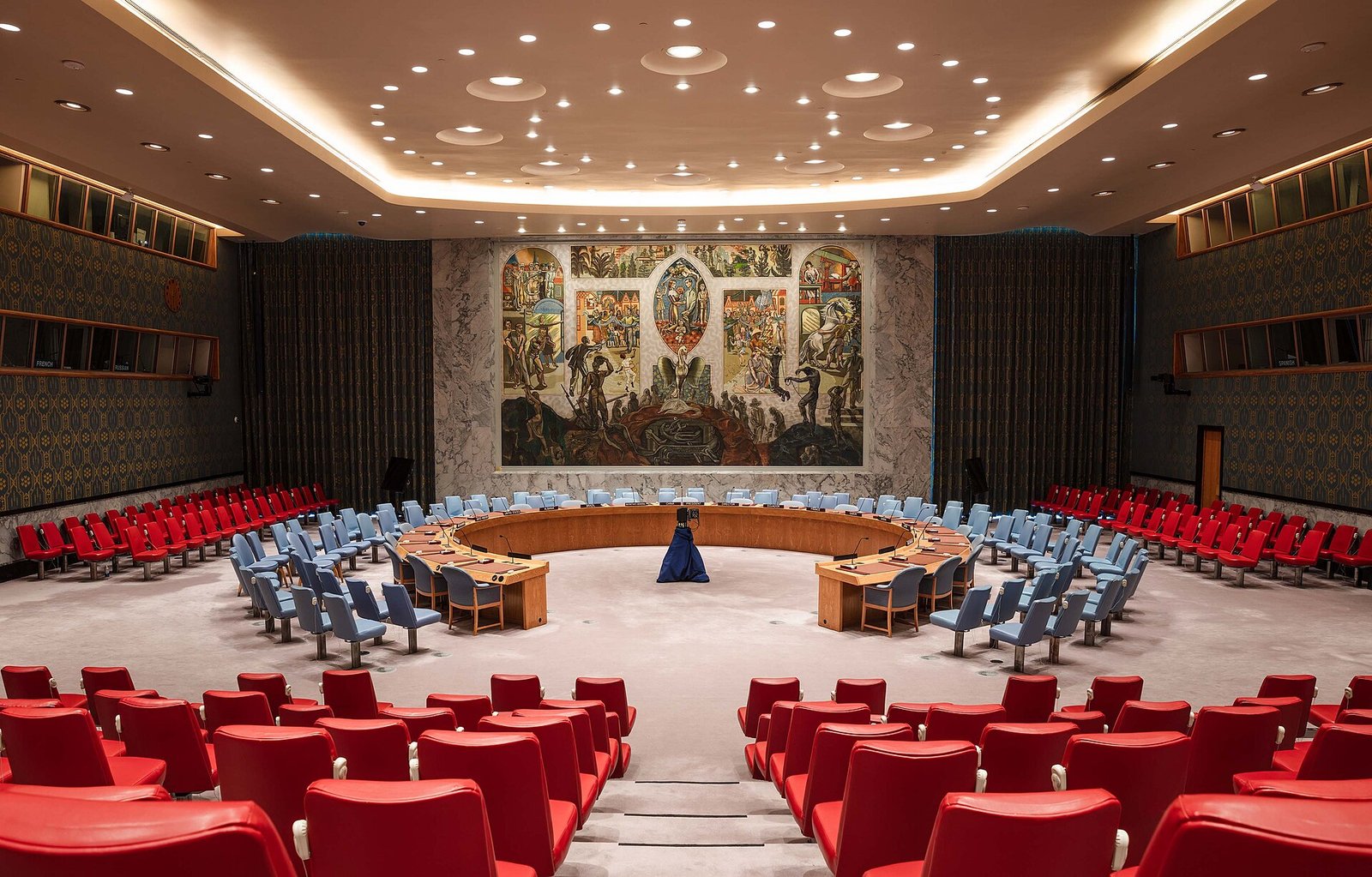
The atmosphere in Manhattan’s diplomatic quarter underscores the gravity of the moment. The German delegation’s convoy struggles through the dense flow of New York streets. Amidst the piercing wail of sirens and the honking of horns—causing the usual irritation among hurrying pedestrians—the ministry’s vehicles move toward First Avenue. Ultimately, Foreign Minister Johann Wadephul arrived at the monumental United Nations building just minutes before the appointed time. The meeting took place in the heart of the 80-year-old institution: the council chamber of its most powerful organ, the Security Council.
The Minister’s schedule at the UN headquarters is extremely tight. In a concise three-minute speech, Wadephul addressed critical issues of maritime security, emphasized the destabilizing consequences of the prolonged conflict in Iran, and focused on the strategic problem of a potential closure of the Strait of Hormuz. After concluding his speech, Wadephul took a seat at the famous horseshoe-shaped conference table—the place where decisions on sanctions and peacekeeping operations are made. However, protocol soon provided a reality check: the Minister was politely asked to move to the nearby rows for guests. The reason: Germany is currently not among the decision-making nations on the Council.
Wadephul: “The Chances Are Good”
The head of the German Foreign Office has set an ambitious goal: to return the country to that table for a two-year period in 2027 and 2028. Berlin’s historical record in this matter is solid: the Federal Republic has been elected as a non-permanent member of the Security Council six times, most recently serving in 2019 and 2020. Nevertheless, the power dynamic remains unchanged: the key levers of control and the power of veto are held by the “Big Five” permanent members—the USA, China, Russia, France, and the UK.
In an exclusive interview with DW, Johann Wadephul expressed cautious but fact-based optimism regarding the prospects of the upcoming election. The Minister noted: “I would say the chances are good, but this is a competition and a living democratic process. We can either win or lose—in international politics, both are possible. However, we have strong arguments. Germany isn’t just watching; we are actively working on the world stage and are one of the largest contributors to the UN system.”
The mechanics of the election require surgical precision from German diplomacy. Of the ten non-permanent seats, five are subject to rotation during the June elections. To secure one, Berlin needs to garner the support of two-thirds of the 193 UN member states. Given that the voting is secret, even public promises of support do not guarantee the final result.
Realizing this task is complicated by tactical miscalculations of the past. Germany announced its candidacy relatively late, by which time the group of Western European states had already formed a consensus around the candidacies of Austria and Portugal. This means that the traditional European resource of support is already partially distributed, forcing Berlin to seek allies in other geographical directions. Wadephul’s main bet appears to be on the African Group—the largest electoral bloc in the UN, comprising 54 countries. During his intense 29-hour visit to New York, a series of bilateral meetings with African leaders was scheduled.
Meeting with Representatives of the African Union
The most significant stage of the New York program was the Foreign Minister’s visit to the representation of the African Union (AU). During the negotiations, Wadephul delicately reminded partners of Germany’s status as one of the world’s most generous donor states, whose financial injections support numerous humanitarian and development programs on the continent. However, when asked to formulate the essence of the German bid without referring to budget figures, the emphasis shifted toward political empathy.
“The motto of our campaign is this: the world community should choose a country that possesses the necessary experience and is sincerely interested in showing more understanding toward the interests of other states and continents,” Wadephul explained to reporters.
Berlin’s additional ace is its support for the African Union’s long-standing demand for UN structural reform—specifically, granting African countries two permanent seats on the Security Council. This position appeals to many AU delegates and creates a foundation for mutual support. In the corridors of the UN headquarters, opinions are already being voiced that, despite the late start, the German Foreign Office’s systematic work with developing countries may bear the necessary fruit.
Does the UN Still Remain Relevant?
In expert circles, however, the debate over the expediency of such massive diplomatic efforts does not subside. Critics point out that in the modern era, where “might makes right” increasingly dominates international agreements, the role of the Security Council is becoming more symbolic.
“Certainly, we are under unprecedented pressure,” Johann Wadephul admitted at the conclusion of the conversation. “The entire multilateral UN system is undergoing a stress test.” Nevertheless, the Minister emphasized Berlin’s unwavering faith in the institutional approach: “I am deeply convinced that classical diplomacy remains the only tool capable of preventing a final slide into global chaos.”
Against the backdrop of ongoing conflicts in Ukraine, Sudan, and the Middle East, these words sound like a policy statement. Germany clearly seeks not just to occupy a chair in the meeting hall, but to become a moderator for a return to a post-war order based on clear rules. Whether Berlin succeeds in realizing this scenario will become clear following the June vote, where every single vote from the 193 participating countries will be decisive for the future of German diplomacy.

Latest Posts