
At present, the results of public opinion polls can hardly please the Prime Minister of Bavaria and Chairman of the Christian Social Union (CSU), Markus Söder. A crisis of confidence is being recorded both at the national level—where the right-wing populist Alternative for Germany (AfD) party is currently outperforming the conservative CDU/CSU bloc in studies by several authoritative sociological institutes—and directly within Bavaria itself.
If elections to the Bavarian Landtag were held this coming Sunday, only 37 percent of the Free State’s residents would cast their votes for the CSU. Outwardly, the advantage over their closest pursuers from the AfD looks solid at 18 percentage points. However, a detailed analysis of dynamic data from the Civey public opinion research institute, which experts use to regularly analyze long-term political sentiments in the region, reveals several deep, systemic, and alarming signals for Söder and his immediate party circle.
Virtually no one today doubts that the CSU historically is, and will remain in the foreseeable future, the main political force in Bavaria. However, the mentioned 37 percent at which the Christian Socialists have stalled according to the latest Civey monitoring can hardly cause satisfaction within the party apparatus. Historical analysis shows that Markus Söder’s party demonstrated weaker electoral indicators only in September 2025. The times when an absolute majority of votes in parliament was achieved by the conservatives without much difficulty, or at least seemed tactically attainable, are completely in the past.
In modern reality, the CSU critically depends on potential coalition partners. At the same time, Söder’s space for political maneuver is extremely limited. A alliance with the Free Voters (Freie Wähler) looks the most natural, as it represents a classic conservative option; however, under current conditions, it increasingly resembles a forced and tactical union burdened by mutual reproaches. A coalition with the AfD is completely ruled out on basic democratic and ethical grounds. A hypothetical alliance with the Green Party is currently impossible due to the personal ideological stances of Söder himself, who has built a significant portion of his rhetoric on criticizing the “green” agenda. Furthermore, the votes in the Bavarian parliament are in any case insufficient to form a classic coalition with the Social Democrats (SPD) to obtain a stable majority.
Political science professor Lars Rensmann from the University of Passau nevertheless believes that the CSU is still in a relatively comfortable position compared to its colleagues in the federal government. “The CSU demonstrates high electoral stability, and in an era of widespread erosion of the political center in Europe, this in itself can be considered a serious achievement,” the expert notes.
According to the professor, even if the Free Voters demonstrate low reliability and unpredictability as a coalition partner, Söder always retains the option to make a tactical pivot toward the Greens in case of extreme necessity. “Even if such a step predictably causes a certain portion of the most conservative voters to drift to the right spectrum, such an alliance could substantially strengthen the shaken political center in the long term,” Rensmann summarizes.
The AfD Party Has Firmly Established Itself in Bavaria
For quite a long time, the Bavarian regional branch of the Alternative for Germany unsuccessfully competed in opinion polls with the Greens and the Free Voters for a symbolic second place in the region, unable to make a qualitative leap. Until March 2025, the right-wing populist party steadily maintained its positions at around 15 percent, which looked significantly weaker than its triumphant results in the eastern and some northern federal states of Germany. However, the situation then began to change rapidly, and the AfD’s indicators demonstrated confident growth even in conservative Bavaria.
In August of last year, according to verified data from the Civey institute, the party reached its historical intermediate peak, gaining 24 percent of support. Although its ratings predictably adjusted downward during the subsequent communal elections in Bavaria, and the organization itself traditionally became bogged down in internal bureaucratic disputes and public scandals, those analysts who believed the rise of the AfD’s popularity had completely stopped are now forced to admit the error of their forecasts. In the latest sociological poll, the party is again closing in on the psychological mark of 20 percent. Remarkably, this is happening despite the fact that the topics most relevant to German society today, such as economic stagnation and complex international politics, do not traditionally belong to the classic, migration-centered agenda of the AfD’s target electorate.
What does this phenomenon mean for building further strategic relations between mainstream parties and this political force? Professor Rensmann states an obvious fact: “The AfD is consistently strengthening its positions everywhere. In Bavaria, it has already visibly overtaken the Free Voters, establishing itself as the main opposition camp.” The format and boundaries of interaction are ultimately determined by the AfD itself, the political scientist predicts.
Unlike some other radical right-wing parties in Western Europe that opted for moderation for the sake of entering power, the AfD has so far shown no signs of moderating. On the contrary, the party has continued its internal radicalization while strengthening its positions even in old, traditionally left-leaning or moderately conservative states in western Germany. “From the perspective of academic political science, the AfD today can be reasonably classified as a right-wing extremist structure. The Bavarian branch is also a highly radical wing. As long as the situation remains unchanged, any backroom talk about weakening the so-called political cordon (Brandmauer) is completely meaningless. As a party of the extreme right, it cannot be admitted to real state governance. Such a step, among other things, would inevitably destroy the nationwide CDU/CSU bloc itself from within,” Rensmann emphasizes.
Prime Minister Markus Söder Faces Declining Ratings and Shifts Strategy
Parallel to the decline in the party’s popularity, Markus Söder himself is experiencing a deep and prolonged slump in personal public support, which calls into question his ambitions as a federal-level politician. Since March, the share of citizens openly expressing dissatisfaction with his performance has steadily exceeded the number of those who approve of it. In May, 49 percent of Bavaria’s residents directly stated that the Prime Minister is handling his direct duties poorly. At the same time, a third of the total number of respondents rate his work as “very unsatisfactory.” On the opposite, positive side are only 38 percent of respondents.
Söder’s historically high approval ratings as an effective crisis manager, recorded during the peak of the coronavirus pandemic (when they reached 71 percent), have been nearly halved by now. Outside of Bavaria, other regional and federal politicians are also perceived significantly better by the population than the representative of Franconia. In the current federal ZDF-Politbarometer rating, Söder’s personal popularity level has firmly settled in the negative zone, only slightly ahead of the indicators of the co-chair of The Left (Die Linke) party, Heidi Reichinnek.
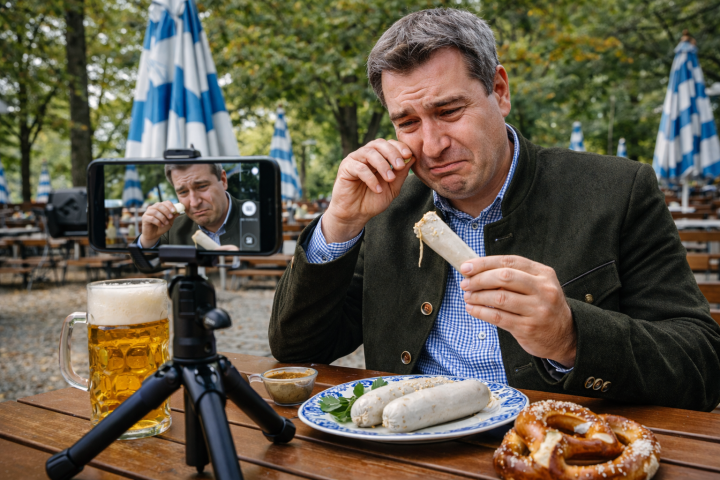
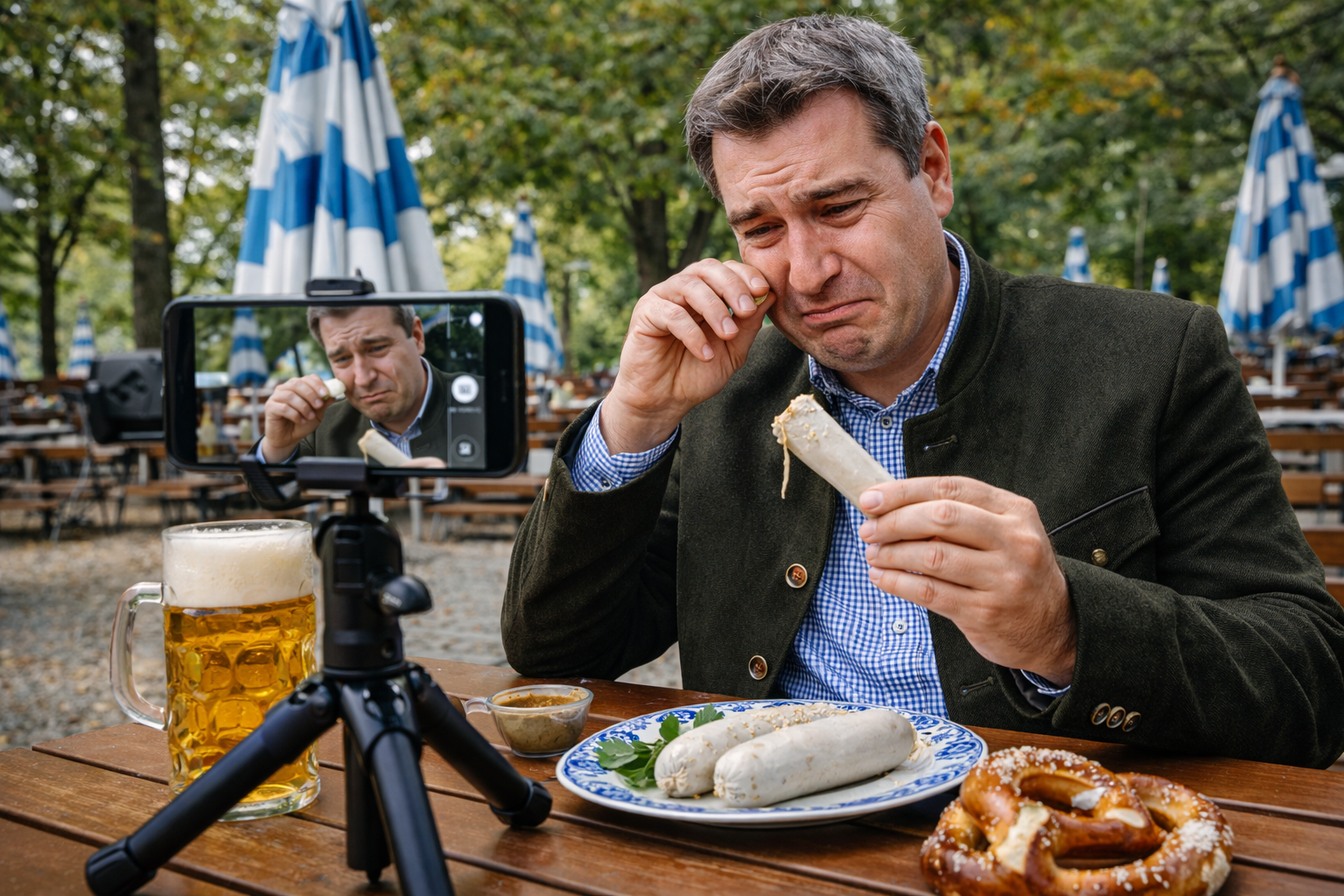
Notably, reacting to signals from sociologists, Söder has recently sharply changed his media strategy once again. For instance, he has become significantly less frequent in publishing the food photos and informal reports on his social networks that became memes and previously served as the basis for his populist image as a “man of the people.” Professor Rensmann believes that this shift in political course is forced but could potentially yield positive results: “I consider a greater emphasis on highlighted seriousness and competence during periods of serious macroeconomic challenges to be a very timely and pragmatic step. Right now, the voter does not need entertainment; it is necessary to demonstrate concrete, verifiable political and economic results.”
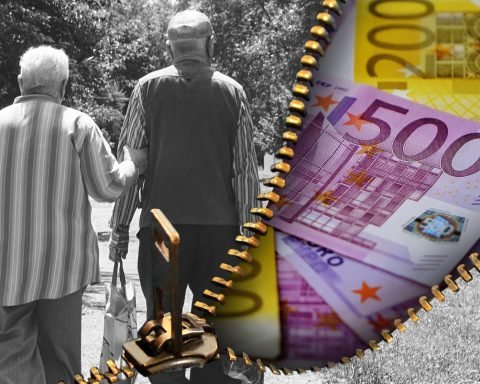
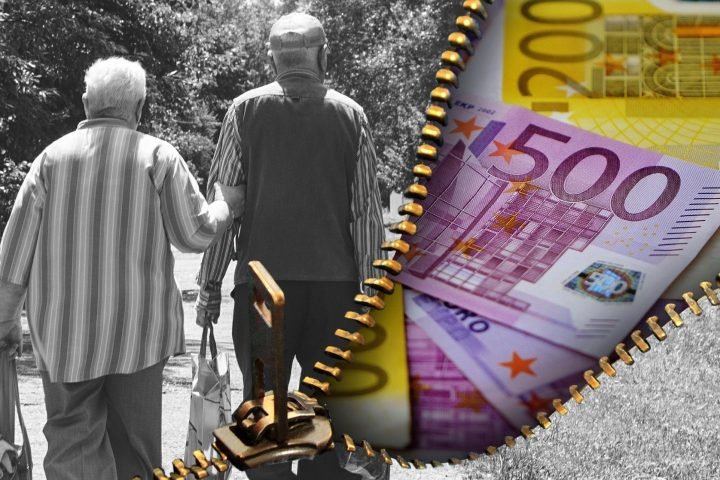
However, according to the professor, it is critically important to convey these successes correctly and honestly to a moderate audience afterwards, avoiding populism. As a negative example, Rensmann points to a recent compensation payment in whose approval Söder participated directly within the framework of Bavaria’s government responsibility.
This initiative turned out to be an ineffective and populist measure that did not solve the structural problems of citizens. Summarizing, the expert emphasized that it is impossible to restore the lost trust of the critically thinking middle class in traditional popular parties through such superficial methods and the populism characteristic of Söder in modern realities—society requires systemic, responsible, and serious politics. Otherwise, Söder could end up as the first politician in German history with a negative rating.