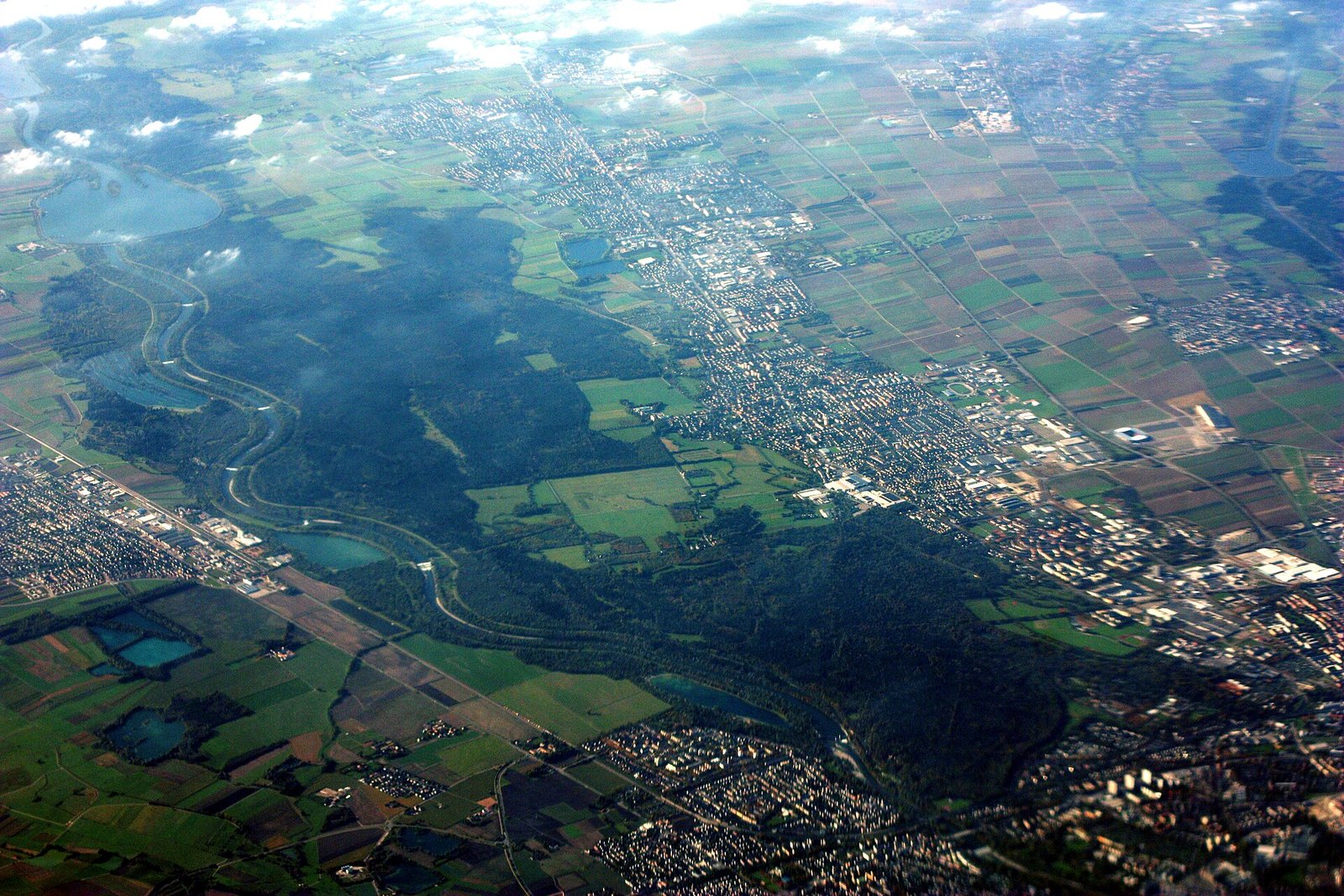

This majestic forest massif is not just a collection of trees, but a true natural universe stretching from the picturesque Spickel district to Königsbrunn itself. Imagine a space where purest streams murmur, seven forestries perform their duties, and countless forest inhabitants find refuge in dense thickets. The main value of this place for citizens lies in a unique opportunity: in just a few minutes, without any car, a person can exchange the noise of the pavements for the serenity of wild nature. Here, in the closest accessibility, are concentrated the best places for relaxation and inspiration. In 2024, this recognition became official: the German Forestry Association chose it as the Forest Area of the Year, confirming the status of the Augsburg Forest as the largest and most significant site of this type in all of Bavaria.
Scales that strike the imagination: 10,000 football fields
What hides behind the dry term “city forest”? This is a vast territory that does not just surround residential quarters but is owned and wisely managed by the city. Thanks to this status, the forest is organically woven into the fabric of the agglomeration, offering residents a developed infrastructure and leisure opportunities that are not found in an ordinary wild forest. According to official administration data, the total area of these holdings is an incredible 7,679 hectares. To realize this scale, try to imagine more than 10,000 football fields laid out in a single green canvas. Curiously, part of these “football hectares” actually exists on the Süd sports field, located right at the shady edge of the forest. It is also noteworthy that a significant part of this massif lies outside the city boundaries, covering territories between the Siebentischwald forest, Haunstetten, and the full-flowing Lech River.
Green empire: from Swabia to the Upper Palatinate
The management ambitions of Augsburg extend far beyond the horizon. The city controls not only adjacent groves but also plots in the Western Forests, as well as parts of the massifs in the famous Wittelsbacher Land. The influence of Augsburg foresters reaches even the Upper Palatinate, specifically the surroundings of the Fuchsmühl community.
In reality, the territory on the banks of the Lech, which most citizens are accustomed to calling the city forest (and which officially holds the status of a nature reserve), constitutes only about a quarter of the total volume of all the city’s forest lands. And yet, the figures speak for themselves: no other city in Bavaria can boast such extensive holdings. On the scale of all of Southern Germany, Augsburg firmly holds the crown of the leader, and in the all-German rating, it is second only to two giants — the capital Berlin and the forest region in Sauerland.
Rating of forest capitals: where it is easiest to breathe
Berlin, with its legendary Grunewald, Köpenick, and majestic Tiergarten, owns almost 30,000 hectares, remaining an unreachable favorite. Immediately following it is Brilon in North Rhine-Westphalia. However, Augsburg is unique in that its forest creates a vivid, almost tangible contrast with the atmosphere of a modern industrial metropolis, which cannot be said of forests in more rural areas of the country. The honorary list of the greenest cities capable of competing with Augsburg in terms of land volume also includes Dresden, Rostock, Wiesbaden, and sunny Freiburg.
Natural authenticity versus man-made gardens
It is important to understand the fine line between a forest and a park. For example, the famous Siebentischanlagen gardens, adjacent to the zoo and botanical garden, formally do not belong to the city forest. Unlike the Siebentischwald forest, which arose naturally thousands of years ago, the gardens represent a landscape masterpiece created by caring human hands. The city forest is a primordial element, although traces of human history are found in it as well. An example of this is the tiny and cozy settlement of Siebenbrunn, hidden right in the middle of a dense forest massif. Today, the Augsburg City Forest is not just an object on the map, but living proof that nature and the modern city can not only coexist but be a single whole.

Latest Posts