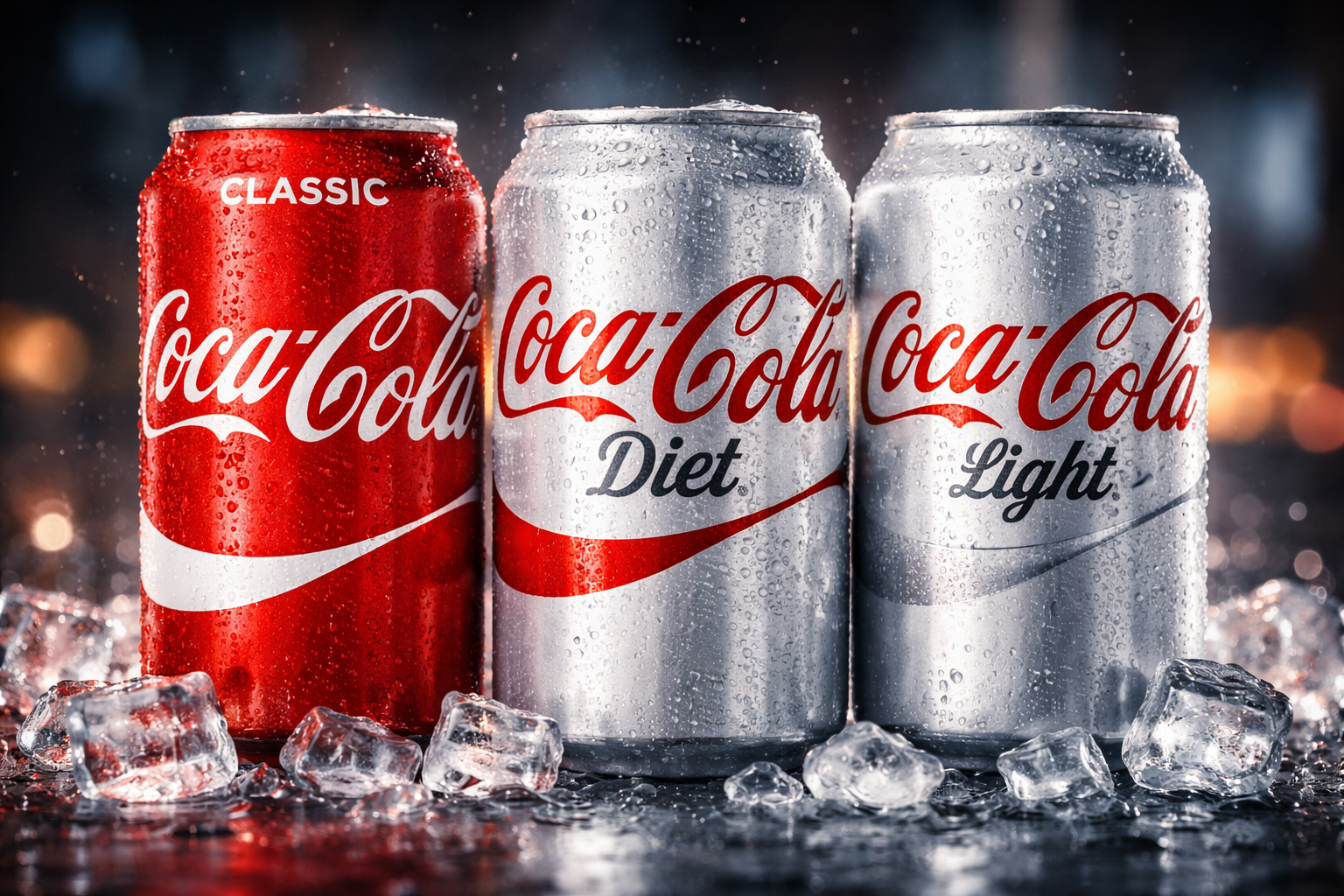

At first glance, these soft drinks seem identical, but that is not the case. Coca-Cola is famous worldwide, and for those who enjoy sweet carbonated beverages, the brand is hard to ignore. Even if you want to avoid high sugar and calorie intake, the company offers suitable alternatives: Coca-Cola Zero and Light. While they differ in recipe from the original and contain no sugar, the manufacturer claims they retain that classic taste. What exactly lies behind these two options?
This article is published in cooperation with Utopia.de, a media platform dedicated to sustainability. The Utopia editorial team provides independent and reliable information on all key issues regarding an ecological lifestyle.
Ingredients in Coca-Cola Light and Zero: The Main Differences
Although the company does not publish the exact recipes for its sugar-free drinks, it is clear that they differ from the original version. This is because sweeteners are used instead of sugar. Furthermore, while Coca-Cola Light and Zero have similar compositions, they are by no means identical.
A look at the list of ingredients reveals slight variations. For instance, Coca-Cola Light contains citric acid, whereas Zero uses sodium citrates (the salts of citric acid) instead. Additionally, the Zero version contains 0.02 grams of salt per 100 milliliters, compared to 0.01 grams in the Light version. Light also contains slightly more caffeine—12 milligrams per 100 milliliters instead of 10 milligrams.
The remaining ingredients are the same. Both drinks use sweeteners such as sodium cyclamate, aspartame, and acesulfame K. However, their distribution and precise quantities in the formula are not the same.
The History of Coca-Cola Zero and Light
The existence of two sugar-free Coca-Cola varieties is rooted in the brand’s history. Coca-Cola Light was introduced in Germany as early as 1983. In the United States, it was known as “Diet Coke,” emphasizing the goal: the same taste, but without the calories. The Zero version did not enter the market until 2005 and was intended to taste even closer to the original Coca-Cola.
The fact that both varieties remain on sale is explained by their flavor profiles. Coca-Cola Light is considered to differ more from the original, possessing a lighter, more citrusy aftertaste. Zero, by contrast, aims to mimic the classic sugary version as closely as possible, making them nearly indistinguishable. Since taste perception is individual, this cannot be generalized. To find out which drink you prefer, you would have to try them side by side.
Are Coca-Cola Zero and Light Truly Healthier?
From a sustainability perspective, Coca-Cola products are not recommended. Although both options contain no sugar and are virtually calorie-free, they should be consumed in moderation because they contain controversial sweeteners.
Furthermore, the operations of the Coca-Cola Company are far from ecological. The company produces millions of tons of plastic waste annually, which pollutes the environment. This is primarily due to the plastic bottles and aluminum cans used for the drinks. Consequently, it is recommended to favor local producers who offer products in glass packaging.
Source: Utopia.de