
UFZ drought monitoring has already confirmed that spring 2026 was an especially dry one for Bavaria — the region was the driest in Germany.
Early Harvest After a Dry Spring
The agricultural year began reasonably well: winter brought enough snow, and spring sowing went ahead almost without disruption. The turning point came in April, when most parts of Bavaria saw practically no rain. This was followed by an unusual heatwave at the end of June, which finished the job.
Winter crops were able to partly offset the lack of moisture using meltwater from winter snow. Winter barley weathered the drought relatively well — its harvest has already been completed across Bavaria, and, according to the association, many farms brought in a comparatively decent yield. Spring crops fared worse: when rain finally came, it arrived too late in many areas. Wheat and rapeseed suffered most from the heat and drought, along with, in the association’s assessment, maize, potatoes and sugar beet — these crops are also short of moisture, though they may still partly recover given sufficient rainfall.
The overall picture for spring crops was mixed:
- grain kernels are forming smaller than usual;
- yields are falling in volume;
- results vary widely depending on the region and how much rain did fall.
An initial harvest estimate was presented during the traditional harvest tour in the district of Mühldorf am Inn, in the towns of Reichertsheim and Kirchdorf. Bavaria’s Agriculture Minister Michaela Kaniber (CSU) and representatives of the Bavarian Farmers‘ Association toured the fields together. Association president Günther Felßner expects a harvest slightly below average, with grain quality varying noticeably from farm to farm. According to him, this year the differences between regions — and even between neighbouring fields — have been unusually large.
Prices Stay Low, Costs Keep Rising
Falling yields are not the only problem facing Bavarian farmers. World grain prices remain below 20 euros per 100 kilograms, while spending on fertiliser and energy continues to climb. Germany’s Federal Statistical Office recorded that in March 2026 grain purchase prices fell by 14.2% year-on-year, even as producers’ costs failed to come down.
Hermann Greif, a representative of the Bavarian Farmers’ Association, described the situation this way: “The gap between costs and revenue is becoming a genuine test of endurance for many crop-farming businesses.”
The one segment showing a positive trend is the rapeseed market. Exchange prices for this crop are noticeably more favourable than for grain, though even this, in the association’s assessment, does not relieve the overall pressure weighing on most crop-farming businesses.
Farmers’ Association Calls for Changes to Agricultural Policy
In Felßner’s assessment, the current situation confirms that climate change is no longer an abstract threat to the region’s agriculture but an everyday reality. Heat, drought and extreme weather events, he said, are becoming the new normal for Bavarian fields.
The Farmers’ Association is pressing for stable and predictable working conditions for the sector:
- state support for farms;
- a reduction in the bureaucratic burden.
This is not just a matter of regional measures. At the federal level, the association is pushing for an exemption from the energy tax for biofuels, a suspension of duties on imported fertiliser, and the creation of a tax reserve for weather-related risks — a measure already written into the coalition agreement. In addition, around 60 million euros has been earmarked for Germany under the EU’s fertiliser support scheme, while Germany’s national strategic plan for the Common Agricultural Policy sets aside roughly 143 million euros for agricultural insurance.
Only under these conditions, the association believes, will farmers be able to adapt to increasingly frequent weather extremes and continue producing food and renewable energy reliably. Kaniber, for her part, pointed to support measures from the state of Bavaria — in particular, subsidies for multi-risk insurance covering crop losses from flooding, hail or drought. The state compensates up to 50% of the insurance premium, though the policy itself is no substitute for a good harvest.
A Word to Drivers During Harvest Season
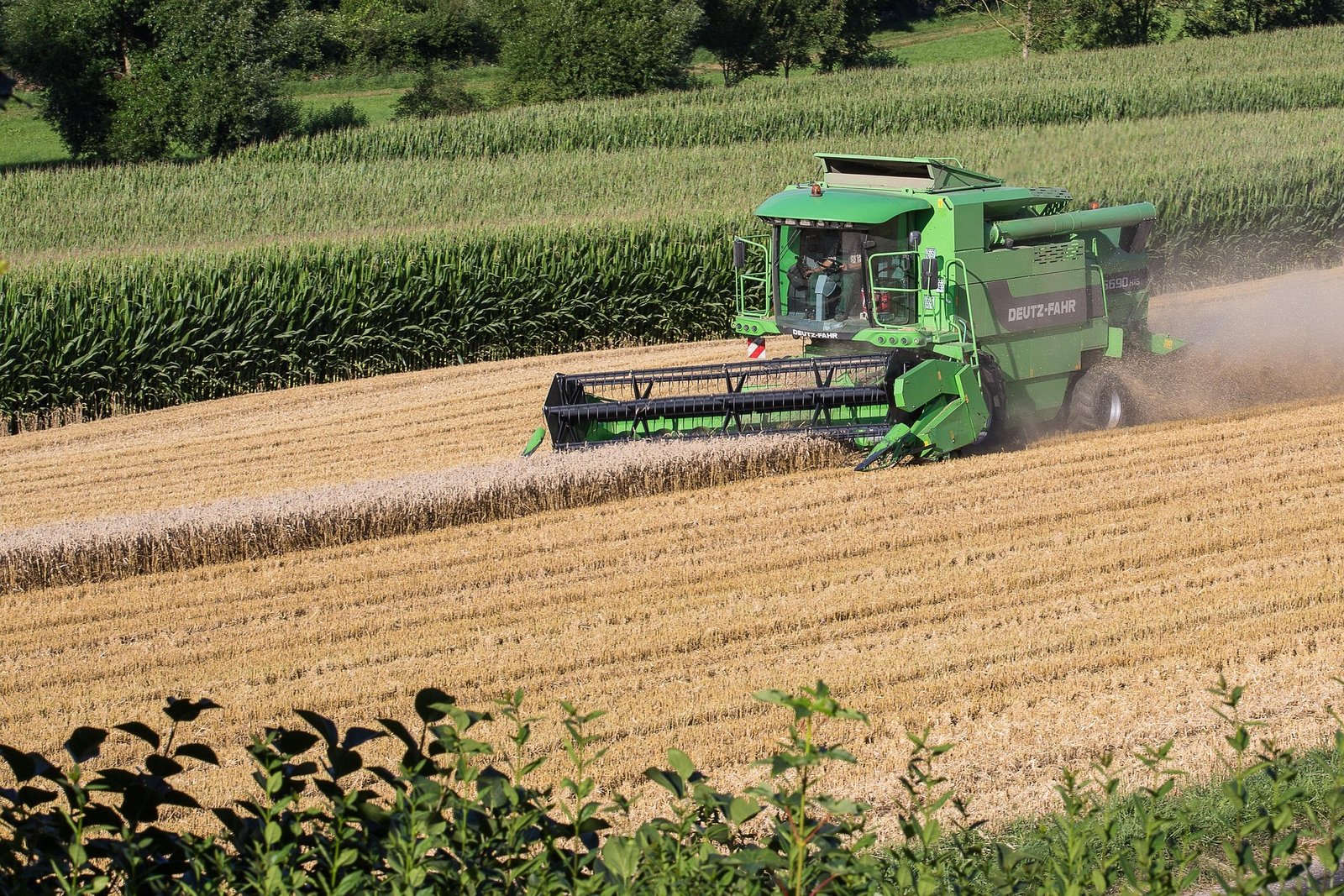
Over the coming weeks, Bavaria’s roads will see noticeably more large agricultural machinery. Felßner appealed to motorists to show understanding and patience toward combine harvesters, loaded trailers and choppers, which will be moving along the roads more slowly than the usual flow of traffic.
He put the request memorably: those forced to drive behind harvesting machinery should picture “what’s up ahead — their next croissant.”
The situation in Bavaria mirrors the pattern seen across Germany as a whole: this year’s grain harvest also began earlier than usual in many parts of the country, and farmers’ associations in other states report similar problems — uneven germination, wheat weakened by drought, and a widening gap between production costs and purchase prices. For Bavarian farms, this means the current season will test not only their resilience to weather, but also the sector’s ability to adapt to climate conditions that, by all forecasts, will keep recurring more often.
Source: br24