
The startup’s valuation has exceeded 2.4 billion euros, making it a so-called “unicorn”—a company with a capitalization above one billion.
Round Involving RWE and Google
The funds were raised as part of the latest financing round, in which the energy conglomerate RWE and Google corporation participated. This was announced by the company itself.
Fulfilling the conditions of the round opens access to an additional 400 million euros from the Bavarian authorities—an agreement that was reached back in February. Thus, according to its own data, Proxima Fusion becomes the most financially secure fusion company in Europe and ranks among the most valuable representatives of the industry worldwide.
Reactor in Gundremmingen by the Late 2030s
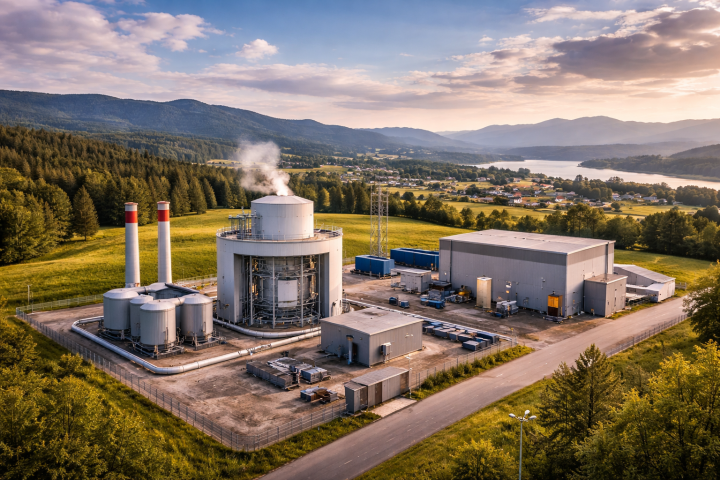
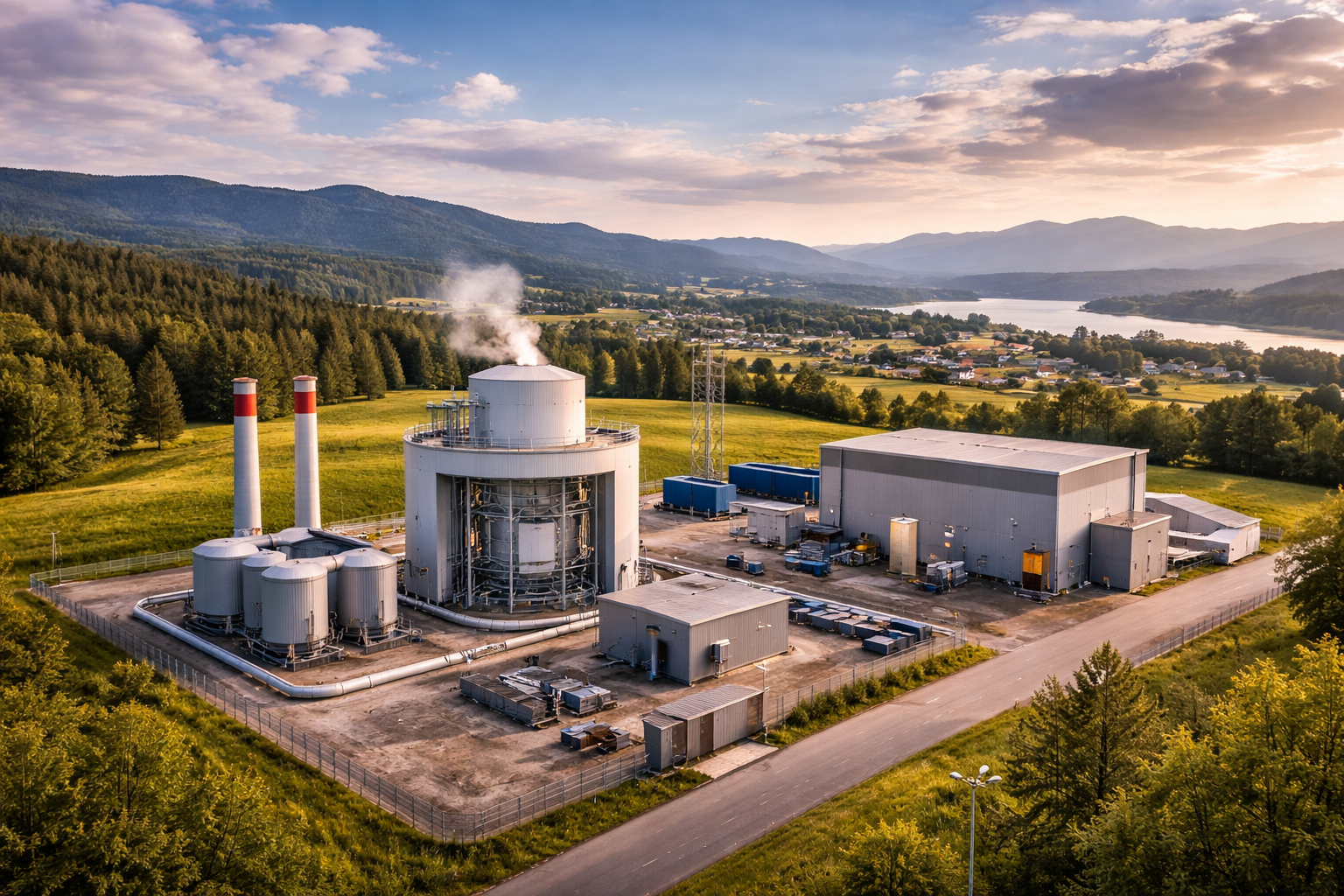
The startup plans to build a commercial fusion reactor in Swabian Gundremmingen by the late 2030s. The reactor will be designed to feed electricity into the grid.
Before that, by the early 2030s, a demonstration plant called “Alpha” is planned to be built in Garching near Munich. Its cost is estimated at two billion euros.
The company expects to receive part of this amount from the German federal government. According to a spokesperson for Proxima Fusion, the company expects the announcement of a corresponding competition for subsidies this autumn.
Individual components for “Alpha” are already in production. The first magnet is scheduled for completion by the end of next year. The raised funds will be used for reactor construction, expansion of production capacities, and the development of key technologies.
Betting on the Stellarator
For a long time, fusion research was primarily conducted by states and intergovernmental organizations. Now, a significant number of private companies have joined the development of reactors, using different technological approaches—from plasma confinement by a magnetic field to laser ignition.
Proxima Fusion is betting on magnetic plasma confinement, but in a special configuration—the reactor is being built on the stellarator principle. Unlike the more common tokamak, the shape of which resembles a doughnut, a stellarator uses a complex system of magnetic coils that twist the plasma. This design facilitates the continuous operation of the reactor but is substantially more complex to design and manufacture.
The company expects that modern materials and manufacturing technologies will make it possible to realize this design. According to startup representatives, a high level of competence has been accumulated in Germany in this field thanks to the Wendelstein program of the Max Planck Institute for Plasma Physics. Proxima Fusion itself originated as a spin-off project from this institute.
Co-founder and CEO Francesco Sciortino stated that fusion energy is capable of gaining an economic significance comparable to that of the automotive industry in its time. In his assessment, this sector could become a new key industry in Germany.
International Competition
In the US and China, billions of dollars have already been invested in fusion startups, so the success of Proxima Fusion remains uncertain. Scientists have been engaged in nuclear fusion research for several decades: for some, this technology looks like a dead end; for others, it remains highly promising.
In the stellarator segment, the Munich company currently holds a leading position by its own assessment.
Fusion Instead of Fission
Unlike traditional nuclear power plants, a fusion reactor generates energy not through the splitting of atoms, but through their merging. This is precisely the process that occurs on the Sun and other stars, providing the emission of energy.
Among the advantages of the technology, the industry cites:
- the lack of any need for a chain reaction, which poses a danger;
- shorter duration and lower intensity of radioactive waste emission;
- the absence of direct CO2 emissions, unlike fossil fuels.
Bavarian Prime Minister Markus Söder (CSU) called fusion energy one of the priority research areas in his state. Among other notable Bavarian companies in the sector are Proxima Fusion’s competitors, the startups Marvel and Gauss.
Materials from the dpa and Reuters.