
The coming summer may turn out to be especially difficult: besides the common mosquito, the warmth-loving Asian tiger mosquito is actively spreading in Germany, and the West Nile virus, the vector of which it is, has already been recorded dozens of times in a part of the country’s territory.
Weather plays into the hands of mosquitoes
The alternation of warm days with periodic rains forms, according to specialists, a practically ideal environment for the breeding of insects. Biologist Doreen Werner from the Leibniz Centre for Agricultural Landscape Research (ZALF) in Brandenburg’s Müncheberg explained that it is precisely the combination of moisture and warmth that gives mosquitoes optimal conditions for the development of offspring: without water the larvae cannot mature, and without warmth their growth noticeably slows down.
In the coming days, the common mosquito (Culex pipiens) — the most widespread species in the country — will find enough puddles and water in barrels for collecting rain moisture to lay eggs. In total, over 50 species of blood-sucking insects live in Germany, and each has its own requirements for the habitat.
The common mosquito begins to lay eggs already in the middle of May. With sufficient moisture and warmth, several generations of insects manage to replace each other in one season — thanks to the abundance of puddles, lakes, ponds, stagnant water after watering lawns, suitable for the rearing of offspring. According to Werner, the peak of the population’s abundance traditionally falls on the end of August, and it is precisely at this time that the residents of Germany most frequently complain about bites.
A prolonged heatwave without precipitation, on the contrary, becomes rather a problem for this species. If rain is absent for two to three weeks in a row, the development of the population noticeably slows down — simply because of the lack of puddles suitable for breeding.
The tiger mosquito — a threat for dacha owners
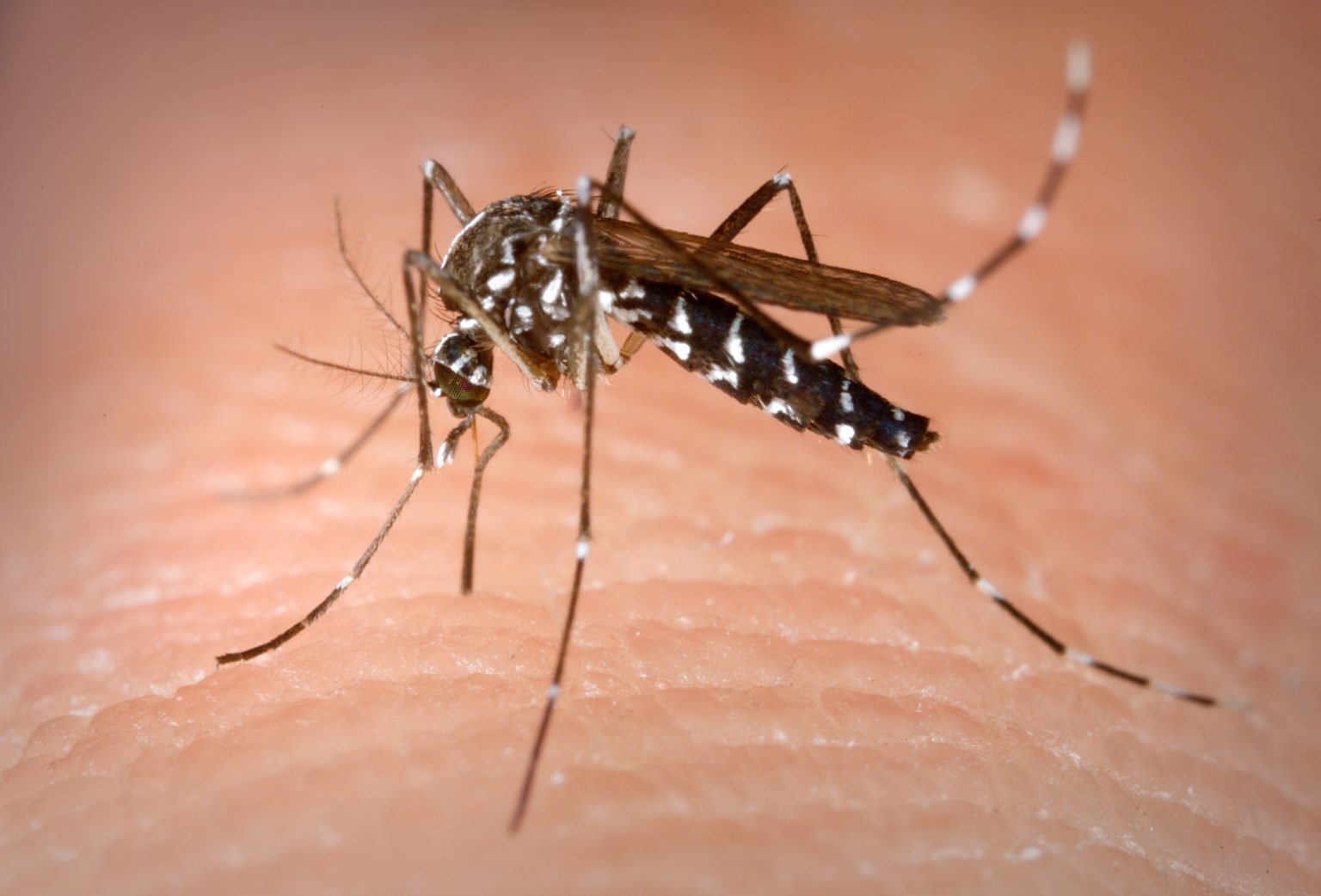
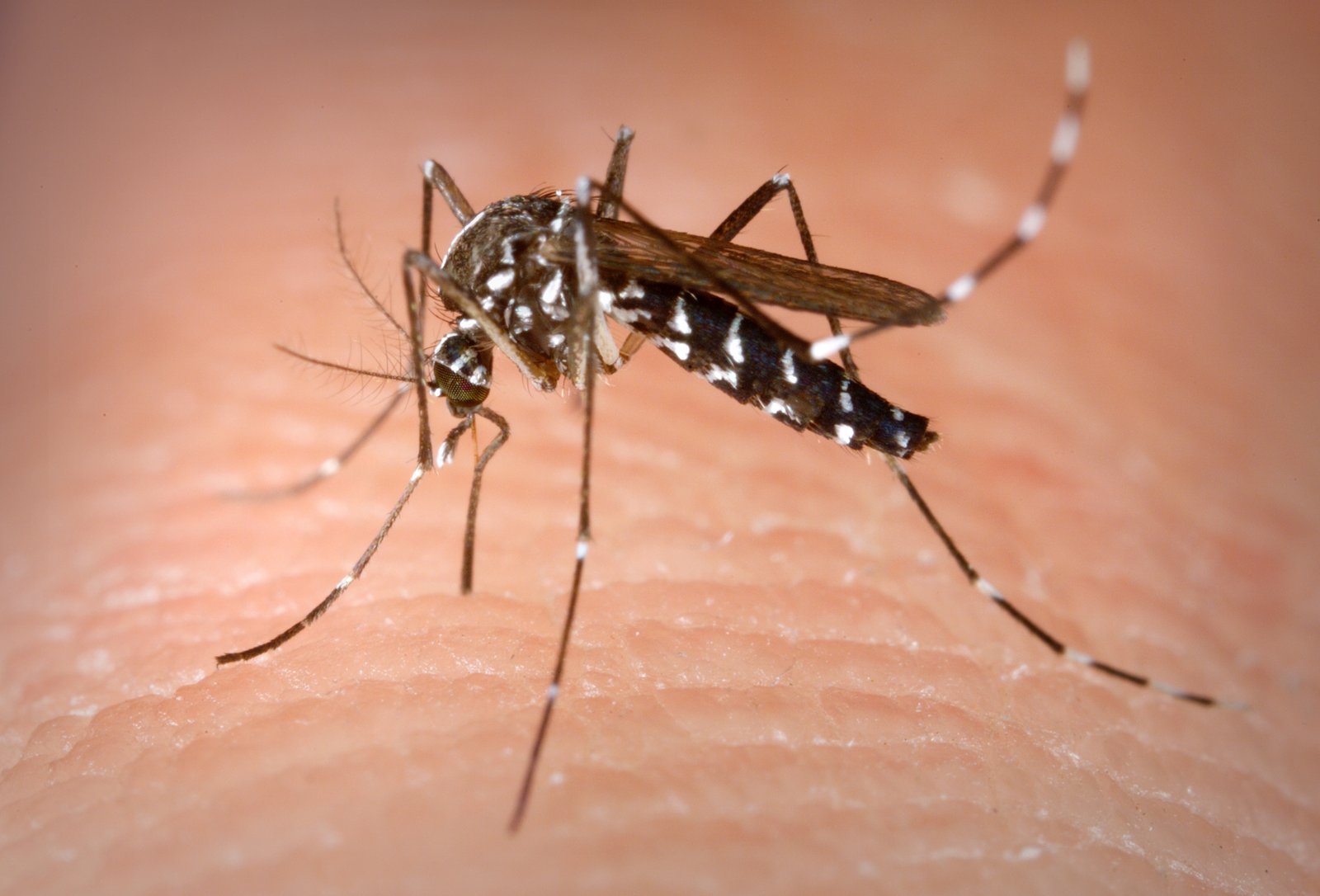
Far more concerns among entomologists are caused by the Asian tiger mosquito (Aedes albopictus). Initially this species lived in the tropics of Southeast Asia, however, in the recent decades it has been settling across Southern and Central Europe, getting here through countries that are major hubs of international freight transport — for example, together with batches of tires or plants in which water with laid eggs is preserved.
The tiger mosquito builds up its abundance over the course of the entire summer, but, in contrast to the common mosquito, is capable of breeding even in minimal accumulations of water. For the laying of eggs, the saucer of a flowerpot, a bird bath, or a vase in a cemetery is enough for it — two to three millimeters of liquid will suffice. It is precisely because of this that this species especially willingly establishes itself in dacha settlements and on private plots.
Werner characterized these insects as small but extremely annoying bloodsuckers. According to the observations of entomologists, the tiger mosquito is frequently active also during the light time of the day — in contrast to the species that prefer to attack in the twilight.
Risk of transmission of dangerous infections
Besides simple discomfort, the tiger mosquito carries with it also more serious risks. In the tropics, this species is considered one of the key vectors of the pathogens of dengue fever and chikungunya.
So far, not a single case of the transmission of these infections by local populations of the insect has been recorded in Germany. However, specialists believe that this is only a matter of time: the mosquito is capable of transmitting the pathogen to a human only after it itself becomes infected by biting an already sick carrier of the virus.
Far more relevant for Germany remains another threat — the West Nile virus. It is carried by tiger mosquitoes and is already capable of being transmitted to humans in individual regions of the country. According to a study by the Berlin Charité clinic, the virus has already established itself in the capital on a permanent basis, that is, it circulates in the local population of insects and birds from year to year.
Incidence statistics
According to the data of the Robert Koch Institute, the following number of cases of infection with the West Nile virus was recorded in Germany:
- 14 cases in 2025;
- 49 cases in 2024;
- 16 cases in 2023.
These figures include, among others, people who became infected during trips abroad. At the same time, scientists suppose that the real number of the infected significantly exceeds the official statistics, since in the majority of those infected the disease proceeds asymptomatically. When the disease nevertheless manifests itself, patients usually observe symptoms similar to the flu: headache, chills, vomiting. In rare cases, the disease ends in death — more frequently among elderly people and persons with weakened immunity.
Werner specified that the multiplication of the virus inside the organism of the mosquito directly depends on the air temperature: the warmer it is, the more actively this process goes. According to her words, under the current weather conditions, a growth in the number of infections cannot be excluded this year.
The West Nile virus circulates predominantly between wild birds and mosquitoes, which alternately infect each other. However, through the bite of an infected insect, both humans and horses can get sick.
How to reduce the number of mosquitoes
According to Werner, residents can take several simple measures for the reduction of the insect population on their own plot: covering barrels with rain water with a fine-mesh net so that mosquitoes cannot lay eggs in them; changing the water in bird baths every three days; turning empty vases in cemeteries upside down so that rain water does not accumulate in them.
Werner since 2012 has been leading the “Mosquito Atlas” (Mückenatlas) project, within the framework of which observations of insects across the whole of Germany are analyzed. Moreover, anyone who wishes can catch a mosquito, freeze it, and send it by mail to Werner’s laboratory for research.
Source: dpa