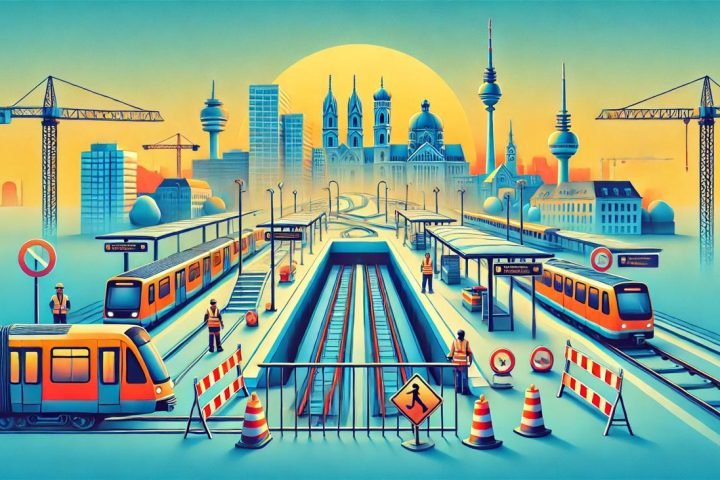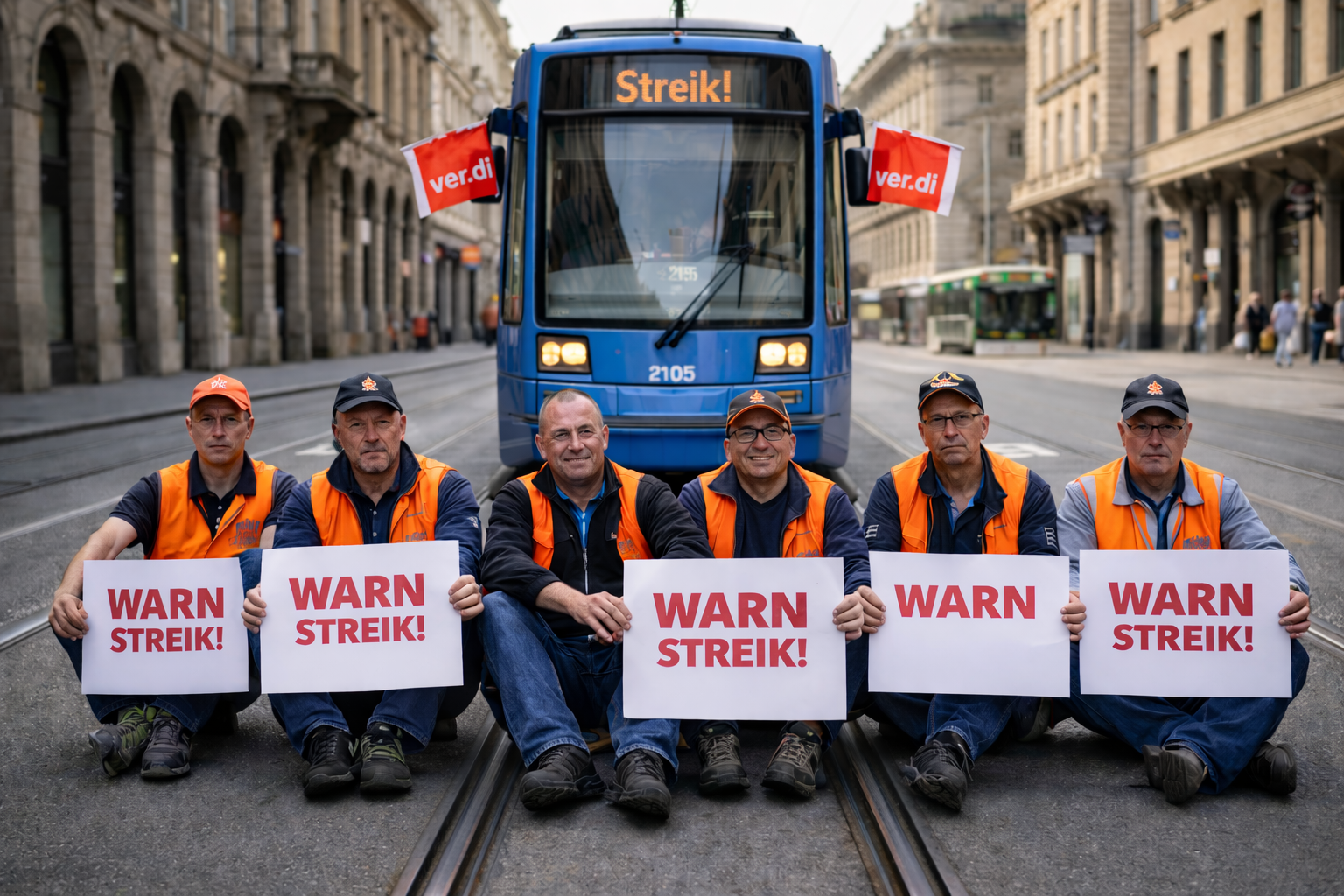

While significant schedule disruptions are expected in other Bavarian cities, Munich’s transport network will continue to function as scheduled. The specific nature of the upcoming action in Munich is that it will exclusively affect internal departments—repair workshops and the administrative sector—allowing the usual timetable for trains and buses to be maintained.
Munich — As of Tuesday, 7 April, another strike began within the Bavarian public transport system, set to last until 4:00 AM on Thursday, 9 April. However, Munich residents will hardly notice the consequences of the Verdi union’s call for protest actions against the Munich Transport Company (MVG) this time. Unlike previous stages of the collective dispute, the action will not directly involve transport operations. This means that the U-Bahn, trams, and city buses will run according to the schedule. “For passengers in Munich, the consequences of the strike will be non-existent or minimal,” Verdi representatives officially confirmed in their statement.
The reason Munich will avoid a transport collapse this time is dictated by the union’s rational approach to the current city situation. The decision not to involve drivers in the strike is directly related to the significant restrictions that arose last week before Easter on the main S-Bahn trunk line due to planned maintenance work. Understanding that a simultaneous stoppage of MVG transport would lead to an excessive load on the road network and create critical difficulties for citizens, Verdi declined to block the routes. Thus, drivers remain at their workplaces to ensure stable mobility for residents amidst the railway repairs.
Nevertheless, the strike remains a real tool for engaging with employers, even if its impact is not immediately obvious to passengers. The union’s main focus in Munich is concentrated on technical infrastructure and internal processes. Verdi notes that the protest will cover individual administrative units but will primarily affect the work of repair workshops. MVG representatives specify: this refers mainly to tram repair depots and ticket machine maintenance services—both for mobile devices in carriages and terminals located at stations. The suspension of service maintenance and cash collection is a sensitive factor for the transport company’s operations.
This action is viewed as an important step before the dialogue continues. Otherwise, a clear rule applies: if no constructive signal is received from the employers’ side by 15 April—the date set for the fifth round of negotiations on the new collective agreement for Bavarian public transport—the situation could change. Verdi emphasises that in the absence of progress in negotiations, “nothing can be ruled out.” This is a direct indication that subsequent protest actions could once again become large-scale and affect transport services across all of Bavaria, including the regional capital.
The union’s demands are aimed at the long-term improvement of working conditions and the retention of qualified personnel in the industry. Verdi insists on a €550 wage increase for employees, proposed to be implemented in two stages. Alongside the financial issue, a key agenda item remains the reduction of the weekly working hours. According to union representatives, such measures are necessary to protect staff health and ensure the future attractiveness of public transport professions. Consequently, the results of the 15 April meeting will determine whether Munich’s current stable operating mode will continue or if the city faces a new wave of protests with a full stoppage of movement.

Latest Posts