
The city administration and representatives of the surfing community have agreed on a pilot project where surfers will take on the liability. While many details remain to be finalized, spring is currently being discussed as a potential start date.
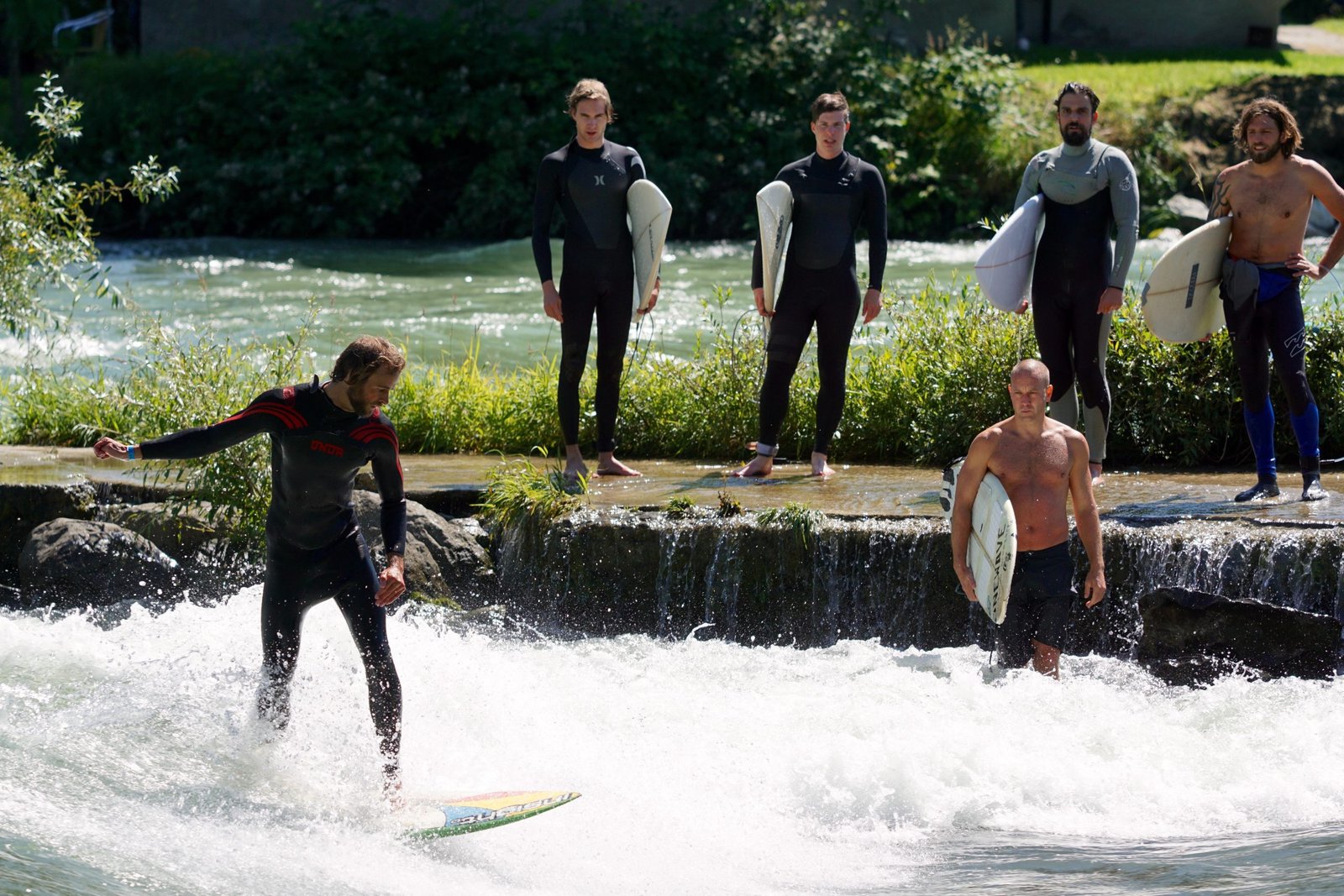
Following lengthy disputes over the revival of Munich’s iconic river wave, a significant step forward has been taken. Lord Mayor Dieter Reiter (SPD) and representatives of the surfing community reached an agreement to conduct an experimental project for the restoration of the Eisbach wave, as announced by Reiter’s office.
Surfers to Assume Liability for the Pilot — Start Date TBD
According to the agreement, the “Interessengemeinschaft Surfen in München” (IGSM) and the Munich Surf Club will assume both the commitment and the legal responsibility for the trial phase. Issues regarding liability had previously been the primary sticking point in negotiations. The city will handle the technical and structural inspections of the installations required for the experiment, while city emergency dispatch services will ensure that help is available if needed.
The exact start date for the experiment remains unclear, as technical details must be clarified first. At the beginning of the week, the Lord Mayor mentioned that a launch is planned for this spring.
Reiter and Surfers: Next Meeting Scheduled for February
Reiter and surfing representatives spent 90 minutes at City Hall to resolve the deadlock and create a concrete perspective for the wave’s rapid restoration. The goal of the project is to bring the Eisbach wave back and preserve it for permanent surfing. In this context, they discussed—though not finalized—whether the city could take over the operation of the wave following a successful pilot phase. Further details will be refined later, with a follow-up meeting scheduled for February.
Participants in Friday’s discussion also included representatives from the Water Management Office, relevant city departments, and fluid dynamics specialist Robert Meier-Staude.
From City Landmark to Conflict Zone
The famous wave in the Eisbach channel disappeared after the city building department cleared debris and sediment from the streambed in October. Since then, the wave has failed to form in its usual manner. Local surfers attempted to save the site; a self-installed ramp during the Christmas holidays briefly allowed surfing to resume, but the fire department dismantled the structure. This incident was one of the reasons negotiations with city authorities had previously stalled.
Tragedy on the Eisbach: Brief Closure Last Year
In April last year, a severe accident occurred at the wave, resulting in the death of a surfer in the hospital. The leash of her board, fastened to her ankle, became snagged underwater. The woman was unable to free herself and was pulled under by the current. Following this incident, the wave was temporarily closed to surfing until the city allowed operations to resume under specific conditions. The wave later vanished due to routine channel cleaning.
On the other hand, for some reason, the authorities do not close motorways where people die every day, they do not close the underground or tram lines where accidents occur, and for some reason they do not close the River Isar and lakes where dozens of people drown every year. Why? Double standards?
The Eisbach wave is intended only for experienced athletes. It is considered a major tourist attraction, drawing spectators year-round, and is world-renowned among surfers.
Источник: dpa

Latest Posts