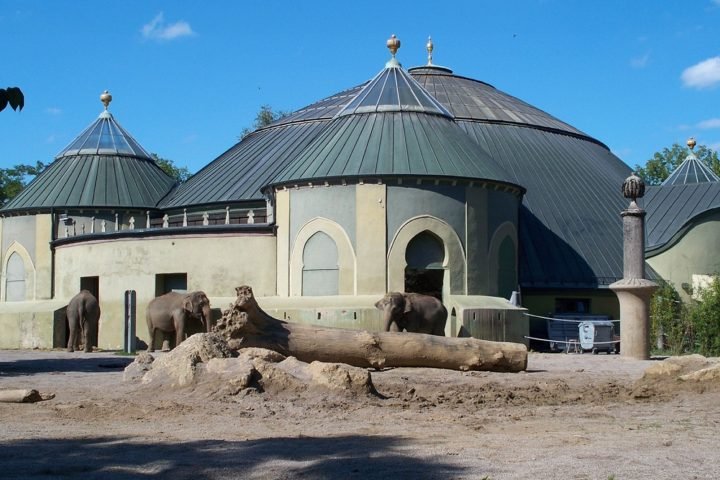

For many years, Munich’s Hellabrunn Zoo has been asking people to refrain from loud firecrackers on New Year’s Eve. While fireworks are a traditional part of the festivities for many people, the explosions and bright light effects cause significant stress for animals, explains zoo director Rasem Baban. The City of Munich has responded for the first time with a ban.
Reiter: “Fireworks and animals are simply incompatible”
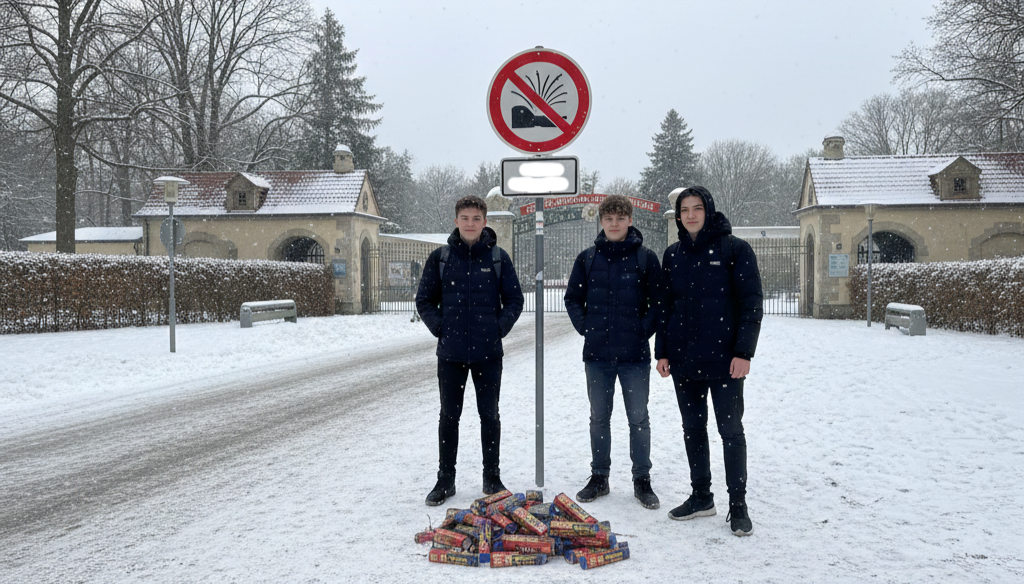
Mayor Dieter Reiter (SPD) stated: “Fireworks and animals are simply incompatible.” For the upcoming New Year’s celebration, a clearly defined ban on firecrackers and fireworks will now be in effect within a 150-meter radius around the zoo.
Reiter called this a first step in the right direction for animal protection. He would gladly extend the ban to other sensitive locations, such as Munich’s animal shelter. However, this would require a change in federal law.
Municipalities Can Only Implement Partial Bans
The legal basis for fireworks in Germany is the Federal Explosives Act. It stipulates when and where private individuals can set off New Year’s fireworks of category F2—that is, classic New Year’s fireworks. Consequently, municipalities cannot independently impose comprehensive fireworks bans but can only do so for specific locations—for example, to ensure public safety or to protect buildings and public institutions. In Munich, a ban on firecrackers within the city’s “Mittlerer Ring” (Middle Ring Road) has already been in effect in previous years.
Municipalities Demand Greater Decision-Making Authority
Reiter criticized the federal regulation: “From my point of view, it would be advisable if the federal government finally gave municipalities the right to decide for themselves where fireworks are allowed. The residents of Munich would be able to determine this well themselves.” He suggested a referendum as a possible path to creating political legitimacy for local bans. In Nuremberg as well, city representatives have expressed a desire for more municipal autonomy. The official for public order, Olaf Kusch, emphasized that the City of Nuremberg would also be open to a fireworks ban.
This debate is part of a broader discussion about how cities and municipalities can in the future take responsibility for safety, health, and the environment without waiting for federal government consent.
DUH: Greater Municipal Authority Doesn’t Solve the Problem
DUH (Environmental Action Germany) air pollution expert Hanna Rein explained: “Greater municipal authority doesn’t solve the problem. The federal government is leaving municipalities to their own fate here. Restricted zones, like around Hellabrunn Zoo, would have to be established in roughly 11,000 municipalities, which is almost impossible to monitor.”
Instead of numerous separate rules, the DUH demands a nationwide ban on the sale and use of private pyrotechnics to prevent risks to safety, health, and the environment everywhere.
Relief for the Animals
For Hellabrunn Zoo, the fireworks ban is not a bureaucratic measure but concrete relief for the animals. Director Rasem Baban explained: “With the now-established fireworks-free zone, our sometimes extremely noise-sensitive animal inhabitants can be spared a significant amount of unnecessary stress and nightly disturbance.”

Latest Posts