
According to the law enforcement agencies, most of the violators demonstrated a serious lack of a sense of responsibility, respect for other road users, and knowledge of traffic regulations. This trend causes growing concern for both municipal and federal authorities, as well as local residents who regularly encounter threats in pedestrian zones.
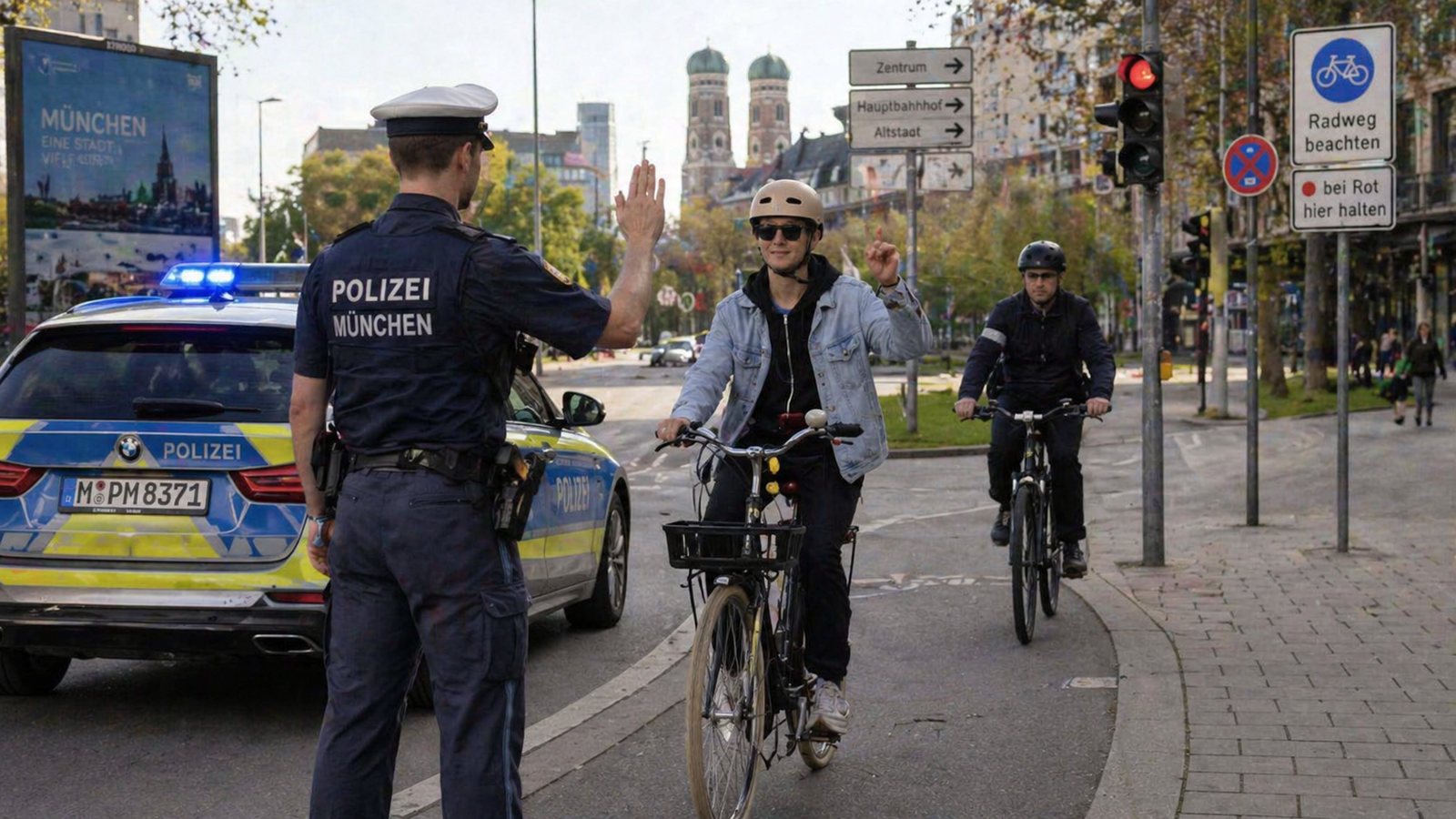
In the course of large-scale checks of two-wheeled transport in the municipalities of Gauting, Gilching, and Krailling, the local police recorded rather alarming facts. Most road users on e-bikes, conventional bicycles, and e-scooters do not have an elementary understanding of traffic rules, awareness of guilt, and minimal respect for others, especially for the more vulnerable — pedestrians, is observed among them. This was officially reported by the deputy head of the inspection, Chief Police Commissioner Erik Schirmbeck, when summing up the final control measures that took place last week.
Direction of Inspections and Technical Control Issues
During the past inspections, increased attention was paid not only to classic bicycles and e-bikes, but also to modern e-scooters, the overall popularity of which, as the police separately note, continues to demonstrate stable growth, especially among teenagers.
“The main focus was again on the rules of conduct on the road, such as the legally prohibited riding of a bicycle or e-scooter on the sidewalk, as well as the general technical condition of the vehicles, including the serviceability of braking systems.
Cyclists were also actively reminded of the importance of using individual protective equipment, in particular special helmets, and minimizing the use of the horn without a valid reason. It has been proven by practice that wearing a helmet significantly reduces the risk of sustaining severe head injuries in the event of a fall or collision,” noted Chief Commissioner Erik Schirmbeck.
Reasons for Tightening Control and the Geography of Violations
The main goal of these preventive measures was and remains the systematic increase of the safety level on city streets. Well-founded complaints from frightened pedestrians are regularly received regarding the irresponsible behavior of two-wheeled transport drivers, which has already become a regularity in Germany, who travel at high speed and against the established direction of travel along bicycle and especially pedestrian paths (for example, on Bahnhofstraße in Gauting or on Römerstraße in Gilching), horn without reason, plow right through, and insult pedestrians.
“About half of the checked individuals demonstrated a clear deficit of personal responsibility, and in many individual cases — a complete ignorance of basic traffic rules as well. Some behaved on the road simply recklessly, driving through a red traffic light. It is precisely toward countering such unlawful and disrespectful behavior that the Gauting police seek to contribute through conducting regular controls,” the representative of the law enforcement agencies added.
Penalty Statistics and Specifics of Violators’ Behavior
In total, 52 people were checked in the three specified municipalities. Based on the results of the checks, inspectors needed to issue 34 official warnings with the imposition of a monetary fine. With minor children, exclusively preventive and explanatory talks were conducted, aimed at a detailed explanation of the existing risks for themselves and for surrounding citizens.
Remarkable was the fact that parents often themselves urged their children, who are already legally prohibited from moving along sidewalks after reaching the age of ten, not to ride onto the roadway. Many adults also did not set a good example for the younger generation, trying to justify their own violations with standard excuses like: “I rode a very short section,” — or — “There were almost no pedestrians on the sidewalk at that moment.” Moving on a bicycle through a pedestrian zone, as occurred on the Am Markt square in Gilching, led to fines for 14 cyclists, which is usually punished by a legal penalty in the amount of 25 euros.
It should be noted that with the help of such targeted checks, the police expect to timely detect and educate violators, preventing possible emergency situations. Does this help? It is not noticeable.
Accusations of excessive so-called “extortions,” which are sometimes voiced against police officers by dissatisfied cyclists, are completely unfounded in this case and have no real basis. If cyclists showed greater responsibility, rather than justifying themselves by their exceptionality in preserving the environment, perhaps targeted checks would help correct the behavior of individual cyclists, but when the problem affects 80 and more percent of cyclists, what is to be done? Proof of the inefficiency of targeted checks instead of constant control and responsibility, which applies to everyone on the road except cyclists, is the final statement of Chief Commissioner Schirmbeck: “It is first and foremost about strengthening the understanding of the need for mutual respect, especially toward more vulnerable road users, and thereby making a significant contribution to ensuring general safety on the roads of the region.” In the end, the goal was not to change the situation on the roads, but a simple talk with violators, who violate traffic regulations again just 300 meters later.