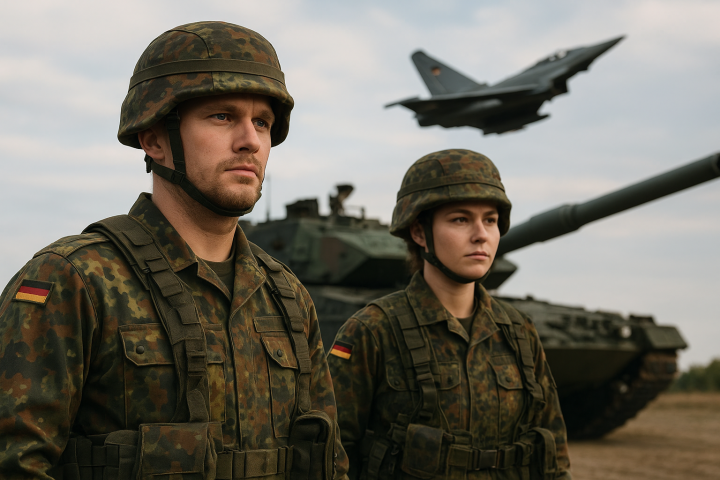

“From a landscape perspective, everything here looks very successful,” shared Christian Bock, reflecting on his impressions of Erding. The 56-year-old flotilla admiral, originally from the Kiel area, officially assumed leadership of the innovation center on Monday—the same day it was opened by Pistorius.
The town is set to host a key element of Germany’s defense—a kind of intellectual hub where an innovative ecosystem will now begin to flourish. The core concept is that startups and their expertise are viewed as engines of progress. The Bundeswehr intends to leverage their ideas, technologies, and research findings.
Boundless Cooperation
The foundation for the project was laid in Erding back in 2022 with the creation of the Soldier System innovation laboratory. Building on that experience, the new structure will serve as a bridge between the military, startups, civil science, and industry. “Military and civilian, national and international”—Pistorius emphasized to numerous guests that there should be no boundaries to this cooperation.
Prior to the official ceremony, startup representatives and center staff demonstrated their projects to the Defense Minister and the Prime Minister. Some of these technologies have already been tested under combat conditions in Ukraine. The leaders were shown reconnaissance drones that create 3D terrain maps for soldiers before building assaults, as well as drones capable of attacking armored vehicles.
Pistorius compared such systems to a “swarm of hornets” and pointed to the conflict in Ukraine as an example of the technological race in drone development and counter-defense. He noted that today, a vehicle crew’s survival depends less on armor thickness and more on the speed of implementing new solutions. In his view, this conflict reflects the realities of the 21st century: “Artificial intelligence, unmanned technology, data transmission—everything intertwines, becoming faster and more innovative.” He added that technological leaps can completely change the situation on the chessboard, turning a harmless pawn into a dangerous piece.
The center in Erding intends not only to implement new technologies in close contact with troops, universities, and industry but also to conduct its own research alongside experimental testing. Existing processes will be subjected to critical analysis and changed if necessary. Special attention will be paid to high-tech areas such as Artificial Intelligence and autonomous systems to provide soldiers with superior technical equipment and tactical advantages.
Pistorius emphasized that innovation is not just a factor for the Bundeswehr, but a prerequisite for success. He expressed satisfaction that the Erding project took only two years to realize instead of the anticipated five. The minister also thanked district and city authorities for their cooperation, noting that the region would benefit from attractive new jobs.
Up to 350 Positions at the Airbase
The staff of the innovation center is expected to grow to between 250 and 350 employees over time. Erding Mayor Max Gotz anticipates that the region will also see many vacancies in startups that will begin to locate nearby. Gotz expressed confidence that the Bundeswehr’s new strategy will not interfere with regional infrastructure development plans. District Administrator Martin Bayerstorfer also confirmed that projects for a highway interchange and the northern bypass are not at risk.
Admiral Bock confirmed that there are no plans to construct new buildings for the center. “We are using existing premises because we do not have time to wait for construction work to finish,” he explained. The director will be in Erding during the workweek and expressed a desire to get to know the city better, noting that during his first three days, he had only seen the airport and the train station.
Source: Merkur

Latest Posts