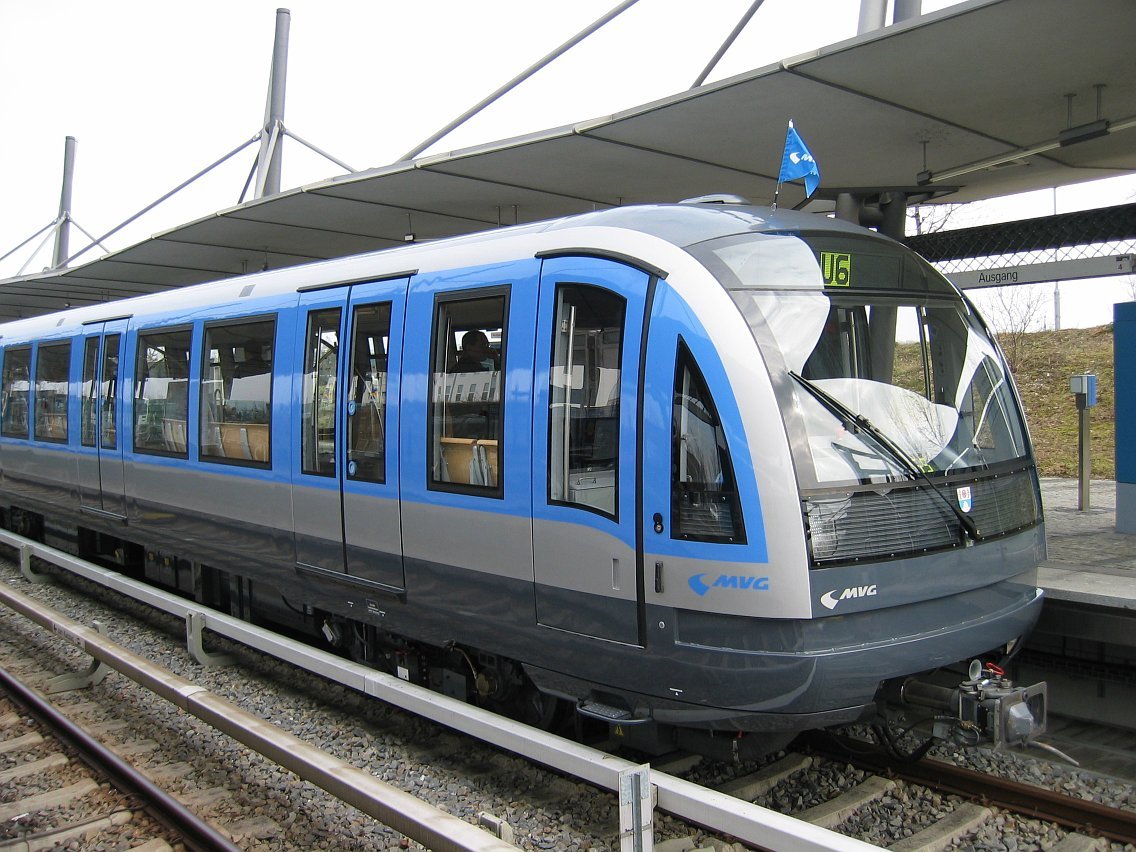
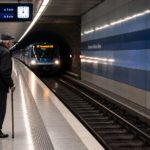
The subway has long been an integral part of daily life in the Bavarian capital. According to the Munich Municipal Utilities (SWM), the first line was commissioned in 1971 following six years of construction and four years of testing. Six months later—just in time for the start of the Munich Summer Olympics—the second line (U3) was launched.
The History of Munich’s First Subway Line
The inaugural subway train traveled between Kieferngarten and Goetheplatz, which remains part of the modern U6 route. Even then, the line was designated as “6” rather than “1” because it replaced a tram route of the same number. However, the oldest section of the network was built much earlier. According to SWM, construction on a tunnel intended for an S-Bahn (suburban train) began between Goetheplatz and Sendlinger Tor as early as 1938. This makes Goetheplatz the oldest station in Munich.
In 1941, construction was halted due to the war. Following the end of the conflict, plans for an underground railway resurfaced, leading to the final decision to build a subway system in 1964. The tunnel laid in 1941 was integrated into the U3 and U6 lines. Because this section was originally designed for the S-Bahn—which requires larger clearances—the platform at Goetheplatz is approximately 15 meters longer than those at any other station in the network.
Future Development Plans
Munich’s subway network is set for gradual expansion in the coming years:
- U6 Extension: Planned to run from the Großhadern Clinic to Martinsried.
- U5 Extension: Set to expand from Laimer Platz to Pasing and Freiham.
- New U9 Line: Designed to relieve congestion in the city center and provide new direct connections, such as from the Central Station to the Allianz Arena and the research hub in Garching.
Source: Stadtwerke München