
This artificial water object clearly illustrates how a former industrial zone can transform into a full-fledged natural oasis and become an important part of the urban environment of a large European megacity, combining in itself the history of city development and a protected green zone.
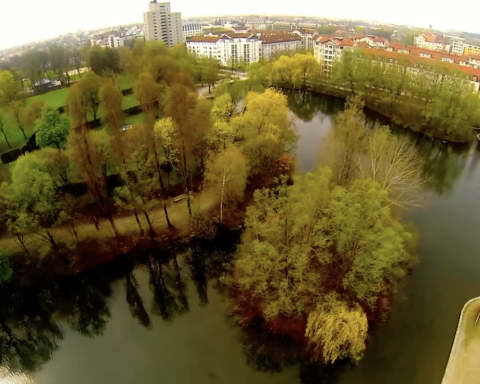
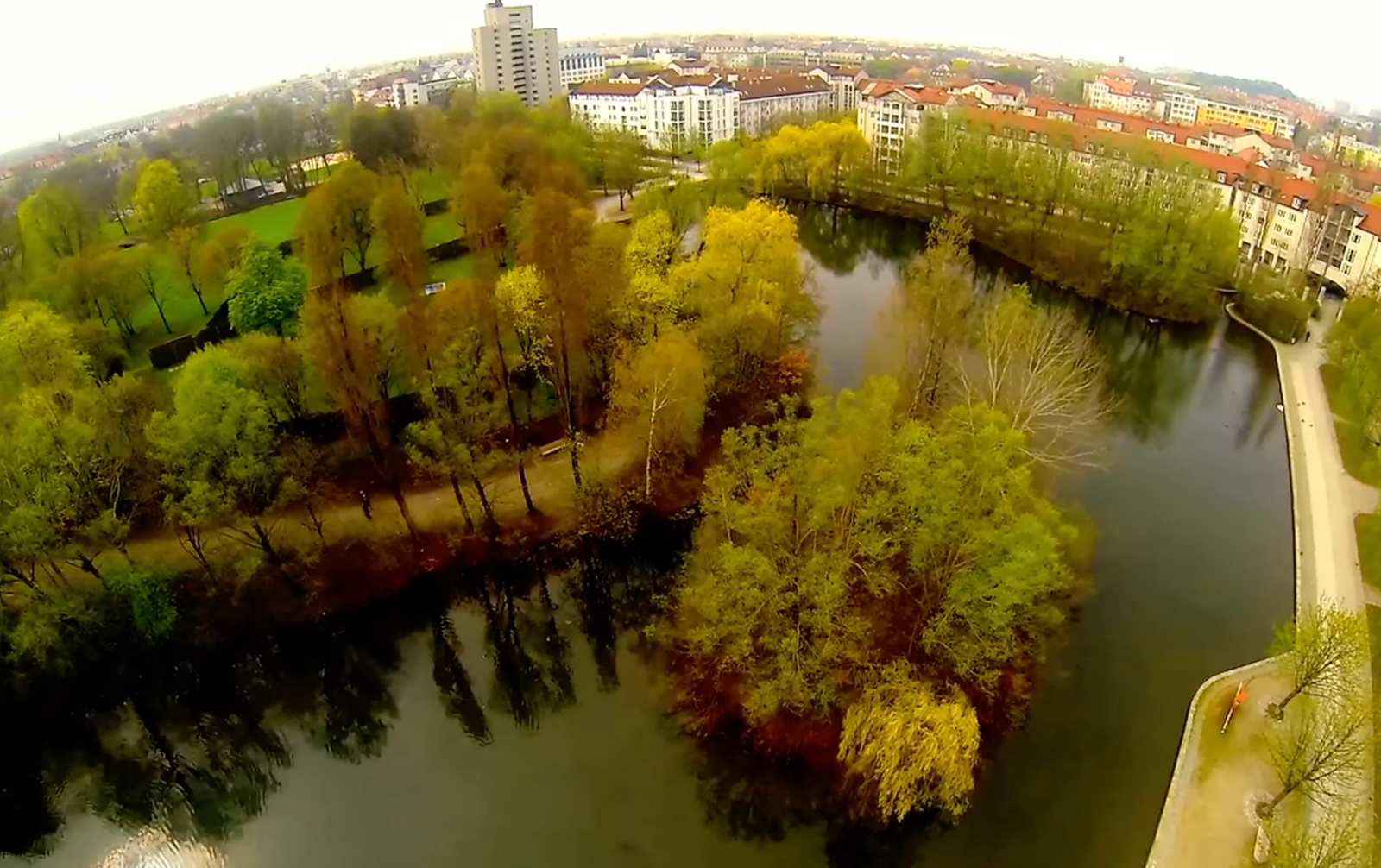
The L-shaped water body, located in the immediate proximity to the busy transport arteries Berliner Strasse and Ungererstrasse, occupies an area of about 2.7 hectares. Today, it is an integral element of the everyday life of the Schwabing district: well-appointed paths around the water daily attract pedestrians, cyclists, dog owners, and families with children.
The secluded natural atmosphere looks contrasting against the background of the surrounding multi-story complexes. This hydrological object appeared in the 1980s as a result of a complex town-planning reorganization of the territory of the former freight railway station Schwabing, which functioned on this spot since the beginning of the XX century.
The water body is not isolated: it is fed by the waters of the Nymphenburg-Biedersteiner canal, known in this district under the historical name Schwarze Lacke. The flowing system ensures constant water circulation, linking Schwabinger See with the branched network of canals of Munich, which prevents silting and blooming of the water, and also supports the local ecosystem.
The architectural environment of the lake emphasizes the status of Schwabing as a dynamically developing center: the open public swimming pool Ungererbad, the futuristic high-rise Highlight Towers, and the ultra-modern residential quarter Schwabinger Tor adjoin the borders of the park zone.
Despite the dominance of concrete and glass, the lake has become a stable habitat for a number of waterfowl. Local populations of swans, geese, and ducks use two isolated inner islands, closed to visits by people, as a natural shelter and nesting zone. Moreover, according to verified reports of naturalists on the Komoot platform, stable traces of beaver vital activity were recorded in the surroundings of the water body, which testifies to the high quality of the local ecosystem.
The walking route near the lake is adapted for all categories of citizens: the general length of the paths constitutes about 2 km, and a wide paved promenade is laid along the northern side. The infrastructure is completely barrier-free and accessible for low-mobility groups of the population.
In the eastern extremity, a children’s play zone functions, and at the southern border of the park, near the fence of the swimming pool, is located a cultural object — the decorative Berolina fountain, transferred here as an element of preserving the historical heritage of the city.
The administrative status of the object is strictly regulated: swimming in the Schwabinger See lake is prohibited by municipal legislation, since the water body fulfills exclusively recreational and ecological functions.
The density of residential development conditions a tough deficit of automobile parking places in the district, in connection with which city services recommend to use the developed network of public transport, including several adjacent tram and bus routes.

Latest Posts