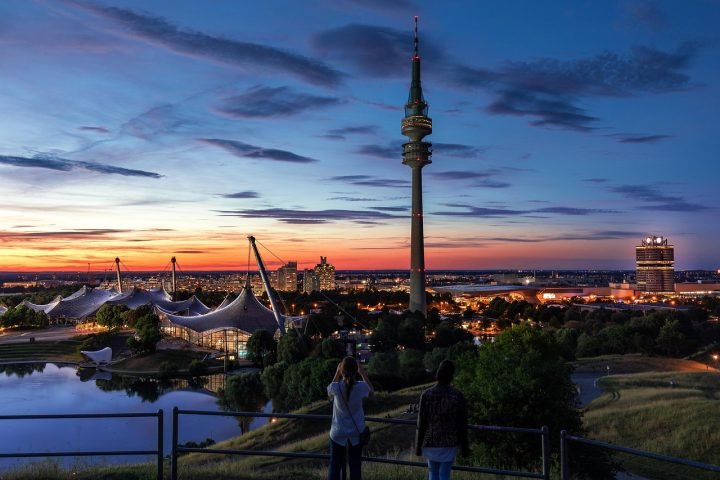

In the northern part of Munich, Fröttmaning Hill rises 75 meters high — a place with a surprising fate and incredible energy. Those travelers who decide on this climb will be rewarded with a panorama that many native residents of the city do not even expect to see here.
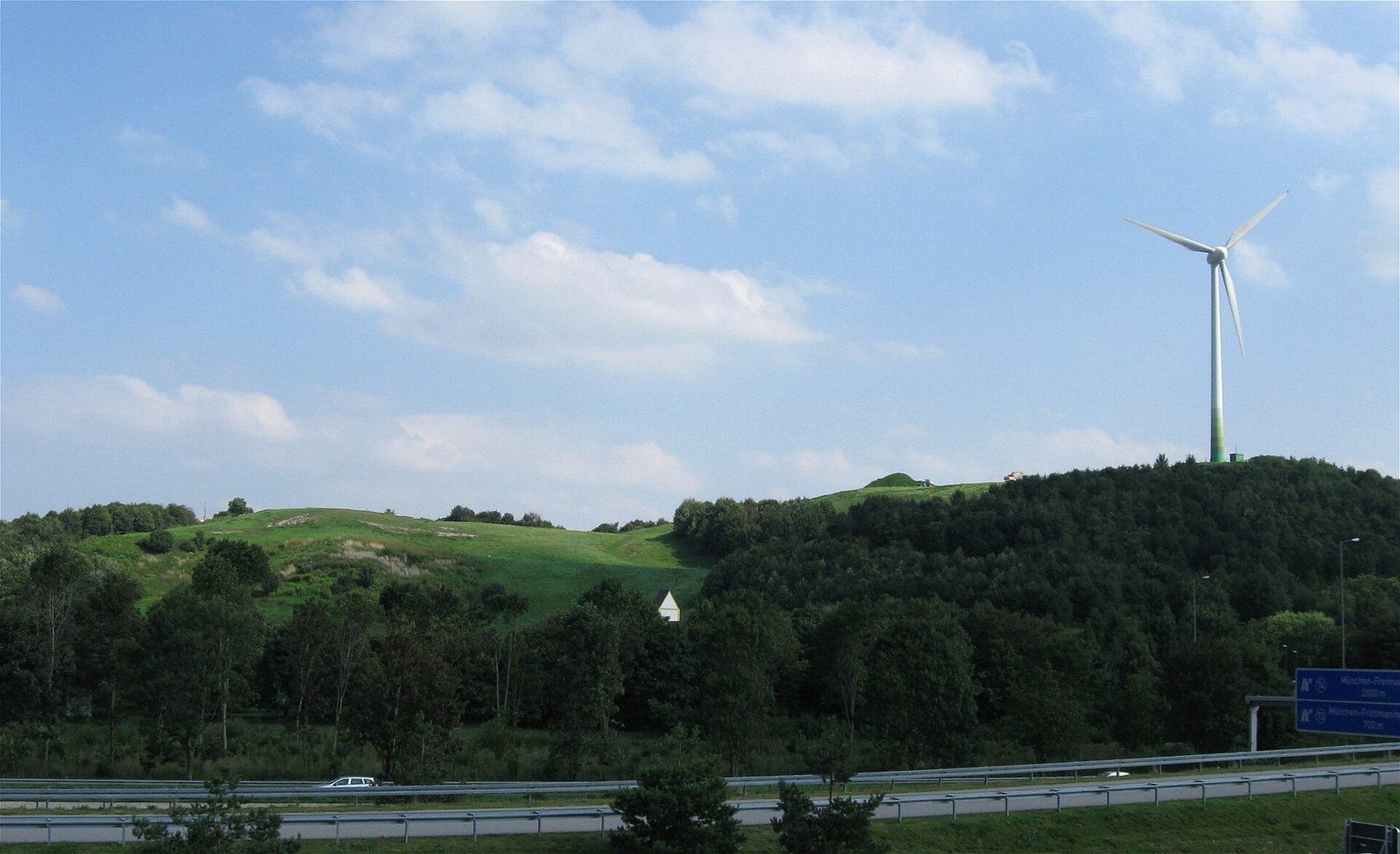
From the top of the hill, a majestic view opens up over the entire Munich skyline, the endless expanses of the Fröttmaning Heath, and on clear days, the snow-capped chains of the Alps. It is hard to believe, but beneath the picturesque green dome covered with grass lie millions of cubic meters of household waste accumulated over decades.
Wind turbines, a stadium, and an alpine panorama
Since 1999, the blades of a huge wind turbine have been turning steadily at the very top of the hill — this ecological symbol was erected on the site of the former landfill as a reminder of the triumph of natural technologies over the industrial past. Since 2021, just a few hundred meters away on the territory of the neighboring former North-West landfill, a second, even taller and more modern wind turbine was installed.
However, it should be noted that this neighboring hill remains closed to visitors and serves exclusively technical purposes. On the other side of the busy highway interchange, the Allianz Arena shimmers with bright lights — the stadium is also an integral part of this recognizable landscape. Interestingly, during the winter period when the city is covered in snow, the steep slope of Fröttmaning Hill turns into a ski slope popular among locals.
The sunken village and Munich’s oldest church
At the very foot of the hill, a unique and touching fragment of the city’s history is carefully preserved. Here lies the Church of the Holy Cross — officially recognized as the oldest surviving church building in all of modern Munich. This white-stone temple remained the only silent witness to the existence of the once-prosperous settlement of Fröttmaning. Until 1960, the village was forced to retreat step by step under the pressure of the constantly expanding city landfill until it disappeared completely. Only this small ancient building managed to withstand the excavators.
If you are attentive, quite near the church you can find its mysterious double. An unusual art object called The Sunken Village is a full-size concrete copy of the temple that seems to tragically sink into the ground right at the slope of the hill. This artistic work serves as a memorial and a reminder of all the houses and fates that were forever buried in this place under layers of garbage and earth.
Fröttmaning Heath Nature Reserve
After descending the hill, it is worth taking a walk through the adjacent territory of the Southern Fröttmaning Heath reserve. This vast area of 347 hectares has been officially open to visitors since 2016 and is intersected by a network of convenient hiking trails. Light pine forests, rare species of meadow grasses, and small mirror-like ponds form a unique biotope over 10,000 years old. Many rare animals and plants listed in conservation registers have found their home here. At the main entrance, located near the Fröttmaning metro station, there is a modern ecological station, HeideHaus, where specialists provide guests with detailed information about the ecosystem.
Route to Fröttmaning Hill
This unusual attraction is located about ten kilometers north of Marienplatz in the Freimann district, in the immediate vicinity of the A9 autobahn. From the city center, the journey by public transport takes very little time: use the U6 metro line in the direction of Garching-Hochbrück and get off at the Fröttmaning stop. For motorists, on days when no football matches are held at the stadium, the large northern bus parking lot at the Allianz Arena is available.
However, on match days, planning a trip by car is not the best idea due to closures and heavy traffic. An alternative and very picturesque path leads to the foot of the hill along Freisinger Landstraße.

Latest Posts