
This digital divide has already sparked a sharp political debate: Bavaria’s Finance Minister is demanding increased financial support from Berlin, while the Green Party opposition urges regional authorities to first tackle their own bureaucracy.
A clear example of why connection speed is a matter of survival rather than luxury is Maincor, a company based in Schweinfurt, Lower Franconia. The plastic pipe manufacturer has fully digitized its processes—from shop-floor monitoring to generating commercial proposals using Artificial Intelligence. CEO Dieter Pfister notes that with an export share of 45%, the lack of a stable high-speed connection makes competing with aggressive manufacturers from Southeast Asia nearly impossible.
Numbers vs. Ambitions: 70.5% against 73.8%
Bertram Brossardt, head of the Association of the Bavarian Economy (vbw), acknowledges progress in digitizing rural areas, but the overall statistics are cause for concern. The study shows that 93% of Bavarian firms have basic access (100 Mbit/s), which is technically higher than the German average of 91.8%. However, in the “major league”—gigabit connections exceeding 1000 Mbit/s—Bavaria is faltering: only 70.5% of enterprises have access to such capacities, compared to the 73.8% national average. “Bavaria must not just stay the course but significantly accelerate the pace of network expansion to maintain its industrial edge,” Brossardt emphasizes.
Political Clinch: Who Is to Blame for Slow Progress?
Finance Minister Albert Füracker (CSU) counters the criticism with investment figures: since 2014, Bavaria has voluntarily invested approximately €2.7 billion in fiber optics. However, the minister points out that under the Telecommunications Act, the primary responsibility lies with the federal government in Berlin. “We are ready to continue investing,” Füracker stated in an interview with BR, “but we are not to blame for the fact that national expansion speeds do not meet our expectations.”
The situation is further complicated by physical factors. Brossardt from vbw points out that federal subsidy programs often fail to account for Bavaria’s unique geology. Laying cables in rocky terrain and mountainous regions is significantly more expensive than in the sandy soils of northern Germany. Meanwhile, business patience is wearing thin: Chamber of Commerce surveys show that only 72% of companies are satisfied with their connectivity, down from 76% the previous year.
Dropped Calls and Business Risks
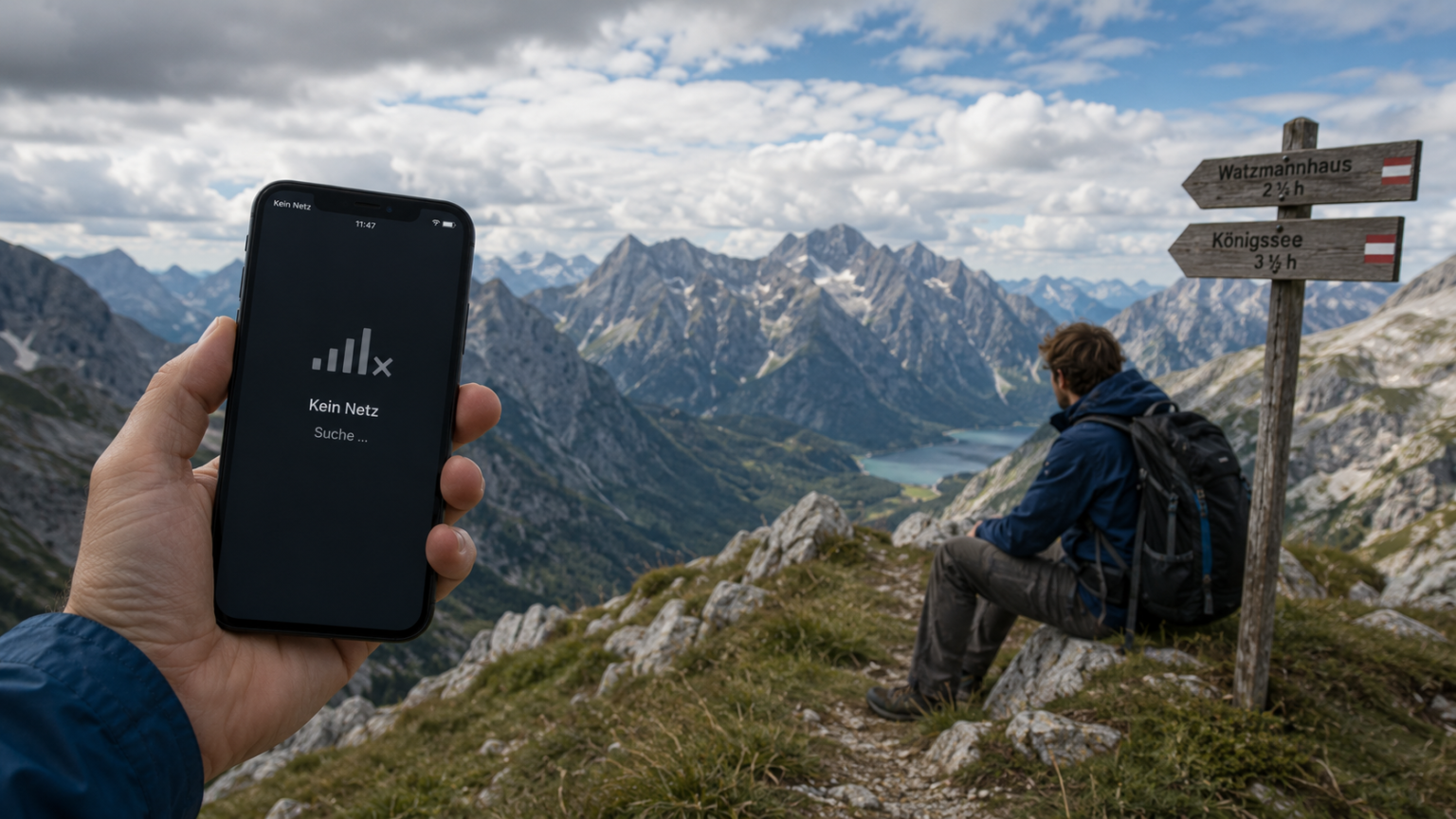
The issue runs deeper than just slow download speeds. Around 70% of study participants complain about disruptions even in standard mobile communication. For a business built on trust, a situation where a call with a key client is dropped due to a “dead zone” is unacceptable. Füracker attributes the delays to the pragmatism of providers: telecommunications giants often refuse to enter industrial zones if the number of guaranteed connection orders seems insufficient.
In response, Benjamin Adjei, representing the Greens in the Landtag, accuses the government of passing the buck. In his view, it is time for Bavaria to simplify its internal bureaucratic procedures. “We need faster, digital application processes, not endless approvals,” Adjei argues. The Greens also insist on using funds from the special infrastructure fund not just for bridges and railways, but for building “digital highways.”