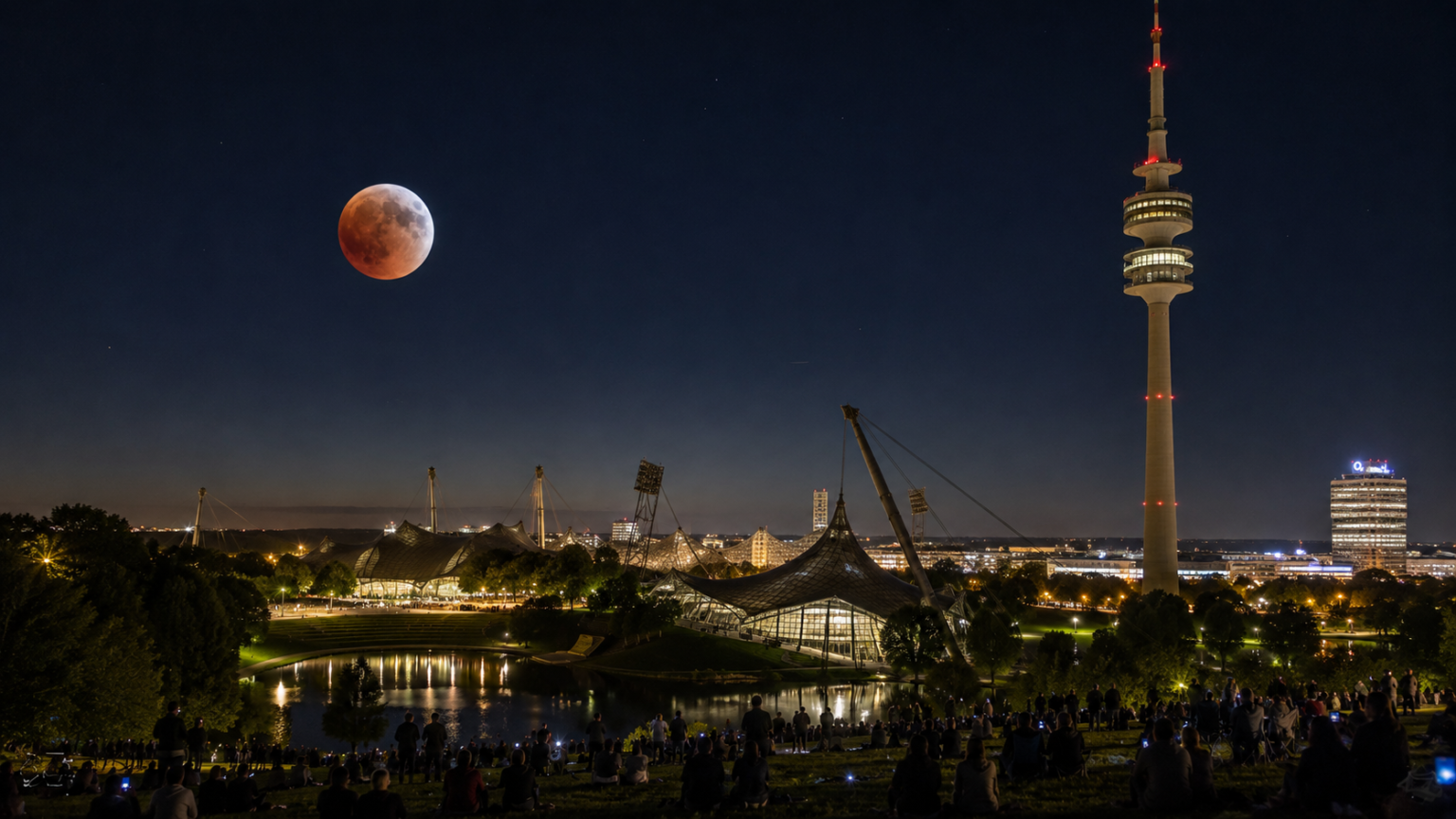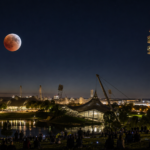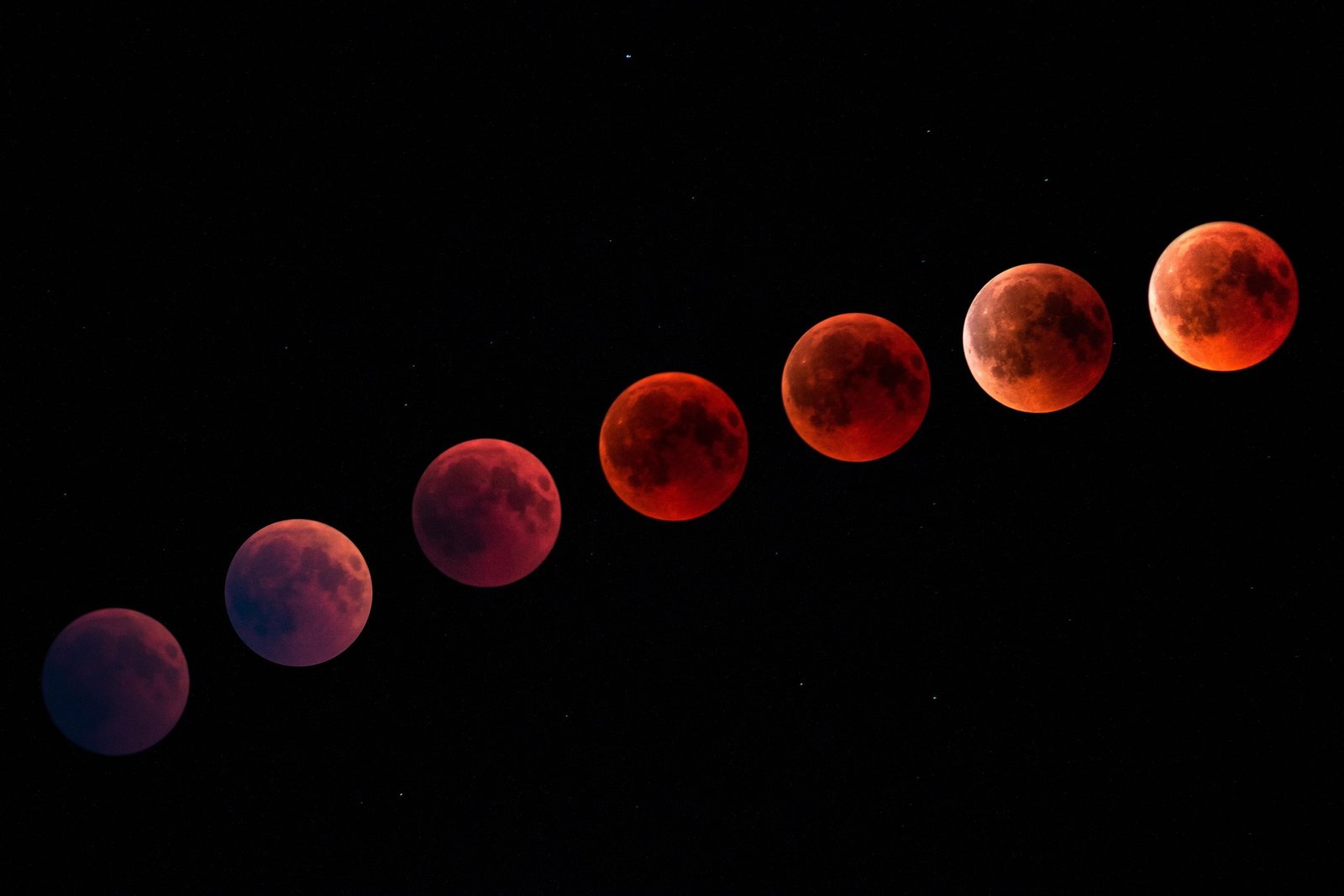

The total lunar eclipse will be visible to the naked eye in many regions.
On the evening of September 7, starting at around 7:40 p.m., it is worth looking east, depending on your location: the moon will rise glowing red, as it will already be entirely within Earth’s shadow at that moment. This marks the phase of totality, an event that requires no special equipment to enjoy.
What happens during a lunar eclipse?
Three celestial bodies align during a lunar eclipse: the sun, the Earth, and the moon. While the moon orbits the Earth, both travel around the sun, while the Earth also rotates on its axis.
Normally, the moon reflects sunlight and shines brightly. During an eclipse, however, the Earth positions itself directly between the sun and the moon, casting its shadow into space. When the moon is completely immersed in the umbra, it results in a total lunar eclipse.
Timeline on September 7
The total eclipse begins at 7:31 p.m. CEST. In Munich, the moon will appear on the horizon at around 7:40 p.m., almost at the same time as the sunset at 7:43 p.m. The maximum eclipse occurs at 8:12 p.m., with totality ending at 8:53 p.m. The Earth’s shadow remains partially visible for about another hour, while the moon gradually brightens again. The eclipse fully ends at 10:55 p.m.
Exact times may differ by a few minutes depending on location in Germany. To view the red full moon without obstruction, it is recommended to find a clear vantage point facing the eastern horizon.
Visibility Worldwide
The eclipse will be visible across large parts of the globe, including all of Europe, much of Africa, and large regions of Asia. In Germany, totality coincides with moonrise. The farther east the observer, the higher the moon will already be in the sky. In some western regions, such as Ireland or parts of West Africa, the total eclipse will already be over by the time the moon rises.
Key times for Munich (CEST):
- 7:31 p.m. – Beginning of totality
- 7:40 p.m. – Moonrise
- 8:12 p.m. – Maximum eclipse
- 8:53 p.m. – End of totality
- 9:56 p.m. – Moon exits Earth’s umbra
- 10:55 p.m. – End of the eclipse
Why does the moon turn red?
In theory, the moon should vanish in Earth’s shadow. However, it does not, because Earth’s atmosphere bends and scatters sunlight. Blue light is scattered more strongly, while long-wavelength red light passes through the atmosphere and illuminates the moon within the umbra, giving it a reddish glow.
Photography Tips
- Ensure an unobstructed view toward the east without buildings or trees.
- Use a tripod, as longer exposure times are required.
- A telephoto lens or zoom helps capture details.
- Activate HDR mode on smartphones to balance brightness differences.
- Test settings in advance, as lighting changes quickly—ideally, practice the evening before.
How often do lunar eclipses occur?
On average, there are between two and four lunar eclipses per year, including penumbral, partial, and total eclipses. Total eclipses are less frequent and occur globally about once every two and a half years. Locally, it can take much longer before another total eclipse is visible. What makes September 2025 especially remarkable is that the full moon will rise already immersed in totality—making the event particularly striking.