
Neighboring states reacted with outrage, and Israel’s opponents see it as evidence of annexation plans.
What does Netanyahu mean by “Greater Israel”?
Political scientist Volker Perthes from the German Institute for International and Security Affairs (Stiftung Wissenschaft und Politik) explained in a BR24 interview for “Possoch klärt”: Netanyahu is not referring to the biblical territory from the Nile to the Euphrates, but to the territories occupied since 1967. “I think he means what right-wing Israeli politicians have called Greater Israel since 1967,” said Perthes.
This includes the West Bank, East Jerusalem, the Gaza Strip, and the Syrian Golan Heights. Expansion into Iraq, even for hardliners, would be unrealistic: Israel could not control or govern such an area many times larger than its current size. Demographic realities also work against such plans.
A favorable moment for expansion?
Perthes sees the current situation as advantageous for Netanyahu’s ambitions. Israel has demonstrated “its major military superiority. At the moment, there is no one who could or would stop Israel,” the expert analyzed. Right-wing parties in the government see this as an opportunity “to do what they have long wanted to do.” In the past, American opposition or regional resistance had made this impossible. Today, the U.S. president effectively grants Israel a free hand.
Trump’s religious voter base as a factor
U.S. expert Philipp Adorf explains American support through the religious right. White Evangelicals are an important voting bloc for Trump, and they adhere to “Christian Zionism,” which holds that Christ’s return can only occur if this area is inhabited by Jews and remains under Jewish control.
At the same time, Adorf observes growing Israel skepticism among Republicans. Many oppose Netanyahu’s unilateral actions without consultation with the U.S., especially as his approach goes against the wishes of the Israeli public majority, which seeks an end to the war in exchange for the return of hostages. Senior military officials have also criticized the Gaza war as increasingly counterproductive.
Potential long-term downsides
Perthes considers annexation policy potentially harmful for Israel in the long run: “Ultimately, Israel has more security when a friendly state is on its side rather than creating enemies through occupation.” Netanyahu aims, according to experts, to be remembered as the “expander of Israel”—but his course could ultimately make Israel weaker and less secure.
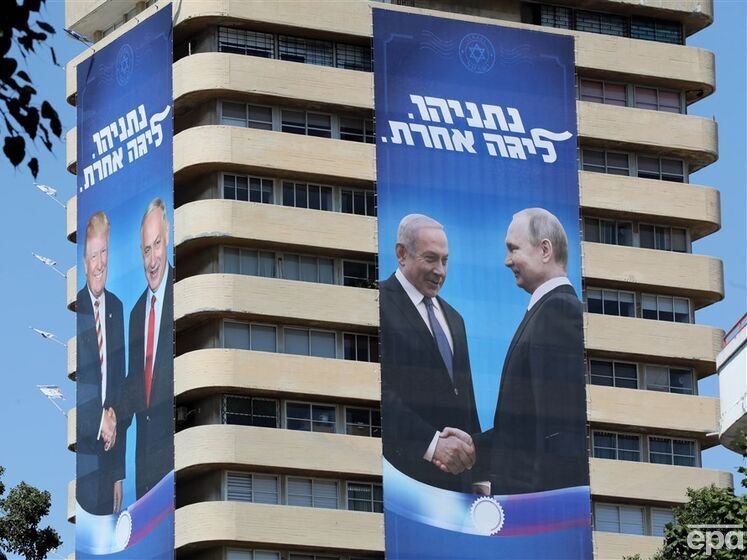
In the photo: Netanyahu’s election poster. Slogan: ‘A Different League.’ According to the explanation provided by Netanyahu’s election campaign team, he considers himself a friend of Putin and Trump and attributes himself to the ‘higher league’ of humanity, using this phrase to refer to a circle of authoritarian rulers.

Latest Posts