
An airport spokesperson explained the reasons for the emergency situation in detail, emphasizing that the safety of passengers and crews remained the priority for all services. The incident triggered a chain of delays, the consequences of which affected thousands of travelers returning to Germany at the end of the weekend.
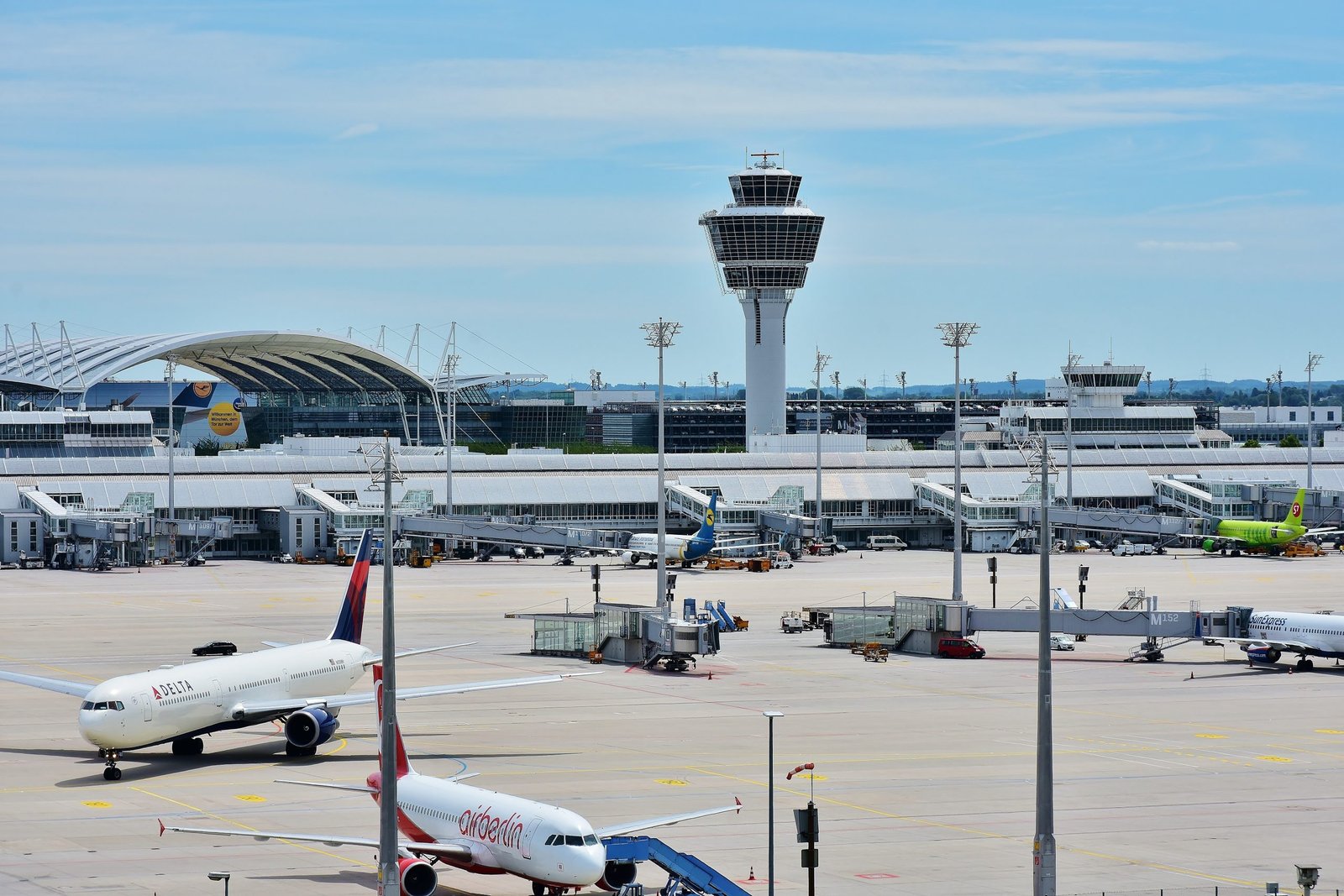
Due to a false fire alarm on Sunday evening, numerous changes had to be made to the Munich Airport schedule: about 40 departures were cancelled completely, and another 40 arriving aircraft were diverted to other airports. As airport representative Robert Wilhelm informed our editorial office, air traffic was completely halted for almost two hours. This measure is a mandatory safety protocol when any threats are detected in the flight control zone, as controllers cannot coordinate the movement of airliners outside their workstations.
The cause of the incident was a sharp smell of burning, which control service staff noticed in time in the premises of the main tower, after which they immediately called the fire service to the scene. As it turned out during an operational inspection, the technical source of the smell was a faulty drive belt in the building’s central ventilation unit. By now, the part has already been successfully replaced by airport technicians. No open fire was recorded in the building, and none of those present in the building were injured. Nevertheless, according to Wilhelm, all specialists on duty in the tower underwent a mandatory preventive medical examination to rule out the risk of smoke and carbon monoxide poisoning.
Diversion and Cancellation of Flights
The disruption to international air traffic was significant and required coordinated action from controllers in neighboring regions: 40 aircraft had to be promptly directed to other airports. Airlines decided where exactly to fly in the critical situation on an individual basis, as an alternate airport is always determined by the carrier in advance before each departure in accordance with the flight plan.
As a result, the airliners were accepted by the airports of Nuremberg, Frankfurt, Stuttgart, Linz, and Prague. Users on the international platform Facebook also actively wrote about this, sharing photos from the waiting halls. However, 24 of the diverted aircraft were able to return safely to Munich during the night, as soon as the emergency mode was officially lifted by the airport management.
Other domestic and international flights had to be cancelled completely due to the impossibility of promptly restructuring the flight schedule. According to the airport representative, this precisely affected approximately 40 destinations. For passengers stranded in the airport terminals, the airlines offered accommodation and overnight stays in the nearest hotels at the carriers’ expense.
However, as the representative separately noted, a small portion of passengers consciously refused the trip to the hotels and remained to sleep in the airport itself, since their repeated departures were scheduled for early morning, and spending time on a transfer was impractical.
Operations at Munich Airport Were Suspended for Almost Two Hours
The consequences of the Sunday evening incident were practically no longer felt on the departure board on Monday. On Monday morning, the representative reported that the airport began accepting arriving aircraft at exactly 5:00 AM, and from 6:00 AM scheduled departures resumed in full.
A total of 1,000 flights are scheduled for this day, and the airport is operating in its normal routine mode. Individual cancellations that occur during the day are a standard operational situation for a facility of this scale and are not necessarily directly related to Sunday’s incident in the control room.
The evacuation of employees from the control tower began on Sunday at around 8:33 PM, and already at 10:15 PM the servicing of passenger flights resumed. At the same time, the airport administration promptly warned online about possible further delays due to the resulting queue on the runway.
In order to dispatch and accept as many accumulated aircraft as possible, the operation of the night flight ban, which usually comes into force at exactly midnight, was extended by a decision of the ministry until 1:30 AM. This allowed the majority of passengers to be returned home without postponing flights to the next day.
Serious Adjustments to the Schedule
“After midnight, permission for each departure or landing of an aircraft must be requested from the airport management without fail. Then this request is transmitted to the duty officer of the Ministry of Transport, who makes the final decision on each case individually,” the airport representative explained the standard procedure in detail. On Sunday evening, 30 special permits for performing flights at night were issued in manual mode in this manner.
On the schedule of the Munich Airport board, it was visible that many evening flights arrived and departed with significant delays or were diverted to other cities. By 10:00 PM, boarding for delayed flights gradually resumed.
Despite the fact that Sunday was the last day of the Whitsun school holidays in Bavaria, the overall consequences of the disruption were minimized. The representative emphasized that the main flow of passengers returning from vacation had already successfully passed through the terminals by the time the inspection of the building began.
Specifics of the Emergency Situation at Munich Airport
“Local overheating of ventilation motors or minor technical breakdowns of equipment on the territory of the complex occur regularly. But we have faced the need for a complete evacuation of the control tower for the first time in a very long period.
The main technological difficulty here lies in the fact that when the tower fails, the reception and departure of aircraft instantly stop throughout the entire airport,” concluded Robert Wilhelm, confirming that this incident became an exceptional case in many years of operating practice, requiring manual management of processes.