
The tram could no longer brake – a few seconds later, the man was dead. Munich’s road traffic claimed another victim on Monday evening. In this case, the cause of the accident was likely the inattentiveness of the man, whom police knew for various drug offenses. However, another sad reality is this: Munich’s streets are full of dangerous spots—for pedestrians, cyclists, and motorists.
Chaotic Situation on Dachauer Straße
One of the hotspots is the intersection of Dachauer Straße and Maßmannstraße. “This spot is totally chaotic,” criticize the parents of elementary school students on Dachauer Straße. “The bike path here is partly two-way, so cyclists shoot towards the children from four directions on their way to school. Furthermore, the 30 km/h speed limit signs in front of the school are barely visible.” The parents have suggested a separate traffic light for cyclists, with green phases distinct from those for pedestrians, as well as a ground marking to draw attention to the school route. “But the city always just says, that’s not possible, we can’t do that,” says Miriam Häberle from the parent council.
Statistics Reveal Accident Hotspots
Such danger spots and similar ones are not imagined. The Federal Statistical Office has created a map showing precisely which road sections are accident blackspots. In Munich, the most severe spot for pedestrians is reportedly the intersection of Nymphenburger Straße and Landshuter Allee. The area of danger also extends along Nymphenburger Straße up to Hedwigstraße. In 2024, there were a total of 27 accidents involving pedestrians here.
Construction Site at the Main Station Promotes Collisions
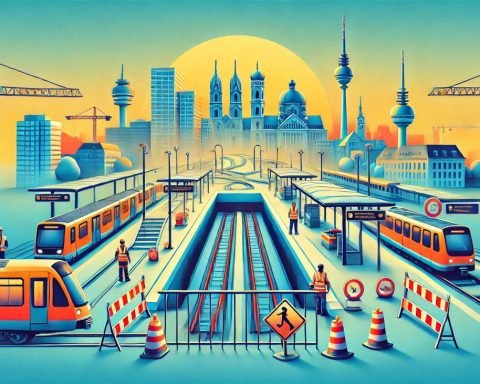
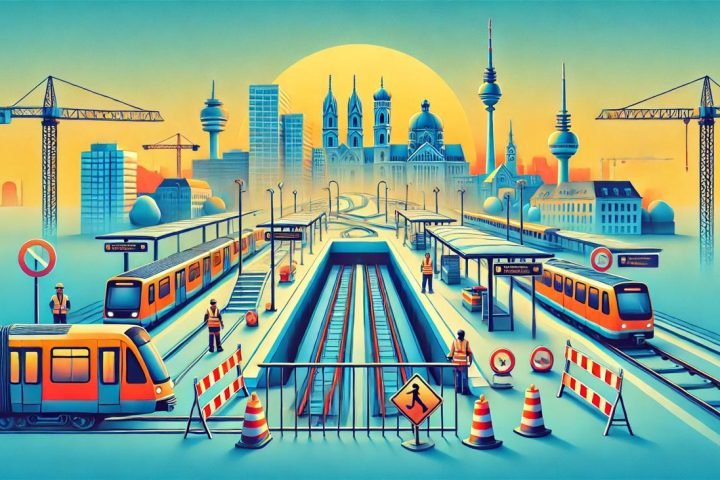
Cyclists are particularly at risk on Kapuzinerstraße, passing the Südfriedhof between Thalkirchener Straße and Wittelsbacherbrücke. Last year, there were 39 accidents involving cyclists here. Motorists are less at risk of personal injury than cyclists and pedestrians, but there are also critical spots for them—primarily on Bayerstraße between Goethestraße and Paul-Heyse-Straße. In the construction site chaos near the station, 30 accidents occurred.
Mobility Department Aims to Improve Junctions
The Mobility Department analyzes such accident hotspots. However: “Often we cannot implement citizens’ improvement suggestions because they contravene the Road Traffic Regulations,” says spokesperson Christina Warta. “Nevertheless, our ‘Safe Junctions’ working group has the task of making dangerous intersections safer. Accident blackspots are closely monitored, and a priority list is created identifying where we need to make changes first.” The Mobility Department intends to inform the city council which intersections are on this list in November.
City Measures Are Helping
The parents from the elementary school on Dachauer Straße have at least achieved one small but effective change. “An electronic smiley now shows drivers along the school how fast they are driving. Traffic there is indeed flowing slower now,” says Miriam Häberle. “It works.”
Editor’s Note: Unfortunately, when publishing such analyses, authorities, journalists, activists, and especially politicians always forget the most important external factors affecting accident statistics involving cyclists:
- Most cyclists do not know how to ride a bicycle properly.
- They do not know the traffic rules or do not follow them.
- They lack basic respect for other road users.
- They believe they always have the right of way.
- They ride in prohibited areas (on sidewalks, lawns) and demand the right of way, even when a road or bike path is nearby.
- They run red lights.
One cannot blame the streets for accidents involving cyclists. Our personal observations indicate that the problem lies with the cyclists themselves.

Latest Posts