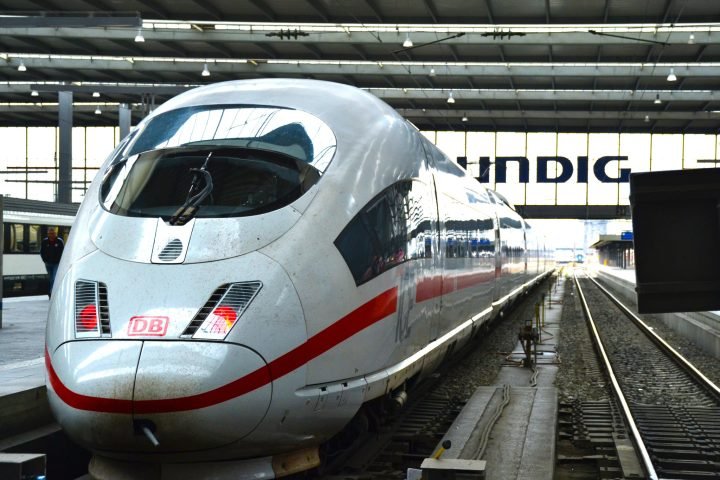

The network on which a high-speed train runs approximately every half hour will grow from 900 to 2,300 kilometers. This applies, among others, to connections between Hamburg, Hanover, and Kassel, as well as Erfurt, Halle, and Berlin.
Fourteen new “particularly fast” ICE journeys will strengthen the north-south corridors Hamburg-Frankfurt (Main) and Berlin-Munich. The new sprinter service from Berlin to Stuttgart via Nuremberg, with a travel time of around 4 hours and 45 minutes, will be over an hour faster than before.
Between Germany and Poland, the new EuroCity line between Leipzig and Krakow will commence service. To Switzerland, there will be more fast, direct ICE connections from North Rhine-Westphalia to Zurich or Chur. Brig will be newly connected—both from North Rhine-Westphalia and towards Berlin.
From May 2026, the direct connection Prague-Copenhagen via Dresden, Berlin, and Hamburg is scheduled to start. Depending on the season, this will also mean up to four additional trains daily between Hamburg and Copenhagen. And for the first time, from September 2026, there will be four daily ICE connections between Cologne and Antwerp via Brussels Airport, which will thus be newly connected to the ICE network.
On the most important ICE lines, DB is standardizing—”wherever possible”—the starting and destination stations, intermediate stops, and timetable frequencies. Furthermore, as many journeys as possible on a given line will be operated using the same ICE model. This will make the system “less complex, more reliable, and railway operations overall more stable,” according to DB. The basic principle corresponds to that of S-Bahn systems.
As a result, some direct connections will change. For example, the state capital Kiel will now have a systematic two-hourly service towards Hanover, Frankfurt, and Stuttgart, replacing many unsystematic individual connections.
Additionally, in the new timetable, DB states it will largely refrain from splitting a single ICE train (composed of two units) at a specific station or merging the two parts. While such so-called “wing concepts” enabled more direct connections, they were prone to delays.
Due to the economic framework conditions with high cost increases, DB can no longer operate some very low-demand trains. This affects extremely underutilized connections where sometimes only ten percent of seats are occupied, for example between Leipzig and Nuremberg via Jena. There, the number of journeys per direction will be reduced from five to two.
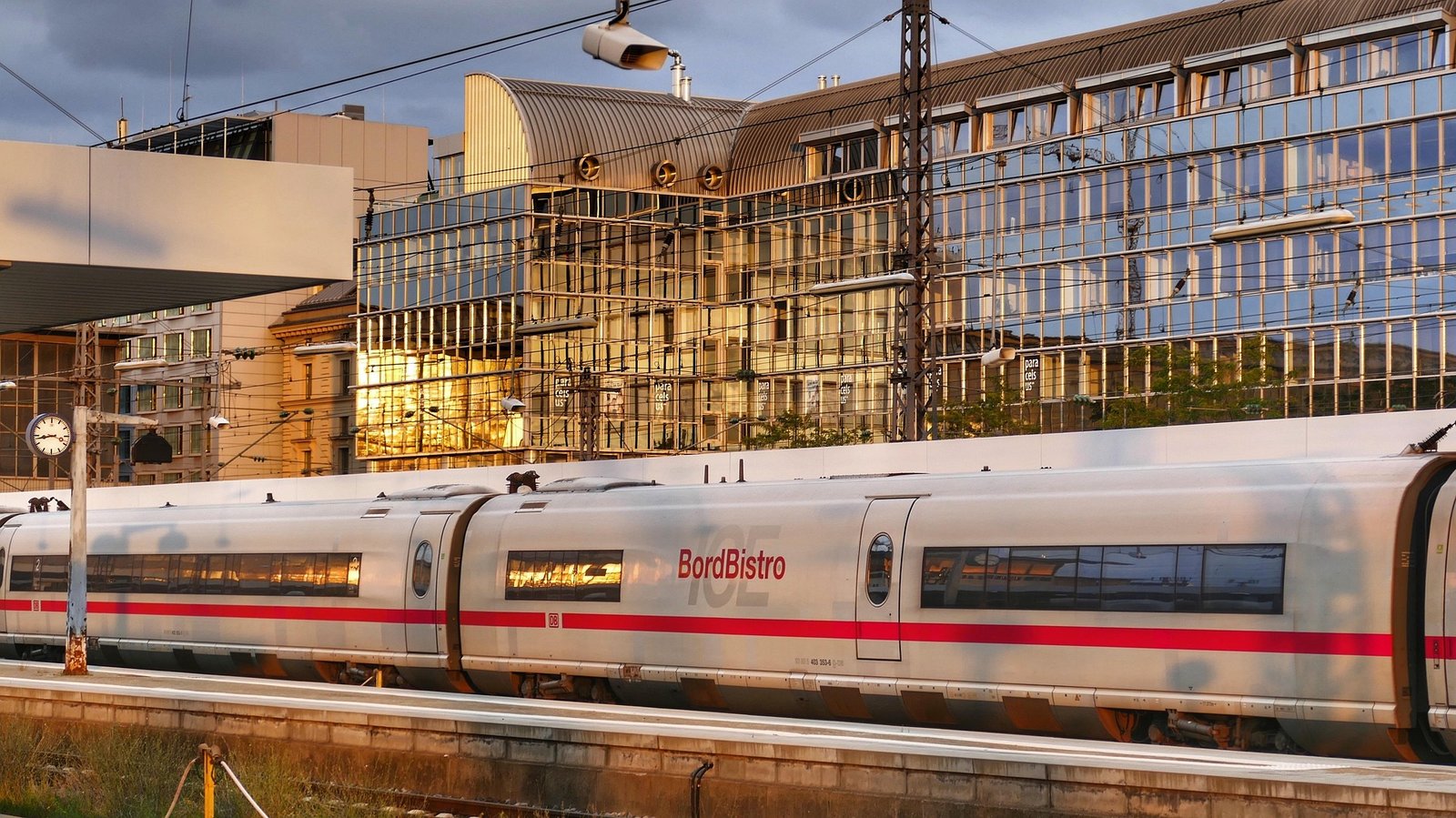
The new ICE L will make its debut with the timetable change. Initial deployments are planned between Berlin and Cologne. From May 1, 2026, after the completion of the major refurbishment of the Hamburg-Berlin line, the ICE L will run to Westerland (Sylt); from mid-July, it will also operate on connections from Cologne and Frankfurt to Westerland, as well as between Dortmund and Oberstdorf.
In addition to tickets for long-distance trains operated by ÖBB (Austrian Federal Railways) and SBB (Swiss Federal Railways), DB customers can now also book many domestic French TGV connections and Eurostar tickets directly on DB’s websites. The ÖBB night trains that pass through Germany are also now available directly from DB. By the end of 2026, DB aims to offer tickets for all major railways in neighboring countries directly.
The major refurbishment of the Hamburg-Berlin railway line continues until the end of April next year. During this time, ICE traffic between the two cities will be diverted. Further construction work is planned from February to July on the Wupper line between Hagen and Cologne. From February to December, there will be construction-related restrictions between Nuremberg and Passau. Construction will take place on the right Rhine line between Cologne and Frankfurt between July and December.
The new connections will be available to view on DB’s websites from October 15th. Ticket sales will also begin then—they can be booked up to twelve months in advance.

Latest Posts