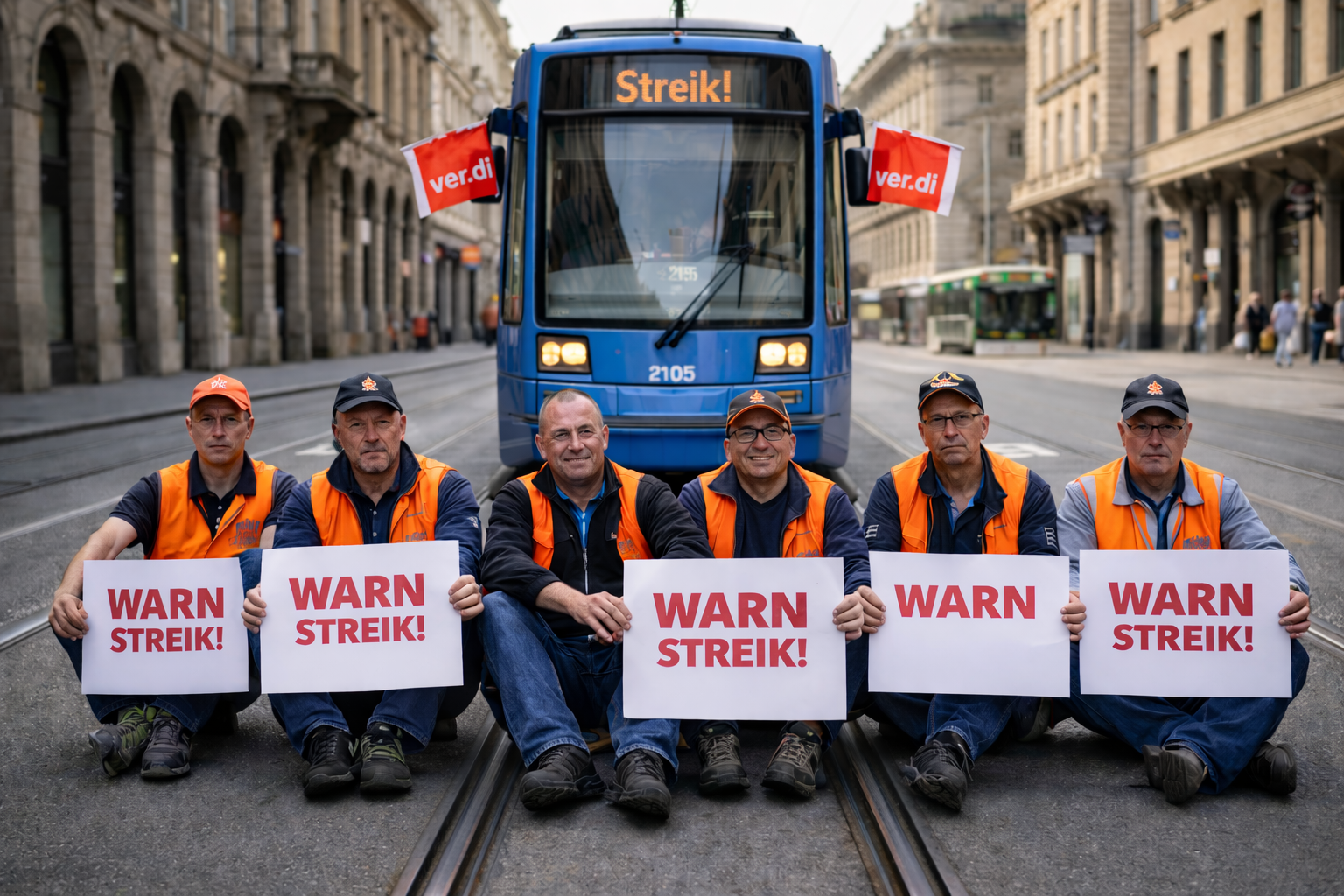

The ratified terms regarding remuneration and working conditions within Bavaria’s municipal transport sector are designed to stabilise a situation that had long remained a source of social tension. The compromise not only guarantees the uninterrupted operation of infrastructure in the short term but also establishes a transparent income indexation schedule for employees, as confirmed by both parties on Thursday.
Verdi union secretary Katharina Wagner characterised the outcome of the dialogue as an agreement “with its pros and cons,” while acknowledging that key systemic contradictions had been resolved. The terms have now been presented to union members for a final ballot, the results of which are to be formalised by 15 May. Sinan Öztürk, head of the regional branch of Verdi, emphasised that any industrial action is strictly excluded during this transitional period. In effect, the adopted document moves the protracted conflict into a legal framework and postpones the prospect of strikes indefinitely.
According to official KAV data, the financial component of the compromise provides for a total phased increase in payments of 7%. The structure of the raise is organised as follows: retrospective from the beginning of the current year, employee incomes increase by 4.1% (with a minimum threshold set at €120). The next stage of indexation, at 1%, is scheduled for 1 September of the current year, while the final step—a 1.9% increase—will come into force on 1 January 2027.
Terms of Commitment and Working Conditions
The new collective agreement is designed for a sustained period of four years. This prolongation of obligations aims to ensure predictability for the functioning of the transport sector. Nevertheless, the document stipulates the right to an early termination of the pay scale on 31 December 2027. This provides the parties with room for manoeuvre and enables a new round of economic discussions to commence as early as 2028, based on the inflationary dynamics relevant at that time.
Significant changes have also affected non-financial aspects of employment. Employers have confirmed their readiness for a gradual reduction of the working week: from 2029, the standard will decrease from 38.5 to 37.5 hours. Furthermore, stringent rest standards are being introduced—no less than 10.5 hours between shifts—while bonus payments for Sunday work are increased and the time interval eligible for night shift premiums is expanded.
“The transition to a 37.5-hour week is an important signal for the entire industry,” Wagner commented. Although the union’s expectations regarding wage growth for junior staff categories were not fully met (Verdi had insisted on more substantial fixed sums), the achieved 7% represented the maximum possible result within the current budgetary constraints of municipal enterprises.
Consequences of Protracted Confrontation
The industrial dispute, which affected the interests of approximately 9,000 employees across more than 20 transport companies in the region, was highly acute. Repeated, coordinated strikes led to large-scale disruptions in the operation of underground trains, trams, and buses in Bavaria’s major cities, forcing hundreds of thousands of citizens to seek alternative means of travel. The most recent major action took place on Tuesday, when employees of dispatch centres, traffic services, and customer service departments—including those in Munich—temporarily ceased work.
The dynamics of Verdi’s demands during the negotiations clearly demonstrated a search for compromise. In the final stages, the union proposed a two-stage increase of €550 with a 24-month contract duration, whereas initial requests stood at €670 for a one-year contract.
The previous agreement, concluded in 2023, formally ended in 2024. However, at that time, Verdi leadership made a strategic decision not to initiate separate negotiations in Bavaria, opting instead to wait for the results of the national bargaining round. Thus, the current agreement draws a line under a long period of uncertainty, creating a foundation for the stable development of the region’s transport network over the next four years.
In summary, it can be stated that the reached agreement is a forced but necessary step to prevent a transport collapse in Bavaria. The four-year term of the contract ensures a period of social peace, allowing enterprises to focus on operational activities and passengers to plan their journeys without regard to protest schedules. Nevertheless, the union’s partial dissatisfaction with the level of indexation in the lower pay grades indicates that, in the long term, labour shortages and the prestige of professions in public transport will require new, more profound structural solutions.

Latest Posts