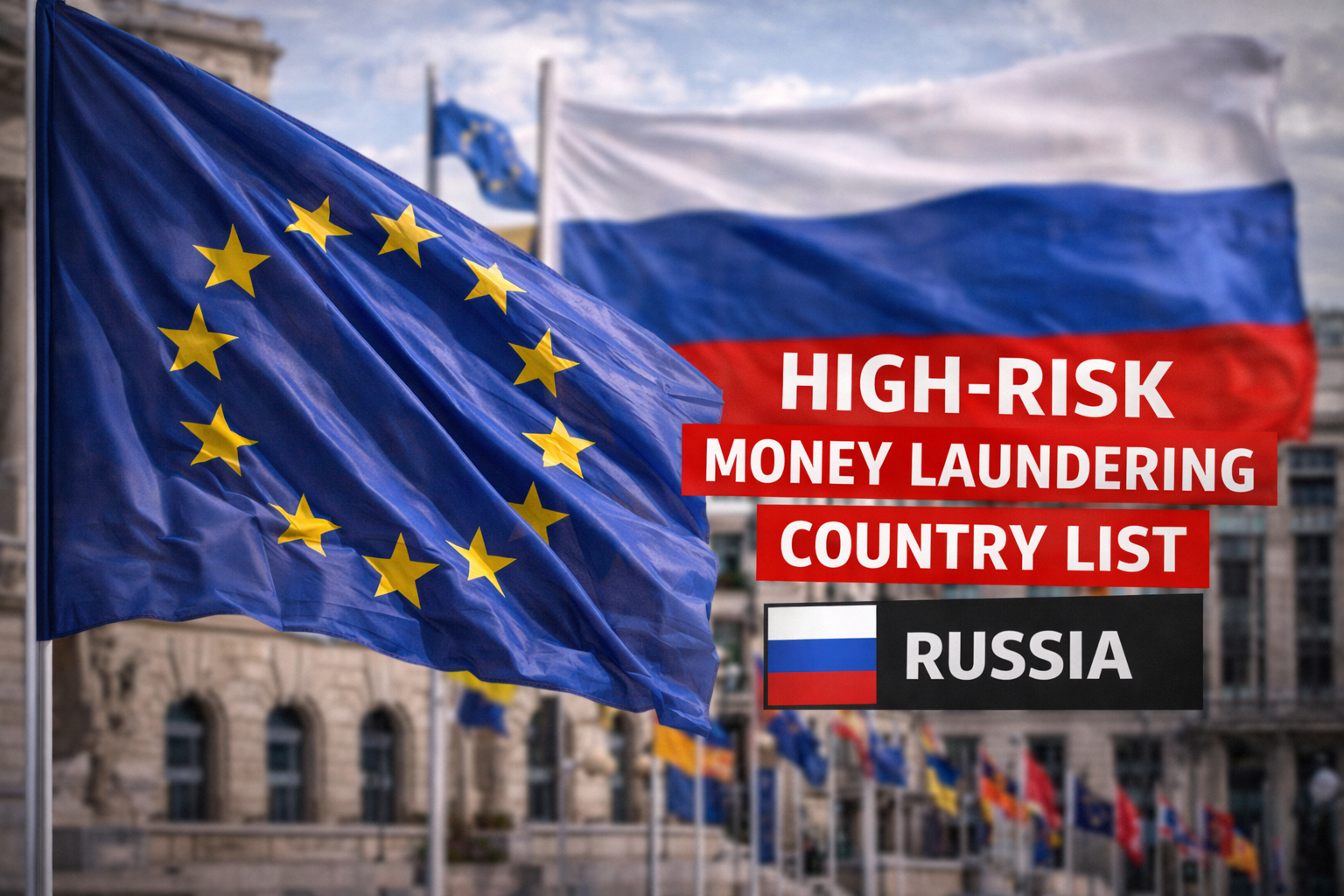

The European Union’s decision to include Russia in its list of high-risk third countries regarding money laundering and terrorist financing officially took effect on January 29. The corresponding notification was published in the Official Journal of the EU.
In previous years, European authorities relied on data from the FATF (Financial Action Task Force). This international body includes countries that intentionally ignore financial transparency rules in its lists. In 2023, the FATF suspended Russia’s membership but refrained from blacklisting it due to the positions of countries such as India, China, and Saudi Arabia. However, Europe has now launched its own specialized agency—the Anti-Money Laundering Authority (AMLA)—which has implemented measures not adopted at the international level. Russia has become the 30th country on the European list, alongside North Korea, Iran, Afghanistan, Syria, and Yemen.
According to Le Monde, the decision is driven by a lack of control over the cryptocurrency market and a decline in the transparency of financial transactions in Russia since 2019. The EU concluded that the Russian financial monitoring service has effectively ceased meaningful international cooperation and shifted its focus toward internal political pressure by labeling Kremlin opponents as extremists.
What the New Status Means for Financial Transactions
Inclusion on the blacklist does not imply an automatic ban on all financial flows. In practice, it mandates enhanced due diligence (EDD) for any transactions linked to Russia by banks, insurance companies, real estate agents, and other intermediaries across the EU. This will likely be most palpable for Russians living in Europe who regularly utilize the local financial system.
Ilya Shumanov, Managing Partner at TritTrace Investigations, explained that credit institutions will begin conducting in-depth checks on all clients with Russian ties. According to him, approving deals with Russian participation will now require senior management consent, and the number of cases where banks refuse service out of caution will rise. Every transaction will take longer due to checks and the preparation of reports for national regulators. While operations are formally permitted subject to thorough verification, banks may prefer to avoid such clients altogether.
“Russian passport holders with temporary or permanent residency in the EU will notice the change: banks were already reviewing client risk profiles, and now they have an official basis to deny account openings or payment processing,” Shumanov warned.
Impact on Residents and Commercial Sector
As an example of negative consequences, Shumanov cited the sale of an apartment in Russia followed by the transfer of those funds to Europe. If previously a simple proof of origin was required to deposit such money, the verification process may now become significantly stricter. Banks may scrutinize the transaction history, the duration of property ownership, and the identities of previous owners to rule out money laundering.
Information from European bankers suggests that capital originating from Russia will now be viewed as a toxic factor. Financial institutions will meticulously weigh potential profits against associated risks. If opening an account for a new individual risks a reaction from the regulator, the bank will likely refuse service.
Following the 19th sanctions package, many already experienced temporary account freezes when platforms requested additional documentation. With the official blacklisting, interacting with Russian citizens may become too burdensome for these services, leading to a “de-risking” trend. Long-term clients of European banks may also face new requirements or requests to close their accounts.
The commercial sector will also be affected. Despite existing restrictions, trade volume between Russia and Europe still amounts to tens of billions of euros annually. Shumanov believes opportunities for operating within the European financial field will shrink rapidly, with support remaining only in industries critically important to the EU itself.
Difficulties for Travelers and Students
Obstacles may also arise for Russians attempting to enter Europe. Rules for issuing Schengen visas had already been tightened, and now the validity of Russian bank statements for proving financial solvency is in question, according to the human rights project The Ark.
Human rights advocates also pointed to difficulties with student visas. Studying in Germany requires transferring funds to a special blocked account in a local bank. This operation was already extremely difficult, but it may now become virtually impossible. For Russians not living in the EU permanently, the country’s new status will limit options for vacations and transfers, including purchasing insurance in Europe.
Consequences in Third Countries
For citizens who moved to visa-free regions, the scale of the consequences is currently hard to estimate due to a lack of established practice. However, banks in these countries may independently introduce additional filters for Russians out of fear of losing their Euro correspondent accounts. Such excessive control has been observed globally for several years.
Countries acting as trade intermediaries now risk being labeled toxic partners, which may force them to distance themselves from Russian contacts. For example, major banks in Kyrgyzstan ceased operations with Russian financial institutions in 2024 due to the threat of US secondary sanctions.
Representatives of a financial company in Georgia noted that they now intend to apply the same standards to Russians as they do to citizens of Iran, requesting proof of funds even for small transactions. Banks will have to choose between maintaining a Russian client base and complying with the stringent requirements of European regulators. Large banks, for whom Russian citizens are not a priority, will find it easier to terminate cooperation to avoid unnecessary compliance burdens.
Source: DW

Latest Posts