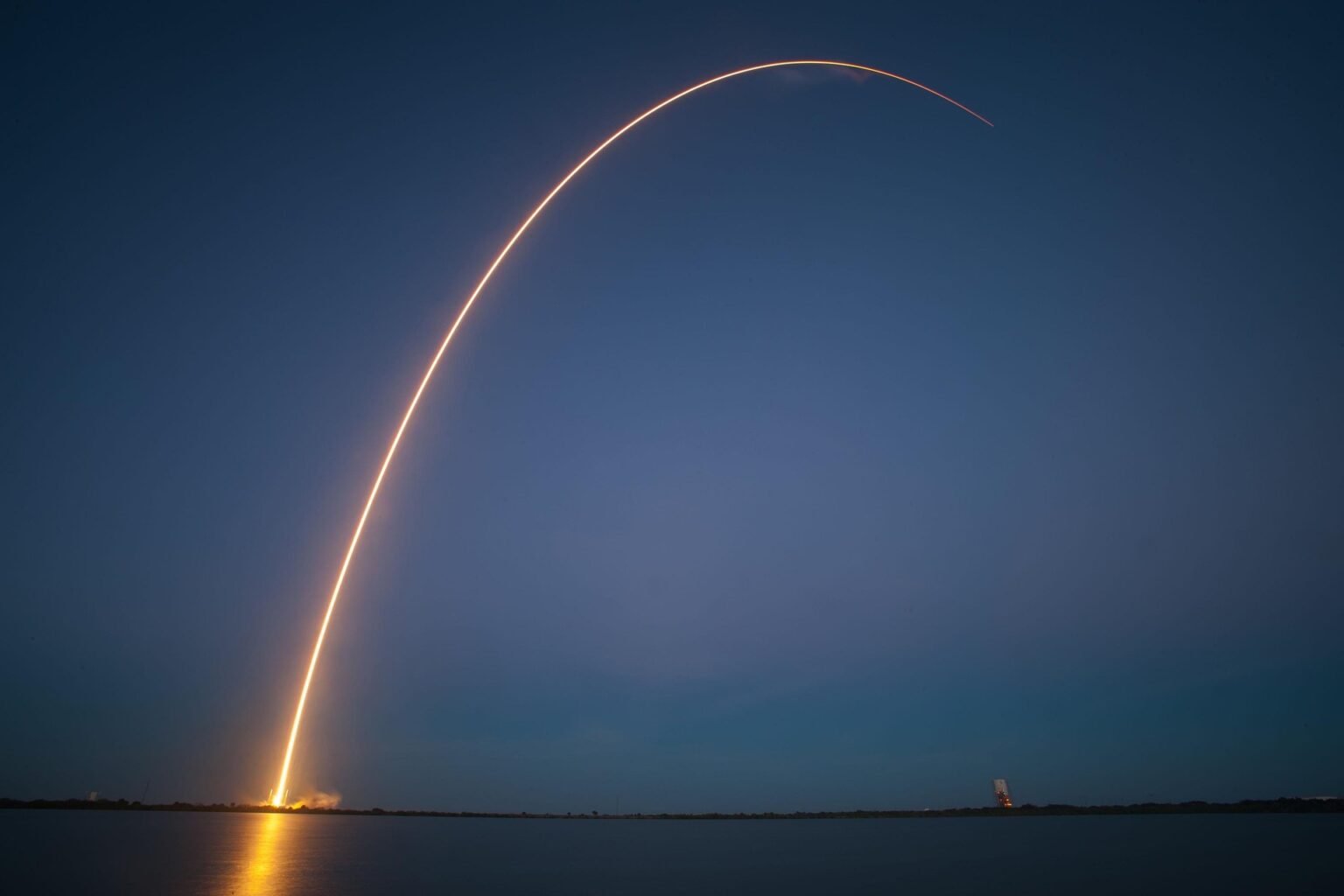

Isar Aerospace, headquartered in Ottobrunn near Munich, has postponed the second planned test flight of its Spectrum rocket. According to the company, the delay was caused by an issue with a pressure valve. A new launch date will be announced shortly, as stated in a post on the platform X. Prior to the postponement, preparations at the Andøya Spaceport in Norway were already at an advanced stage.
March 2025: The First Test Flight
The startup initially sent its rocket on its maiden flight in late March 2025. The flight lasted 30 seconds before the rocket crashed into the sea. Isar Aerospace explained that Mission Control aborted the flight, resulting in a controlled splashdown.
Spectrum Designed for Satellite Deployment
Once in mass production, the Spectrum rocket is intended to deliver satellites to Low Earth Orbit (LEO), several hundred kilometers above the Earth’s surface. According to CEO Daniel Metzler, Isar Aerospace has orders booked for years to come, despite the rocket not yet being ready for serial production. The startup has already secured contracts from the EU and the European Space Agency (ESA).
Intense Scrutiny of Isar Aerospace
The successes and failures of Isar Aerospace are being closely monitored by the European aerospace industry and several national governments. For years, the vast majority of European satellites have been launched by SpaceX, owned by American billionaire Elon Musk. This reliance forces customers to share detailed project data with a foreign commercial entity.
Rocket Launches: Europe Lags Behind
According to data from the German Aerospace Industries Association (BDLI), the United States conducted more than half of the 220 global civil and military rocket launches in 2024. China launched 67 rockets, Russia 20, and India seven. Europe sat in last place with only four launches.
The Franco-German ArianeGroup also intends to launch seven to eight Ariane 6 rockets this year, following long development delays. Unlike the Spectrum, the Ariane 6 is a heavy-lift launch vehicle capable of delivering payloads to geostationary orbits (GEO)—nearly 36,000 kilometers above the Earth’s surface.
Source: DPA