
CDU’s Social Policy Wing Criticizes Söder Harshly
Dennis Radtke, head of the CDU’s employee wing, sharply rebuked Söder in an interview with Focus magazine. He accused Söder of loud populist theatrics. According to Radtke, the proposal is not only substantively questionable but also administratively problematic: it is unclear whether the financial savings would even offset the anticipated bureaucratic burden. He also expressed doubt that the proposal would contribute to the integration of Ukrainians into the German labor market.
Radtke described the demand as a combination of “swagger and sensationalism.” He warned of the dangers of populism in politics:
“Headline-driven thinking has become the tramp stamp of German politics – amusing for a while, but eventually tiresome.”
He urged the Union to return to serious, constructive governance that is not only principled but also functionally sound.
Söder’s Proposal Goes Beyond Existing Coalition Agreement
Söder presented his demand during a ZDF summer interview on Sunday. His proposal would see Ukrainian refugees no longer receive the Citizen’s Benefit but instead receive only the significantly reduced benefits under the Asylum Seekers’ Benefits Act. This would go beyond the current policy: as of April 1, 2024, only newly arrived Ukrainian refugees are excluded from receiving the Citizen’s Benefit, while those who arrived earlier are still eligible.
Common Ground on Combating Welfare Fraud
Despite their differences over the treatment of Ukrainian refugees, there is consensus between the Social Democrats (SPD) and the Union that welfare fraud must be tackled more decisively. SPD parliamentary whip Dirk Wiese told the Redaktionsnetzwerk Deutschland (RND) that in cases of organized fraud and undeclared work, authorities must impose appropriate sanctions. At the same time, he advocated for an increase in the minimum wage and stronger collective bargaining coverage to reduce reliance on state subsidies.
CDU Member of Parliament Tilman Kuban also demanded stricter eligibility criteria:
“Basic income support must be reserved for those who truly need help – not for those who deliberately avoid work.”
He emphasized that the issue is not just about saving money but about fairness and justice.
Kretschmer: Reforms to Citizen’s Benefit Needed – Including for Ukrainians
Michael Kretschmer, Minister President of Saxony (CDU), also voiced support for reform. Speaking on ZDF’s Morgenmagazin, he said that changes were necessary for both German citizens and refugees so that hard work pays off again. He pointed to the immense costs of the Citizen’s Benefit system:
“Almost 47 billion euros annually – I believe everyone understands that this cannot be right. That number must come down.”
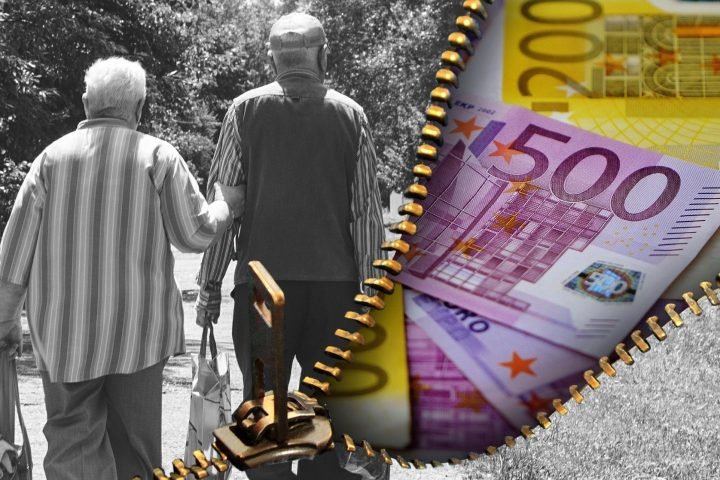
Citizen’s Benefit Spending Reaches Nearly 47 Billion Euros
According to figures from the Federal Ministry of Labor, published in response to a parliamentary inquiry by the AfD, Germany’s Citizen’s Benefit spending in 2024 totaled 46.9 billion euros – an increase of four billion compared to the previous year. Around 5.5 million people received benefits, including nearly four million employable recipients. Experts attribute the increase primarily to higher standard rates in 2023 and 2024, which were introduced to offset inflation.
Citizen’s Benefit Often Insufficient to Cover Basic Needs
The tension between financial need and work capacity is particularly evident in Bavaria, where more than 447,000 people received Citizen’s Benefit in November 2024. Of the over 325,000 employable recipients, about 20 percent were employed yet still relied on supplementary state aid because their incomes were insufficient.
The current standard rate for a single adult is 563 euros per month. According to a study by the non-profit organization Sanktionsfrei e.V., this is often not enough: more than half of the surveyed parents reported skipping meals at the end of the month to ensure their children had enough to eat. Over 70 percent of respondents said the standard rate was too low to allow a life in dignity.
Editorial: Don’t take politicians’ words to heart
Let’s start with the fact that Markus Söder has established himself as a populist politician from the very beginning of his political career, and this introduction should be taken into account when evaluating his words.
Populism is currently trending in many countries. It usually affects less educated and inert societies. Good examples are the election results in Israel, Hungary, Poland, the United States and many other countries.
Populism is a way of talking about issues that concern some voters. With the help of populism, politicians do not promise specific actions, let alone results, but show their voters that they supposedly care about their views and expectations.
According to my personal assessment (based on 20 years of experience working with the media and political technologies) Zöder is trying to attract votes from AfD voters. No more, no less.
It is expected that, like all of Zöder’s other populist statements, this will also remain nothing more than a nice slogan.
Personally, I would like to wish Markus at least a couple of weeks in the shoes of a refugee, especially a refugee from a developed country like Ukraine:
– Let him try to leave everything behind, take his children and a few belongings, cross minefields, knowing that only every third car makes it to the border, not to mention refugees on foot, and travel 700-800 km to the EU border under targeted fire from humanitarian convoys.
– After that, let them try, even as a highly skilled professional, to find a job in a new country where the national language is a fundamental idea.
– Let them try to juggle learning a new language, looking for housing, living in a camp or boarding house, and receiving constant rejections just because they are unemployed. Between children, their upbringing, and integration into a new society.
– Let them try, even knowing four languages and learning a fifth, to find a job where, according to the latest journalistic investigations in Germany, university graduates – not yet polished HR managers – automatically discard CVs of people with foreign names.
Let his children appreciate the attitude towards them in a foreign school, when a child with knowledge and intellectual abilities can easily study at a gymnasium, but populist politicians artificially force them into a framework where children are forced to go to lower-level schools just because German is not their native language. And even if they make progress in learning the language, they still have to become ‘service personnel.’
It is easy to judge when you yourself have grown up with everything ready-made, when you are hired for a job only because you speak the national language at a native level, and not because you have a high level of education and are a professional. It is easy to abolish something that does not affect the economy as a whole, thereby distracting the electorate from pressing issues and, even more so, from their economic failures and inability to find a balance, and from not knowing how to solve the many serious problems of our society.
Dear Marcus, I know many Ukrainians who are willing to work, pay taxes and integrate. Help them integrate in practice, not just with words, and they will go to work. But professional managers solve problems comprehensively. By cancelling the allowance, you will not solve the problem, you will exacerbate it. It’s time to start thinking, not just talking, don’t you think?

Latest Posts