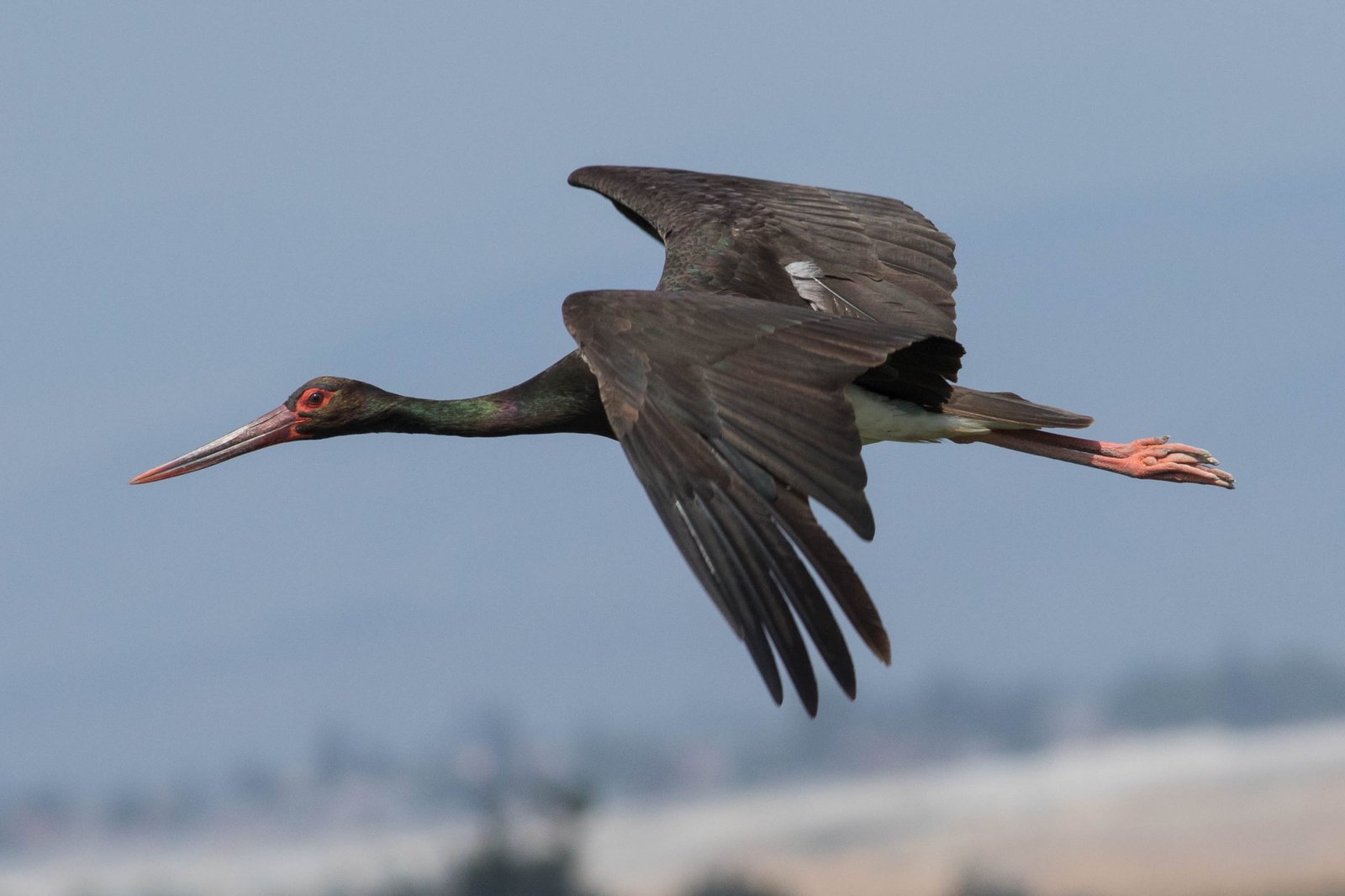

The bird was filmed on a rewilded site in the Freyung-Grafenau district, an area previously used for forestry and now owned and managed by the foundation.
Sighting on Former Forestry Land
The black stork was documented on a protected nature conservation site directly adjacent to the Bavarian Forest National Park. According to the foundation, the area was formerly a managed forest plot but has since been converted into a natural habitat. Unlike its more familiar relative, the white stork, the black stork avoids human settlements and prefers remote, structurally diverse forests with wetland habitats. It is considered highly sensitive to disturbance and is one of Central Europe’s rarest woodland birds.
Shrinking Habitats for Sensitive Species
In its announcement, the Heinz Sielmann Foundation highlighted the growing scarcity of undisturbed, moist woodlands suitable for species like the black stork. These habitats are increasingly lost to agricultural and urban development. In response, the foundation acquired the roughly seven-hectare site in 2022, situated next to the national park, with the specific goal of implementing targeted conservation measures.
Restoration Following Bark Beetle Infestation
In 2023, the area was heavily affected by a bark beetle outbreak that devastated local spruce trees. As a result, the site had to be cleared. Simultaneously, the foundation initiated a rewetting project to revive the bog ecosystem. The objective was to restore the local water balance, sequester carbon dioxide in the soil, and attract rare animal species back to the area.
“With the launch of the rewetting project, we created essential conditions for increasing biodiversity,” explained Bernd Kannenberg, a peatland restoration expert at the foundation.
New Habitat Supports Amphibians, Reptiles, and the Black Stork
Just one year after the intervention, Kannenberg reported visible progress. Among the most notable developments was a marked increase in grass frog spawning activity. This resurgence of amphibian life appears to have attracted the black stork as well. “Its diet includes tadpoles and aquatic insects. The newly restored wetland areas provide it with excellent feeding opportunities,” Kannenberg said. Other wildlife, including various amphibians and reptiles, have also benefited from the revitalized landscape.
Foundation’s Mission Focuses on Conservation and Biodiversity
The Heinz Sielmann Foundation is committed to nature conservation, the promotion of biodiversity, and fostering opportunities for people to experience nature. A key part of its work is the rewetting of degraded wetland areas. Through these efforts, the foundation aims to stabilize endangered ecosystems and ensure that species such as the black stork can find viable habitats in the long term.

Latest Posts