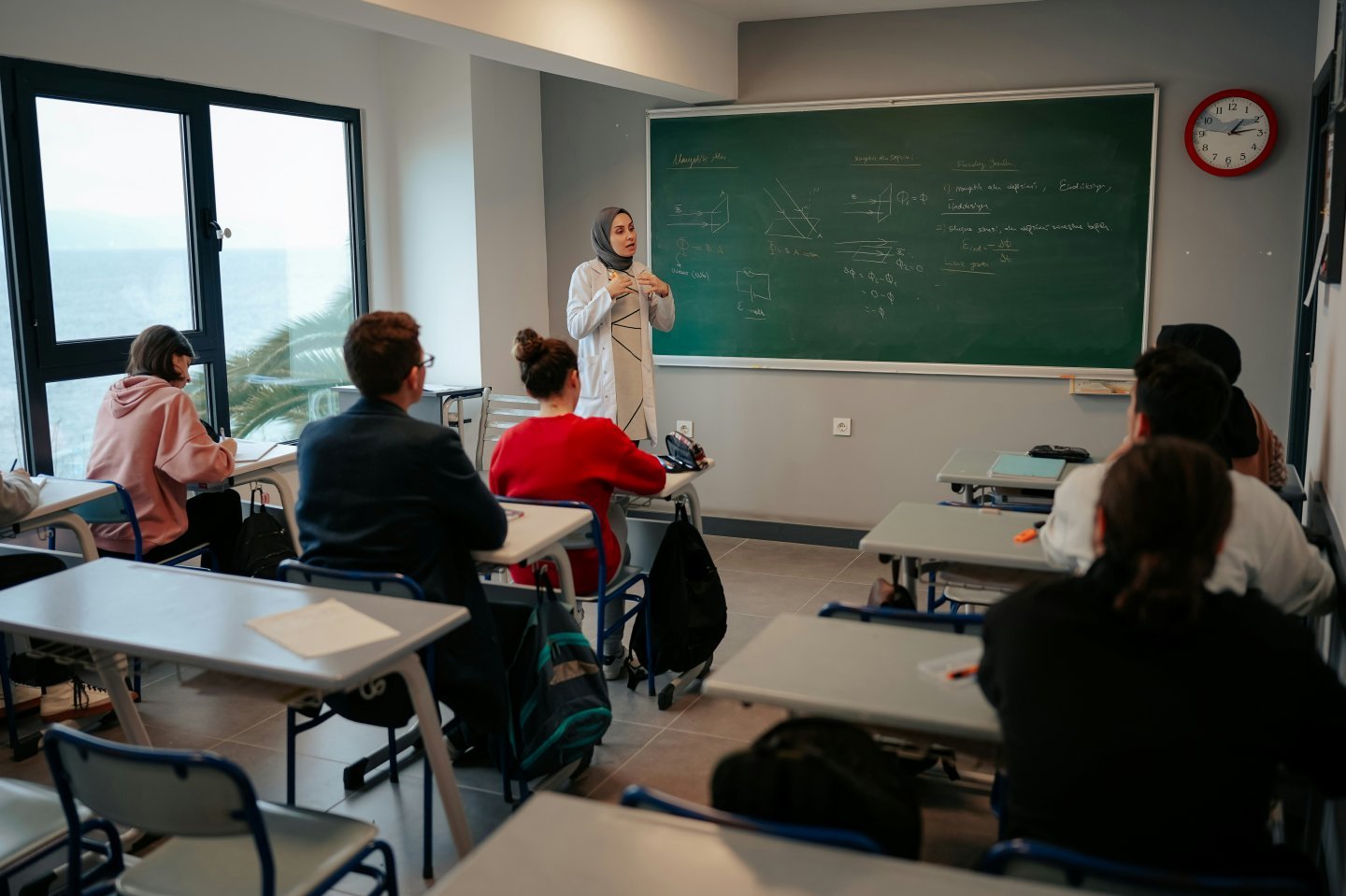

Anna Stolz, Bavaria’s Minister of Education and a member of the Free Voters, stated in an interview with Bayerischer Rundfunk that such quotas were not only logistically and practically unfeasible, but also politically misguided. According to Stolz, Bavaria’s approach focuses consistently on integration rather than separation.
“Every child, regardless of origin, has the same right to education,” Stolz said. She emphasized that the core of Bavarian education policy lies in expanding language support instead of imposing restrictive quotas.
Language Skills Over Origin Remain Bavaria’s Educational Principle
Florian Herrmann, Head of the Bavarian State Chancellery and member of the Christian Social Union, echoed this sentiment in an interview with the Münchner Merkur. He explained that the determining factor for a child’s success in school is not their background, but their command of the German language. “Those who speak German can follow lessons and integrate into our society,” Herrmann said. For this reason, the Bavarian government has rejected any cap on the number of children with a migrant background.
Karl Straub, the State Government’s Commissioner for Integration and also a member of the Christian Social Union, highlighted the difficulties in defining who qualifies as having a migration background. He noted that the criteria are often arbitrary and unclear. According to Straub, quotas would risk fostering exclusion and would contradict Bavaria’s integration model, which prioritizes structured language development.
Federal Education Minister Prien Suggests Quotas Based on Danish Model
Federal Education Minister Karin Prien, a member of the Christian Democratic Union, had previously raised the idea of a migrant quota in a televised interview with Welt editor-in-chief Jan Philipp Burgard. She cited the Danish model, where limits on migrant populations were introduced in certain neighborhoods, as a possible reference point. When asked whether such an approach could be applied in Germany, Prien said it was a “conceivable model” and mentioned that a threshold of 30 or 40 percent could serve as a reference.
However, she also stressed that any such measures would only be effective if paired with robust early childhood language programs. Without sufficient German skills before entering school, children would have little chance of academic success. Prien added that a key goal of her legislative agenda is the introduction of mandatory language assessments in the preschool years, along with compulsory support for children who fall behind.
Still, she acknowledged that education policy in Germany largely falls under the jurisdiction of the federal states. Prien warned against frequent policy changes: “Nothing burdens schools more than constant reforms triggered by shifting political majorities.”
Bavaria Expands Mandatory Language Testing Ahead of School Entry
In Bavaria, the language skills of preschool children have been routinely documented by educators for several years. Since 2024, a mandatory language test has been in place for children between four and a half and five years old, provided their kindergarten does not already confirm sufficient German proficiency. If a child fails the assessment, they are required to attend a kindergarten offering a specialized German language program before starting school. Refusal to comply may result in fines.
“These new pre-school assessments help us identify language support needs early and allow targeted intervention,” Minister Stolz explained. Herrmann also reiterated that language proficiency is essential for educational success: “Without sufficient German skills, regular school attendance is not possible.”
In the spring of 2024, approximately 23,800 children across Bavaria failed the language test. Notably, some of these children had previously been assessed by their kindergartens as not needing support, suggesting that the school-administered tests apply stricter criteria than those used during early childhood observations.
Mixed Reactions Among Political Parties in Bavaria
Support for Prien’s proposal came from the Alternative for Germany (AfD) parliamentary group in the Bavarian state legislature. Member of Parliament Oskar Atzinger said that the introduction of a migrant quota aligned with his party’s longstanding demands. The AfD supports mandatory German instruction, a cap on the number of children with a migrant background in schools, and the deportation of families without residency rights.
The Social Democratic Party (SPD), however, voiced criticism. Education policy spokesperson Simone Strohmayr pointed out regional disparities: “The proportion of children with a migration background varies significantly depending on the place of residence. Redistribution is not a feasible solution.” Instead, she called for better support for schools with high needs—particularly through more teaching staff at primary, special education, and lower secondary schools.
Strohmayr described the debate over migration quotas in education as “a misdirected line of thinking” that overlooked the real challenges facing schools.

Latest Posts