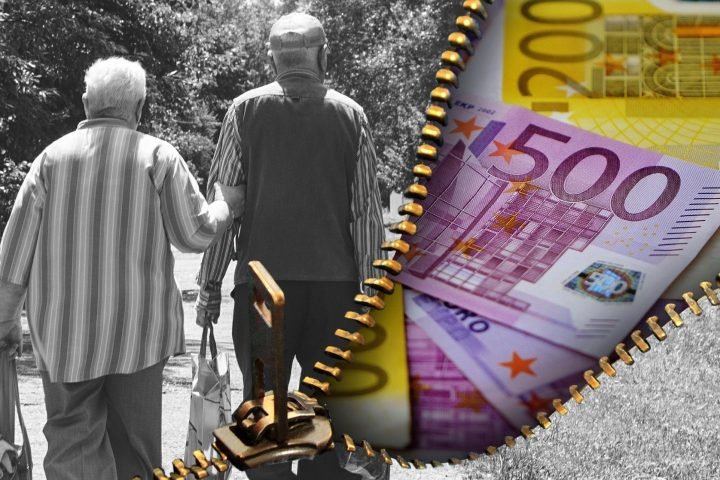

Who exactly do these regular social payments actually benefit? Verified answers to the most important economic and legal questions are gathered in this analytical review.
In the leadership of the conservative CSU party (Christian Social Union), dissatisfaction with the current financial format of these payments has been rapidly growing recently. Hans Reichhart, who holds the post of Landrat in Günzburg and treasurer of the CSU, and is also a member of the board and presidium of the party, openly called on colleagues to sacrifice such established sacred cows as the pension for mothers.
In his recent extensive interview with the Bayerischer Rundfunk broadcasting company, he argumentatively stated that the reform of the modern welfare state must begin exclusively with a completely clean slate. In the current situation, it is worth understanding in detail what exactly this state payment represents and what categories of citizens are now receiving it.
What Is the “Mothers’ Pension”?
With the help of this specialized demographic allowance, not only mothers but generally all parents who temporarily left their professional activities for the sake of full-fledged child-rearing can significantly increase their personal payments within the framework of the statutory pension insurance system. Thus, it is an integral part of the nationwide state pension. Such legislative recognition of the social value of parental labor has existed in Germany for several years. The current amount of this allowance directly depends on the total number of children in the family and the specific year of their birth.
For each child born before 1992, up to 30 months are currently credited to the total child-rearing insurance period, and for children born in 1992 and later — up to 36 months. At the beginning of 2027, it is planned to officially introduce another regulatory change — the so-called “Mothers’ Pension III”. After this law comes into force, the accounting of the child-rearing period up to 36 months will become absolutely identical for all citizens, completely regardless of the historical date of birth of the child.
What Will Change for Pensioners?
The exact long-term consequences of this legislative innovation for household budgets are still difficult to determine due to dynamic demographic and macroeconomic factors. For each child born before 1992, the regulatory care period in the calculation scheme will increase by exactly half a year. Since one full year of care is legislatively equal to one pension point, the aggregate allowance will grow by half of such a point.
Currently, one pension point amounts to just under 41 euros per month, therefore, half a point will bring recipients an additional approximately 20 euros before taxes and social deductions. However, the real value of these conditional points is centrally recalculated every year on July 1 during the scheduled state indexation.
The German Pension Insurance Fund (DRV) officially notes that it is currently practically impossible to give a reliable mathematical forecast regarding the future value of the point, but this baseline indicator will guaranteed turn out to be above the current level in any case.
Why Do They Plan to Expand These Payments?
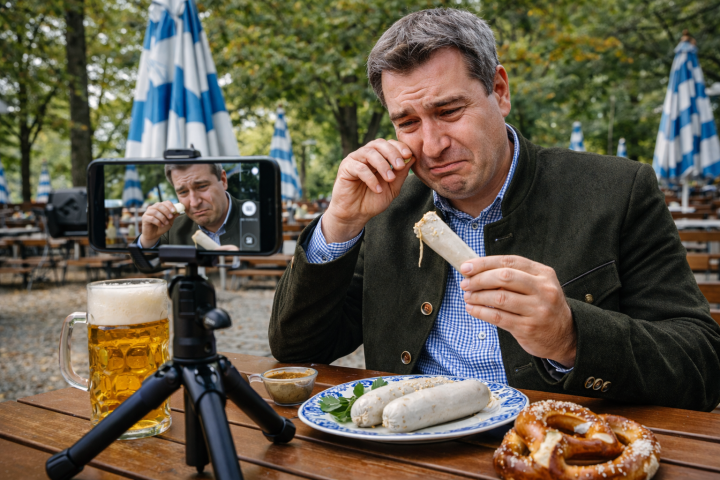
For the current chairman of the CSU party, Markus Söder, the “mothers’ pension” is a key and deeply personal political project. He firmly considers the further expansion of this program a fundamental issue of social justice toward women of the older generation and an official recognition of their invaluable life merits before society. But in essence, this is another trick by Söder, with which he wants to attract certain socially vulnerable segments of society to future elections. Let us remind that the attempt to lure over AfD fanatics failed, no matter how hard our Food Blogger tried to fawn, scattering left and right with populist slogans.
A few weeks ago, the Minister of Social Policy of Bavaria, Ulrike Scharf (CSU), also spoke out quite unequivocally on this discussable topic. She publicly called the new behind-the-scenes discussions about the cancellation or reduction of allowances deeply outrageous. Meanwhile, according to objective estimates by experts from the ifo Institute for Economic Research, the current annual expenses of the state on the realization of Söder’s personal ambitions in the form of this program already amount to about 5 billion euros.
How Will These Expenses Be Funded?
Until now, all additional financial expenses for these payments were mainly covered directly by the internal funds of the German Pension Insurance Fund. However, the financing of the new “Mothers’ Pension III” in the future is planned to be fully carried out from general tax revenues to the federal budget. The management of the DRV calls such a balanced approach economically justified, since real insurance contributions to the fund were not paid by parents for historical periods of child-rearing, and systemic support for parents in old age is a strategic task of the entire solidarity society.
On the other hand, the leading pension specialist from the German Institute for Economic Research (DIW), Johannes Geyer, draws special attention to the fact that extremely difficult times await the pension system of Germany in the coming years. In his expert opinion, it would be reasonable and pragmatic to contrast the long-term goals of the “Mothers’ Pension III” with other state priorities. Geyer explicitly warns: “If legislators still have a real opportunity to stop the launch of the third phase of the reform, this must be done, because after the official introduction of such social obligations, it will be practically impossible to cancel them due to legal and constitutional nuances.”
Do Alternatives Exist?
In this matter, everything directly depends on what specific strategic goals modern society sets for itself and what aggregate expenses it can objectively afford. In his specialized study published several years ago, economist Johannes Geyer came to the unambiguous conclusion that in itself, the mechanical increase in the credited child-rearing insurance period is not a sufficiently effective tool for a purposeful and targeted fight against poverty among elderly people.
Nevertheless, this state measure is fully capable of somewhat reducing the overall risks of poverty, as it helps primarily those women who have a small accumulated pension insurance history. The question is only whether this important social goal can be achieved by more effective and less costly ways. According to Geyer, naming specific viable alternatives is difficult for the professional community now. For in history, there have been no precedents yet for pension payments for the time when a woman was in an already paid maternity leave (by the way, are pension contributions made from maternity money? if yes, then this is the pension insurance history and no Food blogger and concurrently prime Minister can clone it with an additional pension invented merely for Söder’s personal benefit — ed). Besides this, due to the expected large expenses, the state may have to resort to cutting other types of social assistance. If the “Mothers’ Pension III” project is not implemented, the freed-up resources can be effectively directed to other priority tasks.
Conclusions and Long-Term Social Prospects
Thus, the unfolded public discussion around the future of the “mothers’ pension” clearly exposes the deep structural and financial contradictions within modern German social policy. On the one hand, the expansion of the program acts as an important element of recognition of the family merits of citizens and reducing the risks of poverty among women who temporarily left their careers for the sake of the family. On the other hand, the colossal financial burden on the budget forces leading analysts to doubt the long-term sustainability of such a model of state distribution of goods. The final decision of the government commission will show whether official Berlin is ready to sacrifice popular social projects and Söder’s loyalty for the sake of maintaining strict budget discipline and saving in difficult times for all mankind.