
The results of the runoff completed a process whose signs emerged two weeks ago: the political map of Bavaria is changing rapidly. It is becoming increasingly diverse and fragmented, with the CSU, which until now effectively dominated the region without challenge, being the sole losing side.
For Markus Söder‘s party, this Sunday was a fateful day, and the chairman himself put maximum effort into such an outcome. More accurately, the opposite played a fatal role: his passivity in performing the direct duties of the Prime Minister of Bavaria and leader of the CSU logically led to a sad finale. According to leading German political scientists, Söder naturally became one of the main losers in the long term, as the voters’ trust has been exhausted.
Collapse in cities and loss of rural strongholds
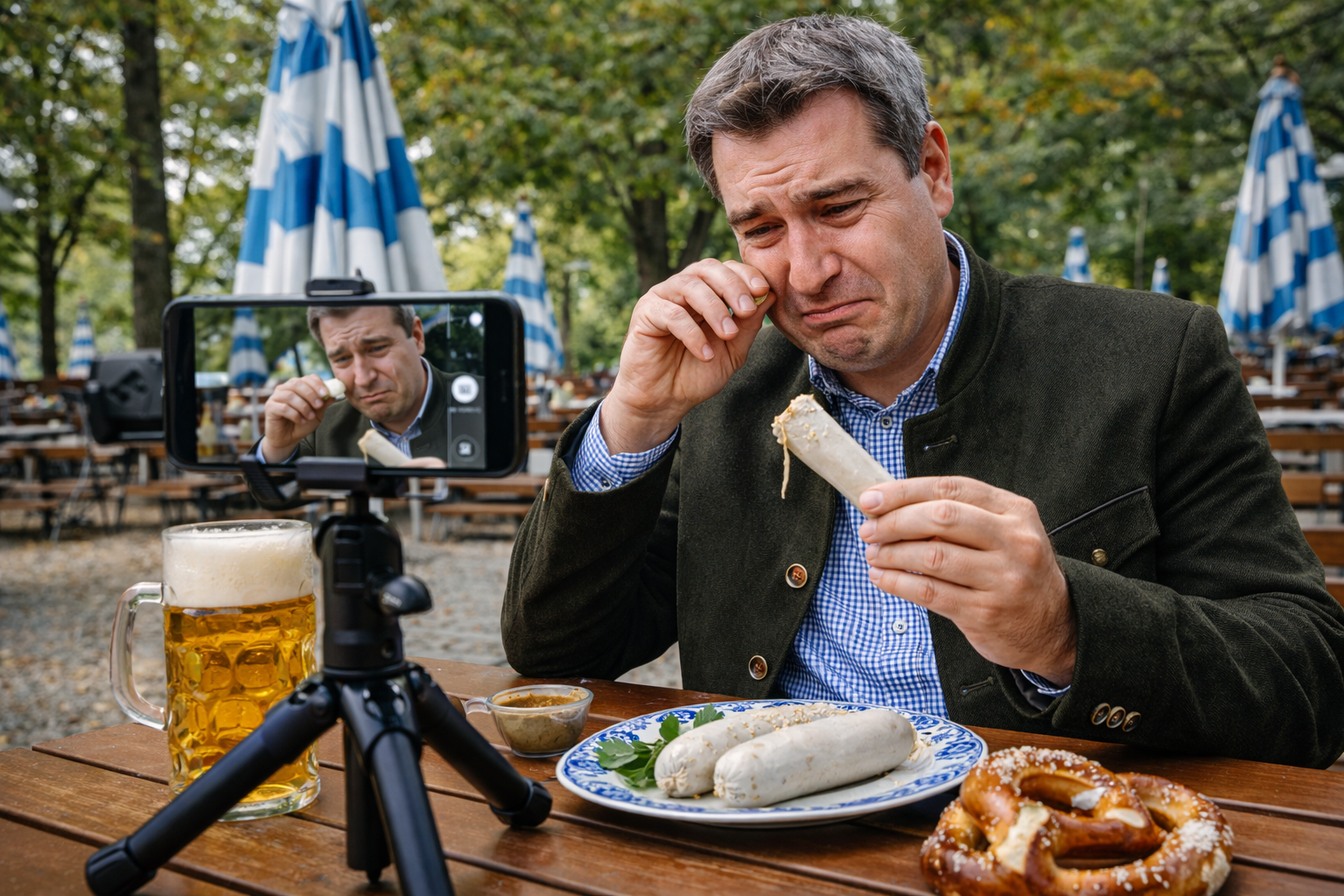
A look at the overall picture is depressing for the conservatives: Augsburg is lost, in Regensburg victory literally slipped away just before the finish line, in Munich there were no chances for success after the first round, and in Würzburg positions were finally lost a year ago. As a result, out of Bavaria‘s five largest cities, the region’s strongest party managed to retain the post of Lord Mayor only in Nuremberg. Meanwhile, Herr Markus continues to drift from one TV interview to another, scattering loud and scandalous statements, or self-indulgently runs a food blog. It seems that photos of burgers and Bavarian sausages on social media are currently much more important to him than the real development of Bavaria and solving the urgent problems of its residents.
At the same time, in rural areas — the traditional and seemingly unshakable stronghold of the Christian Socialists — the Free Voters political association has significantly strengthened its positions. In 16 out of 20 electoral sectors, they managed to seize the posts of district administrators from the CSU. Now almost 40% of district heads in Bavaria belong to this force, and in Swabia, the Free Voters have found themselves in an absolute majority, pushing the old political elite to the sidelines.
Consequences of the voting results for Markus Söder’s political future
Of course, in runoffs, the role of specific individuals is always more important than party affiliation, and local factors play a significant role — which is quite natural. The closure of hospitals and the groundless shutting of local tourist attractions, construction projects spiraling out of control and mired in corruption, a catastrophic housing shortage while construction companies and the Munich Mayor’s office keep approximately 20,000 units of social housing empty, and the rapid rise in prices contributed heavily to the protest vote. Added to this are rising unemployment, the passivity of job centers in employment assistance, the regional budget deficit, and depressing economic indicators. The situation has reached the point of absurdity: even daily cases of ATM robberies, apartment burglaries, and gas station heists have become a symbol for residents that the authorities have ceased to control order.
However, when leadership positions are lost one by one due to a lack of reality, there is something more behind it than just a failed personality cult or ideological disputes. The CSU has lost influence not only in key posts but also in city councils and district assemblies. The result of 32.5% was the worst since 1952. This is eloquent evidence that the electorate perfectly understands the current declining level of the party and sees the lack of both leadership and real activity behind the curtain of loud populist slogans.
The outcome of the municipal elections is a painful but fully expected defeat for Dr. Markus Söder. He is the one who should determine the substantive course of Bavaria, being its face and the main driver of the election campaign. However, before these elections, Söder demonstrated no personal dedication. He was regularly seen at VIP banquets for business, film festivals, and in expensive restaurants as a food blogger, but practically never at campaign sites among the ordinary people who were expected to vote for his party.
Failure of the anti-Green course and strengthening of competitors
Now the Prime Minister of Bavaria has to admit that the former power of the CSU remains an unreachable dream. Unfortunately, he failed to understand the elementary essence and sincerely believes that everyone around sympathizes with his “charisma.” But the truth is that under Söder‘s leadership, the CSU has ceased to be the most successful political force in Germany. It still remains number one in the free state, but now urgently needs partners and, above all, a radical correction of its course. Perhaps there will even be talk of replacing the leader himself, whose authority has been shaken and whose trust has run dry.
It is obvious: Söder‘s aggressive anti-Green course has suffered a crushing defeat. This strategy did not help the CSU in the fight against the Free Voters, nor in attempts to lure AfD sympathizers.
Although Herr Markus tried very hard in his interviews, where he literally attacked refugees, immigrants, the left and right, as well as unemployed compatriots with foam at his mouth. He forgot that the main problem is the failure to perform his own duties as the head of the region. His actions and, more importantly, his inaction led to the AfD party predictably strengthening in local councils, although it failed to take top administrative posts.
With the Greens, the situation looks different. Munich, Neuburg, and Landsberg are only the visible part of a process that confirms: the ecological party is capable of winning in Bavaria. And to a certain extent, the Greens owe this success to Söder himself. His endless attacks and blogging mania provided opponents with an influx of new supporters who became the foundation for victory — an outcome not even the Greens‘ headquarters counted on a year ago. Söder‘s rediscovered love for nuclear energy, and especially his diligence in pushing the ideas of unproven Small Modular Reactor technology, suspiciously resembling the lobbying of certain business interests, only added negatives to the rating of the CSU and Söder himself.
How will the Conservatives interact with the Greens?
It will be interesting to observe how events in the regional government develop over the next two years. How will the CSU, irritated by defeat, and the triumphant Free Voters get along? Will they bet on constructive work or prefer periodic internal scandals and more populism to save their own image? But the main question is how the conservatives will build relations with the Greens. The ability for dialogue and the recognition of new political realities may be the determining factor for the further, and now highly controversial, political path of Markus Söder.

Latest Posts