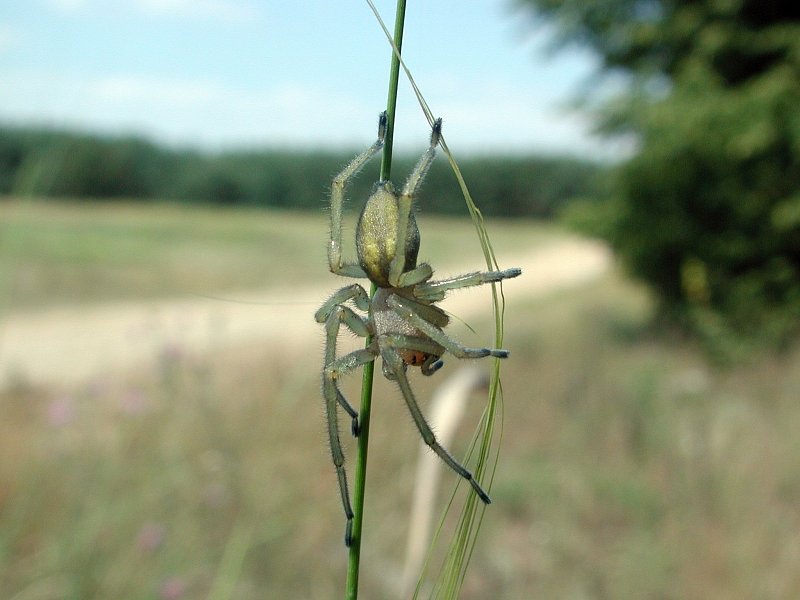

Originally from Southern Europe, the spider is expanding its territory across Germany. Here is what you need to know.
Until now, the fear of spiders in this country has mostly been limited to a strong sense of disgust, as native species are generally harmless. However, several species from abroad—including venomous ones—are becoming increasingly widespread.
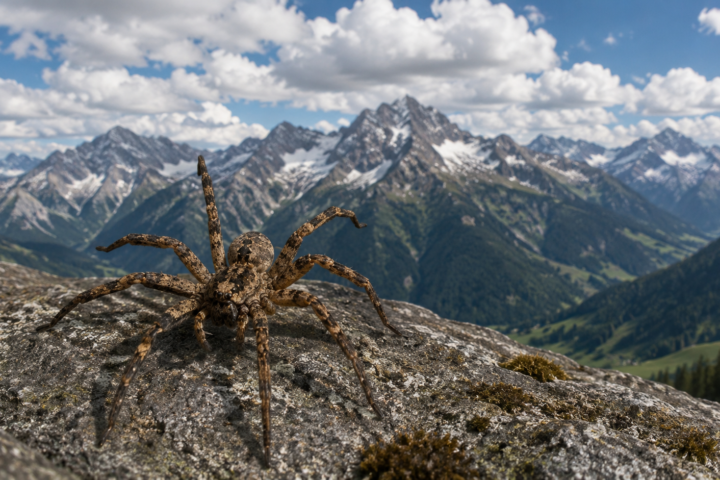
The Yellow Sac Spider has been present in Germany since the 1950s. Due to rising temperatures, it is appearing more frequently in various regions, primarily in Eastern and Southwestern Germany, such as Brandenburg and Saarland. While recorded less frequently in Bavaria, it is present there as well. Nevertheless, this is no cause for alarm; while venomous, the species is not lethal to humans.
Appearance and Habitat
Encounters remain relatively rare because the spider is nocturnal and shy. Measuring about 1.5 centimeters in length with a red-brown and yellow body, it hides in tall grass, unused agricultural land, overgrown roadsides, and forest edges.
Why is it Called the “Nurse” Spider?
Its German name (Ammen-Dornfinger—nurse thorn-finger) refers to the female’s protective behavior. She remains by the nest, guarding the eggs and later the spiderlings like a “nurse.” The spider lives for only one year. Males appear in early summer, mate, and die shortly thereafter. In August, females lay between 80 and 300 eggs in a large cocoon. Once the young leave the nest, the female usually dies of exhaustion, while the offspring build small nests to overwinter, according to POLLICHIA (Society for Nature Research and Environmental Education).
A Reclusive Predator: Attack Mode Only Under Threat
The Yellow Sac Spider is essentially a harmless creature that only becomes aggressive when it feels threatened or senses danger to its offspring. In such cases, it can bite, using powerful chelicerae capable of piercing human skin—a feat most native German spiders cannot achieve, though recent arrivals like the Nosferatu spider share this ability.
The Bite: Unpleasant but Not Dangerous
If bitten, there is no reason to panic. Victims describe the sensation as similar to a wasp sting. Symptoms may include:
- Swelling of the affected limb.
- Redness, pain, and localized inflammatory reactions.
- In very rare cases: fever, circulatory issues, dizziness, chills, or vomiting.
According to the Nature Conservation Union (NABU) of Baden-Württemberg, all symptoms typically disappear within two to three days.
Medical Potential of the Venom
Research is currently exploring the use of this spider’s venom in medicine, similar to bee venom studies. Biochemist and zoologist Tim Lüddeke notes that the venom appears to damage various cell types: “This suggests possible applications for cell-based diseases—for example, in tumor therapy or tissue surgery.” These mechanisms remain a subject of ongoing research.
What to Do if You Encounter One?
- Avoid tall grass: During summer months, try to stay on paths to avoid hiding spots.
- Watch for webs: Cocoons are typically found in the grass at about waist height.
- Stay calm after a bite: Do not scratch the area. The NABU of Brandenburg recommends capturing the spider if possible for identification to assist a doctor.
Source: POLLICHIA, NABU Baden-Württemberg, NABU Brandenburg

Latest Posts