
STARNBERG DISTRICT — A report came out just a few days ago: in the first ten months of this year, almost 60 percent fewer people from abroad applied for asylum in Bavaria compared to the previous year. As the Bavarian Ministry of the Interior explained in response to a query from the Deutsche Presse-Agentur, the influx of asylum seekers up to October 2025 was around 11,700, significantly lower than the 27,600 during the same period last year.
As of mid-November, a total of about 126,000 people were housed in Bavaria’s asylum accommodation centers—approximately 12,000 fewer than at the start of the year. Furthermore, as of October 31st this year, the Federal Office for Migration and Refugees had registered 13,053 initial asylum applications, compared to 31,412 during the same period last year. Considering this trend, Interior Minister Joachim Herrmann (CSU) emphasized that the Free State will likely be able to completely close a number of asylum accommodation centers as early as next year. This will relieve the burden on municipalities, “and at the same time, we will reduce state expenditure, meaning we will also relieve the burden on taxpayers,” Herrmann stated.
However, in the Starnberg district, it will apparently still be some time before any facility can be closed without replacement. The Starnberger Merkur newspaper submitted an inquiry to the district administration.
How many refugees currently live in the Starnberg district?
As of September 2025, a total of 4,108 refugees were living in the Starnberg district. “This includes all persons for whom the district administration is responsible under foreign nationals’ residence law—that is, recognized refugees, persons whose asylum procedures are ongoing, persons with a suspension of deportation, and persons with residence permits for other humanitarian reasons,” explained district administration spokesperson Stefan Diebel. Of these, 1,747 refugees arrived from Ukraine and 2,361 from other countries.
How has this number changed since the beginning of the year?
Although the number is subject to fluctuation, it is relatively stable. At the end of last year, the district had 4,138 refugees; at the end of March this year, it was 4,051.
How does the statewide trend affect the Starnberg district?
“Currently, we cannot speak of a sustained decline in refugee numbers in the district. The overall number is relatively stable,” Diebel clarified.
How many people live in collective accommodation centers? And how many places are available there?
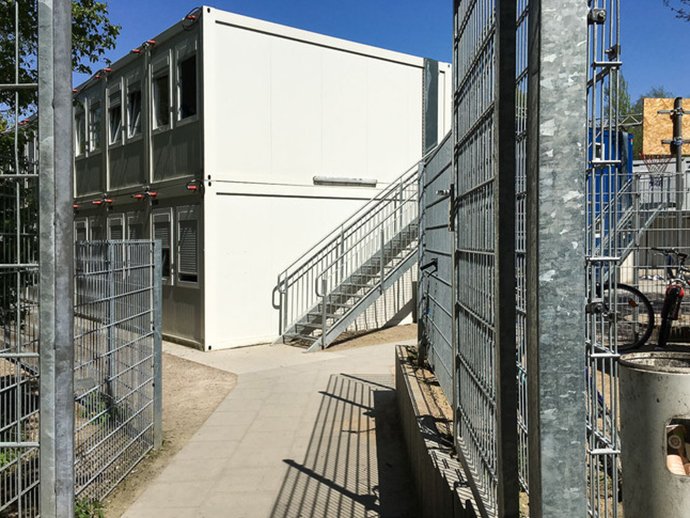
As of September, 2,151 refugees were housed in state-run accommodation centers: 328 from Ukraine and 1,823 from other countries. “Currently, we have a total of about 100 free places,” the spokesperson noted. “That’s not many.”
What is the proportion of persons inappropriately occupying places?
665 persons living in collective accommodation centers are considered to be occupying places inappropriately. This means they are recognized asylum seekers who, for this reason, should leave the accommodation center but can continue to stay because, in the expensive Starnberg district, they either cannot find housing or cannot afford it.
Does this trend affect the district’s expansion program?
“Because we are currently not meeting our reception quota, we are still receiving new buses with refugees,” Diebel explained. “Furthermore, we must not forget that we are constantly losing individual facilities, and the Free State requires us to focus on collective accommodation centers. Therefore, we constantly have to redistribute people.”
Most recently, the lease expired for a large accommodation center at the AOA in Gauting. This meant about 120 people had to be redistributed to other centers all at once. Diebel: “Consequently, we still need all accommodation centers and the corresponding expansions to meet these requirements. Under no circumstances will gymnasiums be used for this purpose in the Starnberg district. We are pointing this out to both the district government and the Ministry of the Interior. The number of refugees from Ukraine continues to grow significantly.” Funding for the expansion of the accommodation center on Landsberger Straße in Gilching is currently under review by the Ministry of the Interior.
For a long time, it was said the district was meeting or even exceeding its quota. Why has this changed?
“The fact that we are not meeting the quota is not because we have fewer refugees in the district, but due to a change in how Ukrainian refugees are counted,” the district administration spokesperson explained. “They are no longer counted toward the quota if they have been registered here for more than three years, even though, of course, they continue to live here.”
Sources: Bavarian Ministry of the Interior, District Administration Starnberg

Latest Posts