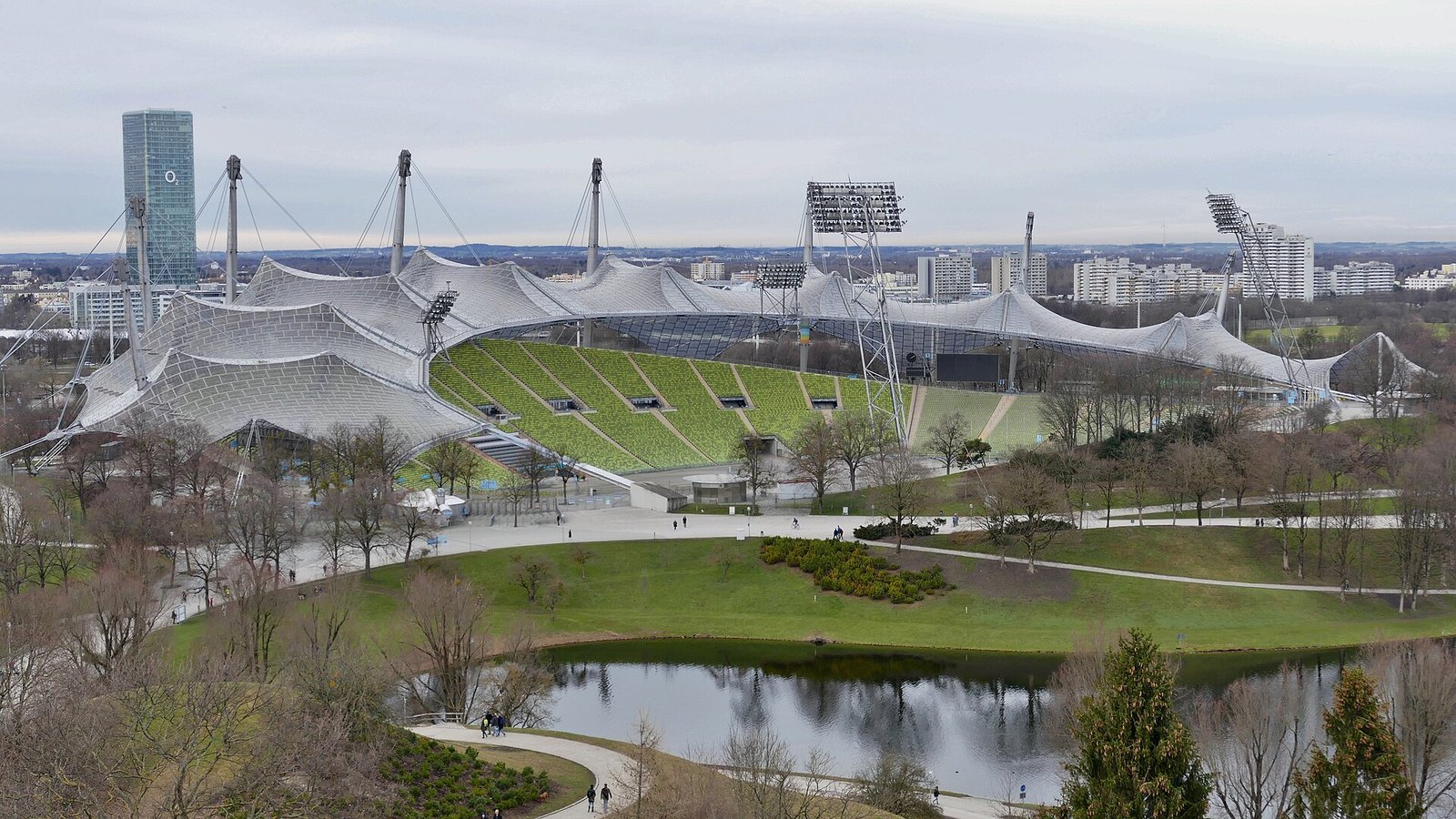

According to current administrative plans, the site will remain a massive construction zone until 2029. For the entertainment industry and thousands of music lovers, this represents a temporary but significant loss of Bavaria’s premier open-air venue. However, city authorities and the Olympic Park management have already developed a comprehensive substitution strategy to maintain Munich’s status as Germany’s musical capital.
For decades, the Olympic Stadium has served as the primary stage for world-class tours. The history of modern pop and rock culture was forged here, with the final bright note before closure being Shawn Mendes’ triumphant performance at the Superbloom 2025 festival. However, time has taken its toll: the facility, built for the 1972 Summer Games, has exhausted its technical resources after over fifty years of operation and now requires fundamental updates to all engineering systems.
Renovation of the Olympic Stadium in Compliance with Heritage Conservation
The main front of work at the current stage is hidden from the eyes of passersby. As explained by the director of Olympiapark GmbH, Marion Schöne, the modernization focuses on the “innards” of the stadium: full replacement of engineering systems, fire protection updates, and the creation of a modern digital infrastructure. These measures are necessary to meet the strict safety standards of the 21st century. Additionally, a complete restructuring of sanitary blocks and visitor service areas is planned. Architects face a complex task: preserving the unique appearance of the stadium, which is officially recognized as a historic monument.
The financial side of the issue underscores the scale of the project. Removing asbestos, typical of 1970s constructions, and adhering to rigid restoration protocols require colossal investment. Approximately 200 million euros have already been budgeted for general construction work. A separate item is the reconstruction of the famous tent roof, the cost of which is estimated at another 300 million euros. While it was initially hoped the stadium could partially function in the summer of 2028, technical difficulties have forced experts to revise the timeline: the full return of major shows to the arena will only be possible in 2029.
Allianz Arena as a Backup Venue
To ensure world tours do not bypass Munich, Olympiapark GmbH has entered into a strategic partnership with the Allianz Arena. The football cathedral in the north of the city is ready to take on the function of the main concert venue during off-season periods. During the summer months free from Bundesliga matches, performances by industry heavyweights such as Linkin Park, Foo Fighters, Helene Fischer, and The Weeknd have already been confirmed. The Korean phenomenon BTS is also expected.
However, using the football arena has its logistical limits. Past experience with Guns N’ Roses showed high efficiency, but the summer of 2028 will be an exception. During this period, a large-scale reconstruction of the subway line leading to the stadium is planned. Without a reliable rail connection, the Allianz Arena will be unable to host mass events, as it is impossible to organize the safe arrival and departure of over 70,000 spectators solely by bus and private transport.
Königsplatz and the Riem Exhibition Center as Alternatives
The city administration is also redistributing the load to other proven locations. Economic Adviser Christian Scharpf highlights Königsplatz as a “constant” in the city’s cultural landscape. This square in the museum quarter is ideal for open-air formats, with three major events planned for August this year alone.
However, for technically hyper-complex productions requiring colossal space, the primary alternative will be the grounds of the Exhibition Center in Riem. Christian Scharpf recalls the success of the Adele concerts in 2024, where a unique 220-meter-long video screen was erected—a project that physically would not have fit into any other venue in Munich. Technical modernization is currently underway in Riem, set to conclude just in time for the critical summer season of 2028, providing the city with a venue for mega-shows.
Olympic Park Remains a Concert Destination
It is important to understand that the stadium’s reconstruction does not mean life in the Olympic Park itself is frozen. While the main arena is hidden behind scaffolding, other venues in the complex will work with double the load. In addition to a dense schedule at the Olympiahalle, the organizers of the Superbloom 2026 festival are considering installing a large stage on the territory of the Tollwood summer festival.
Additional space will be provided by Hans-Jochen-Vogel-Platz, located between the stadium and the hall. In July 2026, it will host two concerts by the band Die Toten Hosen. With a capacity of up to 19,500 spectators, this location is ideal for medium-scale performances, maintaining the familiar Olympic Park atmosphere for city residents.
Competing Arena Near the Airport
Despite temporary difficulties, the park management must also account for new market challenges. The construction of a modern multifunctional arena in Freising, in close proximity to Munich Airport, creates serious competition for the park’s indoor venues. The new complex will offer organizers the latest technology and simplified logistics for international acts.However, Marion Schöne remains optimistic, emphasizing the stadium’s uniqueness. The airport arena is focused on indoor events, while the Olympic Stadium, with its internal area of 18,000 square meters, remains unrivaled for summer shows. Furthermore, the stadium possesses a unique social effect: thanks to the park’s landscape, thousands of people can watch concerts from the Olympic Hill without buying tickets, creating a unique urban festival atmosphere. The modernization is intended only to strengthen this leadership, ensuring that after 2029, Munich will regain its main musical pearl in renewed splendor.

Latest Posts