
Rhineland-Palatinate has now passed the most liberal funeral law in Germany. From now on, families will be allowed to keep urns at home, and river burials will also be permitted. None of this is allowed in Bavaria, despite changing public demand.
Whether it is river burials or dividing ashes, the desire for more individualized funeral practices seems almost limitless. In many neighboring European countries, such practices have long been possible. This is also confirmed by the consumer initiative Bestattungskultur Aeternitas: “Anyone who knows the funeral industry knows that these options are in demand—and often pursued abroad. Representative surveys clearly show how the expectations of large parts of the population have changed,” the group explains.
From shroud burials without a coffin to transforming ashes into diamonds, the wishes and ideas for a meaningful farewell are becoming increasingly diverse, including in Bavaria. Some families even send ashes abroad to have them pressed into synthetic diamonds, explains Munich funeral director Ralf Hanrieder. “That adds between €2,000 and €15,000 in costs on top of the funeral itself,” he notes.
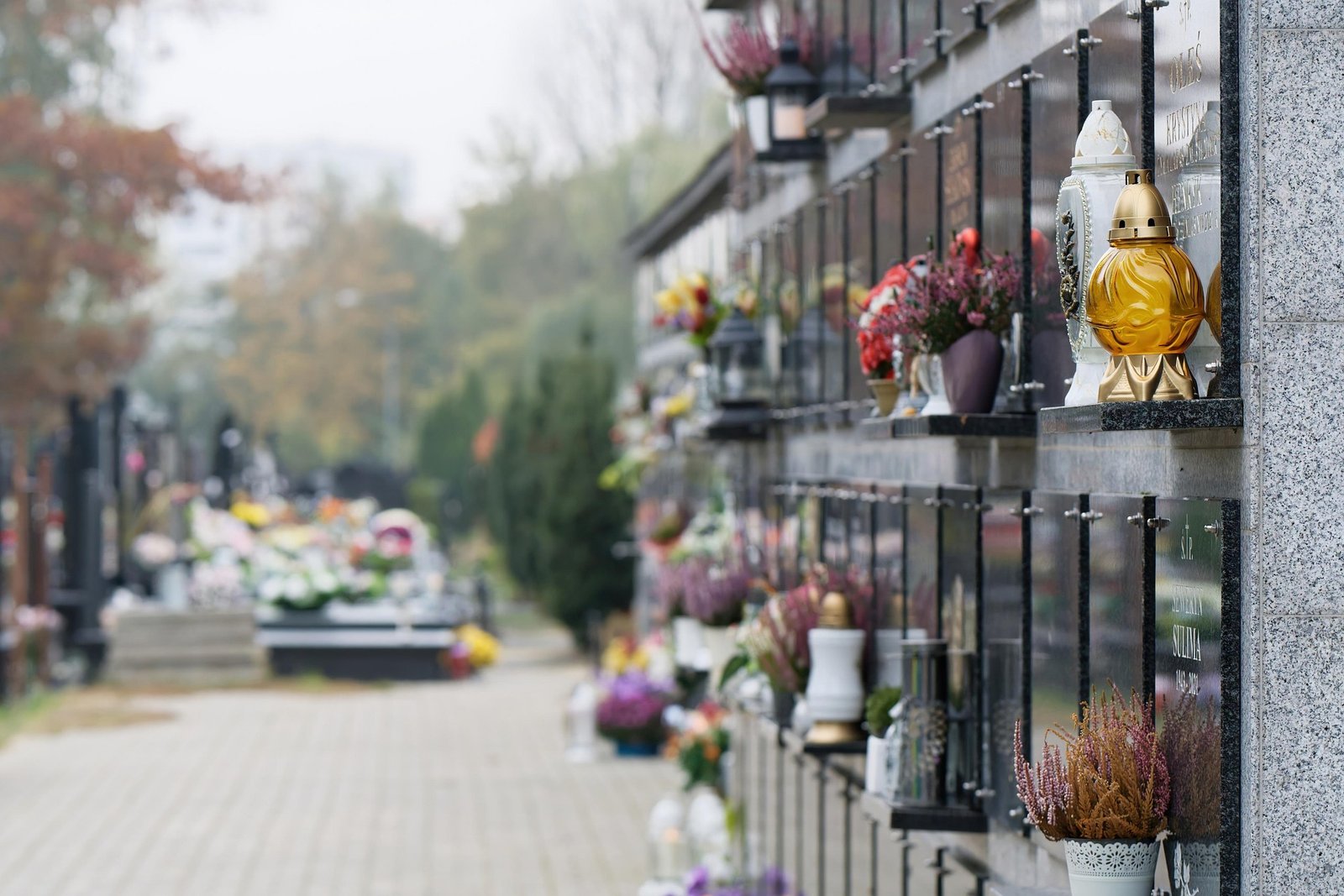
In Bavaria, only one in five funerals is a traditional earth burial. While coffins are still generally required, since April 2021 a shroud burial without a coffin has also been permitted. About 80 percent of the deceased are now cremated. More and more often, there is no grave at all—the trend is moving toward anonymous burials and alternative forms of remembrance.
Across almost all German states, there is a legal obligation to bury the deceased and, in most cases, an obligation to inter remains in a cemetery. Until now, Bremen was the only exception. As of Thursday, however, Rhineland-Palatinate allows the broadest range of options nationwide: many alternative funeral practices are now legal, and the cemetery requirement for ashes has been lifted. Families may now keep the ashes of their loved ones privately at home.
“This is a revolution,” says Hanrieder. “In other European countries and in Asia, this has been common for a long time. In Buddhism and Hinduism, ashes are scattered; in the United States, 20 percent of families keep the urn at home.”
The CDU in Rhineland-Palatinate, however, has voiced concerns, warning that the new law could jeopardize the survival of cemeteries. They demand a review soon after the law takes effect.
Bavaria, meanwhile, has no plans to change course, the state health ministry told BR24. Currently, only two options exist: burial in a grave (earth burial) or cremation followed by burial of the urn in a cemetery or at sea. Scattering or dividing ashes is not permitted.
Ashes must remain sealed in a fixed urn. Using the entire ashes to produce diamonds is also forbidden. This restriction, a ministry spokesperson explained, stems from the state’s duty to protect the dignity of the deceased. With keepsakes, the state cannot ensure this dignity in every case. The same applies to keeping an urn at home.
The ministry stresses the long-term protection of dignity: “Even among closest relatives, opinions on how to handle ashes can differ significantly. While societal values are changing, the most dignified solution remains burial in a public cemetery, whose future is secure. The recognition of natural cemeteries in Bavaria has already been an important step.”
The Catholic Office of Bavaria also supports the state government’s stance. Its director, Matthias Belafi, emphasized: “Grief is always a communal matter. Proposals such as keeping urns at home or dividing ashes clearly contradict this principle.” In his view, changes like those in Rhineland-Palatinate are neither sensible nor appropriate.

Latest Posts