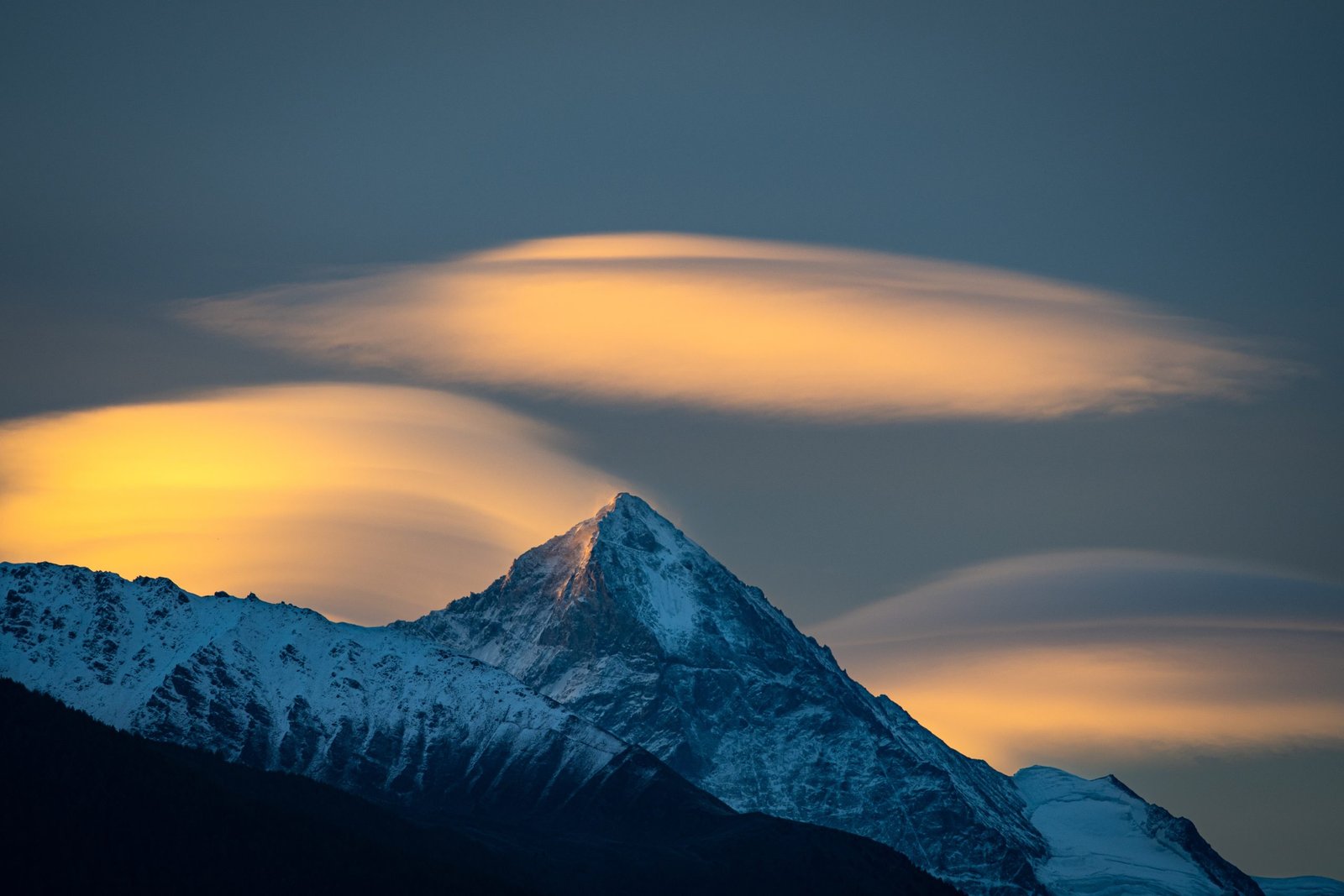

The Hochvogel, a 2,592-meter peak in the Allgäu Alps, has been showing increasingly alarming signs of structural instability. Geologists have been monitoring the mountain closely for years, as the risk of a massive rockfall continues to grow.
Swiss Glacier Collapse Highlights Alpine Dangers
In Switzerland’s Valais region, the situation at the Kleines Nesthorn escalated rapidly. According to geologist Fabian Reist, up to three million cubic meters of rock had started shifting before a massive landslide struck. On May 19, the entire village of Blatten in the Lötschental was evacuated. Just two days later, the feared catastrophe occurred: a massive debris and ice avalanche buried most of the village. One person remains missing.
Widening Cracks Signal Instability at the Hochvogel
The Hochvogel, known for its sharp profile and often called the “Matterhorn of the Allgäu,” is drawing serious attention due to visible and expanding cracks. Professor Michael Krautblatter from the Technical University of Munich has been leading a team studying the mountain’s movements. With the help of high-precision sensors, they are measuring the gradual widening of a major rock fissure on the steep slope.
The cause, experts say, lies in climate change. Increased episodes of heavy rainfall and faster snowmelt are destabilizing the rock formations. Since monitoring began, about 140,000 cubic meters of rock have already detached from the mountain—roughly equivalent to 1,400 truckloads of stone.
The Danger Is Real, Even Without Permafrost
Unlike the Kleines Nesthorn, where thawing permafrost is to blame for the collapse, the Hochvogel is not located in a permafrost zone—it’s simply too low in altitude. Permafrost acts like glue in high alpine regions, and its thawing can trigger massive slides. In Germany, permafrost exists only on the Zugspitze, which frequently experiences smaller rockfalls.
Despite the absence of permafrost, the Hochvogel poses a greater hazard. Experts warn that up to 260,000 cubic meters of rock—nearly half the summit—could break off in a single event. While there are no inhabited areas directly beneath the site, hikers and climbers in the region could be at serious risk.
A Silent Threat Under Constant Surveillance
Though the Hochvogel hasn’t seen a sudden collapse like in Switzerland, the situation remains serious. The gradual nature of the movement makes it harder to predict, with accurate warnings possible only shortly before a potential rockfall. Krautblatter notes: “When we see the acceleration, that’s the signal that things are getting critical.”
Thanks to modern monitoring technology, researchers are watching the mountain closely. But despite their efforts, a residual risk remains. For alpine authorities, scientists, and outdoor enthusiasts, vigilance is essential as climate-related shifts continue to reshape even the most solid-seeming peaks in the Alps.

Latest Posts